


 United States — would you like to set this as your default country of delivery?


 Trade
Trade  Shops & Events
  Customer Service
Japanese Single Malt
Discover more »Japanese Single Malt
With distilleries across the whole country, Japan produces a wide variety of single malts - from rich and peaty, to light and floral, and even fresh and fruity.
Humble Beginnings
The early years of Japanese whisky are dominated by two men: Masataka Taketsuru and Shinjiro Torii. Taketsuru was famously sent to Scotland in 1918 to learn about whisky-making, studying in Glasgow and getting hands-on experience in Speyside and Campbeltown before returning to Japan with a head full of facts and a Scottish wife.
When he joined forces with Torii in about 1921, Taketsuru’s vision was to build a distillery on the remote northern island of Hokkaido – the part of the country he thought most mirrored Scotland. However, Torii feared this was too far from the main markets of central Honshu, vetoed the idea and instead built Yamazaki on the outskirts of Kyoto in 1923.
Taketsuru swallowed his reservations and worked as Yamazaki’s first distillery manager before leaving in 1934 to strike out on his own and finally realise his dream: the building of the Yoichi distillery on Hokkaido.
Eighty years later, the companies founded by Torii and Taketsuru – Suntory and Nikka respectively – still dominate the Japanese whisky industry. But, unlike the twin monoliths of Scotch whisky, Diageo and Pernod Ricard, they don’t have dozens of distilleries, but only four between them.
CHAMELEONS OF DISTILLATION
While Scotland took centuries to build up a critical mass of about 100 malt distilleries, all with subtly different styles, Japan wanted to move faster, and with just a small number of sites. What’s more, Suntory and Nikka don’t trade whisky with each other – which, as in Scotland, would increase their blending options.
What developed was a very different model of distillation: plants like Yamazaki which produce a multiplicity of styles thanks to an eclectic collection of still shapes and sizes, plus a range of peated/unpeated barley, different yeast strains, fermentations, cut points – not to mention a number of cask options including the distinctive mizunara or Japanese oak.
These chameleons of distillation – Suntory stablemate Hakushu and Nikka’s two plants, Yoichi and Miyagikyou, follow a broadly similar philosophy – play havoc with the notion of ‘single’ malt, and yet there is a common thread that unites their bottlings, from Yamazaki’s floral roundness to Hakushu’s precision; and from Miyagikyou’s spiced fruit to Yoichi’s heavy smoke.
Typical Character and Style of Japanese Single Malt
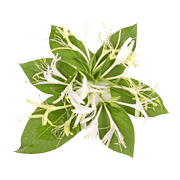 Honeysuckle
 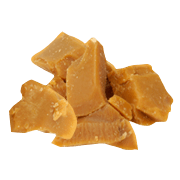 Toffee
 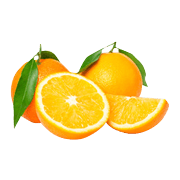 Orange
Filter By
Price Range
Bottling Status
Producer
Flavour Profile
Age
Vintage
Cask Type
Single Cask
Bottler
Series
Strength
Size
Limited Edition
Colouring

Hakushu 12 Year Old100th Anniversary
£180

Yamazaki 18 Year Old Mizunara100th Anniversary
£1,675

Chichibu 20147 Year Old Wine Cask Exclusive To The Whisky Exchange
£750

Chichibu 20156 Year Old Bourbon Cask Exclusive To The Whisky Exchange
£750

Karuizawa 40 Year OldPlatinum Geisha
£25,200

Karuizawa 38 Year OldPlatinum Geisha
£25,000

Yoichi 10 Year Old
£145

Yamazaki 1986Vintage Malt Bot.2004
£15,000

Karuizawa 50 Year Old1965 Vintage
£40,000

Shirakawa 1958
£25,000

Hakushu 1988Vintage Malt Bot.2004
£7,500

Hakushu 1981Vintage Malt Sherry Cask Bot.2004
£10,000

Chichibu London Edition 2022
£500

Mars Komagatake2021 Edition
£129

Yamazaki Peated Malt2022 Edition
£695

Yamazaki Spanish Oak2022 Edition
£1,250

Yamazaki Puncheon2022 Edition
£695

Yamazaki Mizunara2022 Edition
£1,300

Yamazaki Tsukuriwake Cask Collection 2022Set of 4 Bottles
£5,000

Chichibu 2014Chibidaru Cask Exclusive To The Whisky Exchange
£1,200

Chichibu 2014Beer Cask Exclusive To The Whisky Exchange
£1,000

Chichibu 2013Cask 2923 Bot.2021
£950

Chichibu 2015Bourbon Cask Exclusive To The Whisky Exchange
£1,200

Shizuoka Contact S Single Malt3 Year Old
£150