


 United States — would you like to set this as your default country of delivery?


 Trade
Trade  Shops & Events
  Customer Service
Champagneand Sparkling Wine
Of the various sparkling wines, there's one which stands head and shoulders above them all – the most coveted and sought-after: Champagne.
An Introduction to Champagne
When the occasion demands the very best, look no further than Champagne. No other sparkling wine can match the aromatic complexity, poised flavours and sheer elegance, while the character of your favourite Champagne is shaped by a thousand variables.
The Story of Champagne
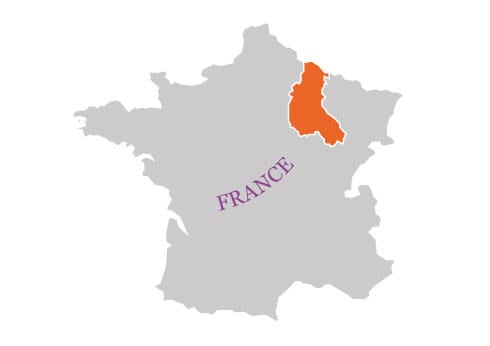
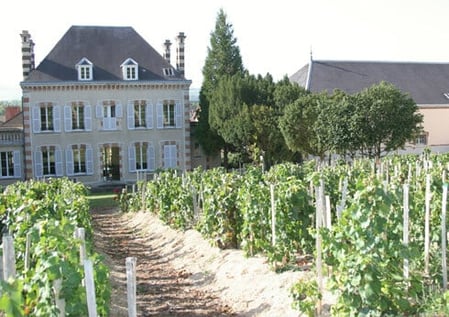
The mention of Champagne evokes a voluptuous bottle of Dom Pérignon reclining in an gleaming ice bucket. In fact, Champagne takes its name from the region of north-east France where the oldest house, Ruinart, began production in 1729 – and true Champagne comes from nowhere else. In this emerald kingdom, the conditions are ideal for Champagne production, with a range of low chalk hills rising gently from an agricultural plain, lifting the vines towards the sun and allowing them to achieve the barest minimum of ripeness. The edgy, high-acid profile of those grapes is perfect base material for the greatest sparkling wine of them all. Quite simply, nothing else drinks like Champagne.
The three grapes behind a true Champagne
Not just any grape can conjure the inimitable taste of Champagne. True Champagne rests on just three grape varieties: Chardonnay, Pinot Noir and Pinot Meunier. Chardonnay is a white grape, while the two Pinots are both black, each bringing its own idiosyncrasies to a Champagne blend. Chardonnay suggests flowers, vanilla, honey. Pinot Noir is earthier, rootier and more structured. Pinot Meunier adds fresh, appley notes. Raise a flute of Champagne and these subtle differences will announce themselves.
The secrets of Champagne production
Just as important is the traditional method for creating Champagne: now imitated for sparkling wine production worldwide, but never equalled. Time-honoured Champagne production begins with still wine made from the classic triumvirate of grapes above. But critically, the wine is then bottled with a little extra sugar and yeast, and carefully laid on its side in the cool, deep Champagne cellars that have been maintained for centuries by houses like Laurent-Perrier, Bollinger, Moët & Chandon, Veuve Clicquot and Ruinart.
Very slowly, the yeast ferments the sugar, producing alcohol and carbon dioxide. Since the Champagne bottle is sealed, the CO2 has nowhere to go. Bubbles form. The fermentation leaves yeasty sediment. After at least twelve months (and usually longer), the Champagne is upended so the sediment settles in the bottle’s neck. It is then removed by freezing the neck, allowing the gas to expel the frozen plug of sediment, and quickly recorking the bottle, adding extra syrup at the same time to balance the naturally high-acid profile. The yeasty sediment, too, leaves rich, sometimes creamy flavours in the wine. The Champagne is now ready to be opened and enjoyed.
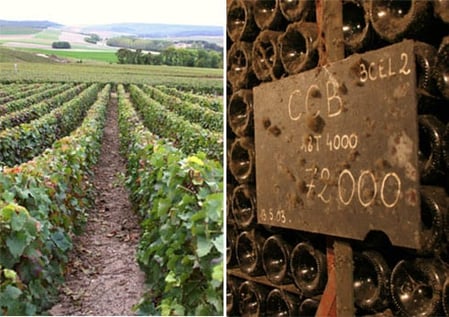 Grapes growing in the vineyards of Champagne / Bottles ageing in the cellar
From Brut to Dom Pérignon: The Many Styles Of Champagne
Centuries later, Ruinart Champagne has been joined by many other brands, and your fizz is as individual as the occasion it is served at. The most widely seen variety of Champagne is non-vintage Brut: a blend of different years, bottled with up to 15g of residual sugar, which encapsulates each house’s unique ethos. These wines are usually given a branded name, such as Moët & Chandon’s Brut Imperial, Bollinger’s Special Cuvée or Roederer’s Brut Premier.
Meanwhile, a single vintage (or Brut Millésime) Champagne reflects the characteristics of a single good or outstanding vintage, and receives extra cellar age. Blanc de Blancs means a Champagne made from Chardonnay alone, while Blanc de Noirs is a Champagne from either or both of the Pinot varieties. Very dry Champagne is called Brut Nature, Extra Brut, Brut Zero or Brut Integral, while a sweeter-than-normal Champagne is called Sec (which paradoxically means ‘dry’), Demi-Sec or Rich.
Champagne made from the region’s best vineyards is labelled Premier Cru or (better still) Grand Cru. Finally, there is the celebrated luxury Champagne, usually called prestige cuvées. Examples of this celebrated Champagne include Moët & Chandon’s Dom Pérignon, Roederer’s Cristal and Veuve Clicquot’s La Grande Dame. Most are wines from a single vintage (although Krug’s Grande Cuvée is multi-vintage), and are blended from the finest parcels of vines and the most successful wines of the year.
Champagne bottle sizes
Champagne bottles come in a dizzying array of sizes, from the tiny quart (20cl) right up to the gargantuan Melchizedek, which is a staggering 30 litres – the equivalent of 40 bottles of a standard 75cl size. Curiously, the majority of larger Champagne bottles are named after ancient kings. This is the full list:
Quart – 20cl
Half-bottle – 37.5cl
Demi – 50cl
Standard bottle – 75cl
Magnum – 1.5 litres (2 bottles)
Jeroboam – 3 litres (4 bottles)
Réhoboam – 4.5 litres – (6 bottles)
Methusaleh – 6 litres (8 bottles)
Salmanazar – 9 litres (12 bottles)
Balthazar – 12 litres (16 bottles)
Nebuchadnezzar – 15 litres (20 bottles)
Solomon – 18 litres (24 bottles)
Sovereign – 26.25 litres (35 bottles)
Primat – 27 litres (36 bottles)
Melchizedek – 30 litres (40 bottles)
Champagne and cuisine
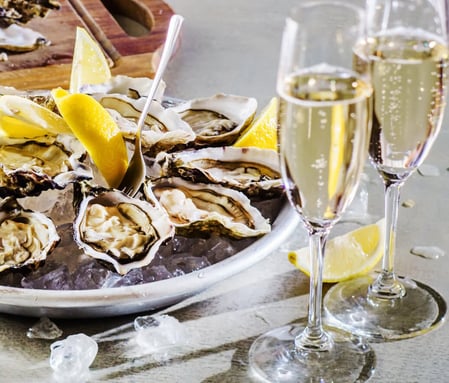 Champagne and oysters are a classic food pairing
Not just the world’s favourite party guest, Champagne is also a versatile partner for cuisine, matching naturally with a variety of dishes, ingredients and flavours. Champagne is well-known for complementing seafood of all kinds, but especially oysters, mussels and langoustines, where the elegant, citrus character is the perfect counterpoint. It also excels alongside meat dishes: try a heavier Blanc de Noirs-style Champagne alongside game for a pairing with complexity and character.
But remember, too, that Champagne doesn’t have to be the preserve of high society and haute cuisine. Try pairing a flute with traditional fish and chips: you’ll be amazed how the clean, refreshing acidity of the Champagne perfectly cuts through the fattiness of the fried food.
Did you know?
- a Champagne cork can reach up to 40mph when popped
- there are approximately 50 million bubbles in a 75cl bottle of Champagne
- Marilyn Monroe reputedly once took a bath using 350 bottles of Champagne
Typical Character and Style of Champagne
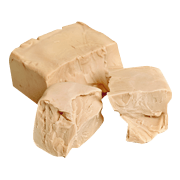 Yeast
Yeast 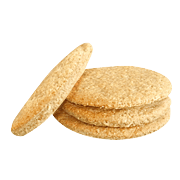 Biscuits
 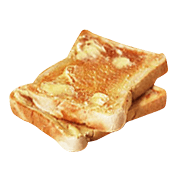 Toast
Toast 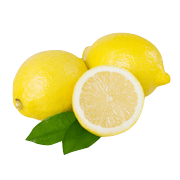 Lemon
Lemon
Filter By
Price Range
Category
Country
Region
Producer
Grape Variety
Age
Vintage
Type
Style
Size
Certification
Sustainability
Food Pairing

Larmandier-Bernier BdB Extra Brut Vieille Vigne du Levant 2014
£199

Agrapart & Fils Venus Grand Cru 2017 Brut Nature Champagne
£250

Piper Heidsieck Coteaux Champenois Blanc de Noir Ay 2022
£68.95

Bereche & Fils Les Beaux Regards 1er Cru Extra Brut 2020
£103

Philipponnat Clos des Goisses 2014 Champagne
£315

Palmer & Co La Réserve Nature Champagne
£56.75

Perrier-Jouet Belle Epoque Blanc de Blancs 2014
£375

Henriot Cuvée Hemera 2013 Champagne
£150

Perrier-Jouët Belle Epoque Rose 2012 ChampagneMagnum
£605

Bollinger Vieilles Vignes Francaises 2014
£1,695

Perrier-Jouët Belle Epoque Rosé 2014 ChampagneFormafantasma Cocoon Gift Box
£256


Laurent-Perrier Rose NVMr & Mr Tin
£81.95

Laurent-Perrier Rose NVBest Mum Tin
£81.95

Laurent-Perrier Rose NVHappy Christmas Tin
£81.95

Chapel Down Kit's Coty Coeur De Cuvee 2016
£120

Champagne Guenin Effloraison
£43.95

Champagne Guenin Liliale Blanc de Blanc
£48.95

Elemart Robion Petit Meslier 2019 Champagne
£91.95

Lelarge-Pugeot Les Meuniers de Clémence 2016
£66.95

Collet Brut 1er Cru 2016 Champagne
£52.75

Helene Beaugrand Le Rose Henriette Champagne
£68.95

Helene Beaugrand Le Grand Carree ChampagneBrut Nature BdB
£61.95

Bruno Paillard Nec Plus Ultra Rose 2008 Champagne
£274

Bruno Paillard Nec Plus Ultra 2009 Champagne
£224

Bruno Paillard Blanc de Blancs Gourmand 2014 Champagne
£97.95

Bruno Paillard 2015 Élan Vintage Brut Champagne
£90.25

Andre Jacquart Le Mesnil Grand Cru Blanc de Blancs 2012
£145

Champagne Vouette et Sorbee Textures 2020
£113

Aurelien Suenen La Cocluette Oiry Grand Cru 2016
£210

Mouzon-Leroux Champagne Verzy Grand Cru L’Ascendant Solera NV Champagne
£68.50

Laurent Perrier Heritage Brut NV
£71.75

Perrier-Jouët Belle Epoque Champagne 2012Magnum
£411

Hoffmann & Rathbone Classic Cuvee 2015
£53.50

Roland Champion Grand Eclate 2016 Grand Cru Blanc de Blancs Champagne
£51.25

Mumm RSRV Cuvee Lalou 2013 Champagne
£140

Champagne Telmont Reserve de la Terre
£69.95

Rathfinny Estate Blanc de Blancs 2019
£42.95

Billecart-Salmon Cuvee Louis Salmon Blanc de Blancs 2012 ChampagneMagnum
£288

Billecart-Salmon Elisabeth Salmon Rose 2012Gift Box
£407

Billecart-Salmon Elisabeth Salmon Rose 2012 ChampagneMagnum
£353

Billecart-Salmon Cuvee Louis Salmon Blanc de Blancs 2012 Champagne
£144

Drappier Millésime Exception 2018 Champagne
£71.25

Pol Roger Brut Vintage 2018 ChampagneMagnum
£199

Laurent-Perrier Alexandra Rose 2012 ChampagneMagnum
£765

Laurent-Perrier 2015 Vintage ChampagneMagnum
£171

Laurent-Perrier Alexandra Rose 2012 ChampagneGift Box
£382

Laurent-Perrier Alexandra Rose 2012 Champagne
£347

Adrien Renoir Le Cepage Verzy Grand Cru Champagne
£66.75

Girard-Bonnet A Mi Chemin Grand Cru Champagne
£59.95

Emilien Alloucherry La Scene 2019 Champagne
£54.75

Legras & Haas Les Saillons 2015 Champagne
£92.95

Billecart-Salmon Elisabeth Salmon Rose 2009Gift Box
£190

Champagne Deutz Brut 2016
£68.25

Champagne Coessens Largillier Les Sens Boises 2017
£86.50

Alwin & Stefanie Jurtschitsch Brut Nature 2017
£32.95

Perrier-Jouët 2014 Belle Epoque Rosé
£256

Dom Ruinart Rosé 2007 Champagne
£280

Dom Perignon 2008 Rose Champagne Luminous Magnum
£1,110

Porte Noire Petite Porte Rose NV Champagne
£49.95

Champagne Bonnet Gilmert La Reserve Grand Cru Blanc de Blancs Oger NV
£51.75