


 United States — would you like to set this as your default country of delivery?


 Trade
Trade  Shops & Events
  Customer Service
 A Complete Guide to Gin: History and Styles
All you need to know about gin, including its history, its use in cocktails, and a guide to its stylistic variations, from London Dry to Old Tom and more

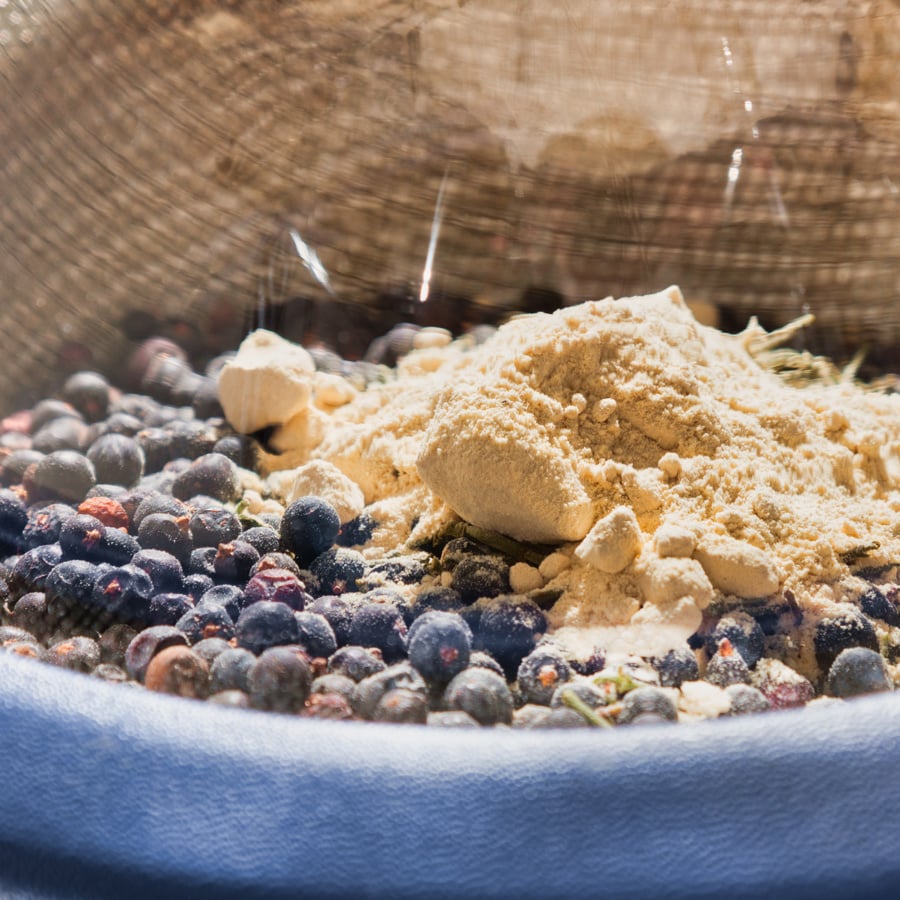
Juniper and other botanicals ready for distillation
Gordon - stock.adobe.com
In general terms, gin is a neutral spirit flavoured by maceration or distillation, made to a minimum ABV of 37.5%, but with many offshoots and variants – some notional, and some governed by regulation.
While gin is often seen as England’s traditional spirit, its origins lie in Europe – more specifically in the Netherlands and Belgium. The key ingredient of gin – juniper – has been used to flavour spirits almost since the invention of distillation, both for its perceived medicinal qualities as well as its flavour. But it’s only since the 17th century that the roots of modern gin as we know it started to appear.
Jenever and the history of gin
The invention of jenever, or genever – otherwise known as Dutch gin – is often attributed to the noted physician Franciscus Sylvius in the early to mid-1600s. However, gin’s modern history really began when it crossed the English Channel, becoming well known in Britain after William of Orange took the English throne in 1688. Due to low taxation, locally produced gin was cheap to make and thus cheap to buy. For better or worse, gin’s popularity exploded.
This was the time of the first gin craze. More than half of London’s drinking establishments were gin shops, and the wave of over-consumption and extreme drunkenness provoked inevitable outrage from the general public and government – Hogarth’s famed diptych of Gin Lane and Beer Street, showing the perils of drinking gin as opposed to the joy of drinking beer, was in direct response. Parliament reacted by passing various laws to help control the drinking and production of gin – including the Gin Act of 1751, which banned small-scale gin production in the UK – and by the 1850s, the excess had eased.
Gin continued to be a popular drink in Britain but also spread with the British Empire, and then beyond, to all corners of the globe. Today, many gins are tailored to the taste of the localities where the spirit is consumed, leading to a wide range of styles, flavours and ingredients, from the traditional to the ultra-modern.
Gin in cocktails
While gin can certainly be sipped, gin is one of the few spirits that drinkers enjoy almost exclusively in cocktails and mixed drinks. One of the spirit’s most notable moments was its introduction to India and the Subcontinent during British rule in the 1800s, where the Gin & Tonic was born. Indian tonic water – a bitter-flavoured and sweetened carbonated water – made the ideal partner to gin in the classic long drink that has flourished to this day, refreshing in the relatively hot climate, and with the bitter quinine that provides much of its flavour said to effectively ward against malaria, which gave the mixer its name.
In the early 1900s, and particularly during and post-Prohibition, gin also became the cornerstone of many classic cocktails of the era. Old Tom was the traditional spirit alongside sweet vermouth and maraschino liqueur in the Martinez, which was the precursor to the classic Martini, a stirred cocktail made with London Dry gin (or vodka) and a small amount of dry vermouth. Gin – usually London Dry – is also the base spirit for classic cocktails of this golden era in cocktail-making, including the Negroni and the Gimlet, among many more.
Gin in the modern era
While the largest and most recognisable gin brands have been distilling for decades, the 2000s catapulted the spirit into the forefront of drinkers' minds. 2008 saw the Gin Act repealed (meaning producers could distil their spirit in any size of still) and new regulation in the EU that sought to regulate its naming conventions. That created room for boutique gin ‘micro-distilleries’ using relatively small stills, and the floodgates were opened.
Mainstream British distilleries including Bombay Sapphire and Hendrick’s had previously pioneered premium and specialised gin categories, but following the repeal of the Gin Act, and spearheaded by Herefordshire distillery Chase in 2008 and London’s Sipsmith in 2009, the so-called ‘craft gin’ movement saw an increasing number of new brands producing gin in small batches. Many of them were made according to the classic London Dry blueprint, but some of them in idiosyncratic styles, leaning on particular ingredients, which fell outside of named distinctions.
Because of the speed at which it’s possible to distil and bottle gin and the relatively small scale needed to produce the spirit, many of these new craft gin brands sprang up very quickly. In 2008, there were only 12 individual gin distilleries in the UK; fast-forward to today and there are in the region of 800. And while England is still the epicentre of gin production, there are now innumerable gin distilleries across the world, too, from the USA to Australia, India, Kenya and beyond.
While many gin brands large and small are produced on-site at a named distillery with a visitor’s centre, many of the newer gin brands were contract-distilled – created according to a producer’s recipe in a separate existing distillery. Indeed, many of the gin brands on the market won’t list a distillery location, in which case it’s likely to have been distilled for them elsewhere. Far from being a mark of a lack of quality, many of the best-reviewed and most highly rated gin brands are made by experts in large distilleries, and like in tequila, one large gin distillery can produce spirit for large numbers of brands. If a gin brand has its own distillery, though, it will likely be obvious.

How is gin made?
Simplicity is part of the beauty of gin. But it’s worth knowing about the two key production categories, and how these impact on the gin in your glass.
Compounded gin
Compounded gin is made by flavouring neutral spirit without redistilling it, either using actual botanicals or by adding natural extracts. Many cheaper brands of gin are made using this method, but there are also a range of excellent gins within the category, produced by macerating whole botanicals to produce high-quality spirit.
Distilled gin
Distilled gin is made by redistilling spirit that has had botanicals added to it, with the option of adding flavourings after distillation as well. London Dry Gin is a stricter version, which also forbids the addition of anything but water after distillation. While a spirit must have, according to most regulations around the world, a predominant flavour of juniper in order to be called gin, the rest of the ingredients are left up to the producer.
There are certain botanicals that are very common in gin, including orris and angelica root, orange and lemon peel (both fresh and dried), liquorice, anise and cardamom. But as gin’s popularity has exploded since the turn of the millennium, gin producers have started looking further afield. Grains of paradise, green tea, cubeb, honey, hops, exotic fruit and even ants have all appeared, each contributing to a gin’s unique flavour profile and distinguishing each bottle from the rest of the field.
Types of gin
Categorising gin can be tricky, because aside from the use of juniper as the key botanical – a non-negotiable across any gin category – most of the category is not governed by strict regulation, as is the case with many other spirits, and different styles are generally distinguished by broader stylistic themes.
London Dry gin
The most hard and fast of all the gin categories, London Dry is, as stated above, a style based around a few requirements: notably being a distilled gin, high in juniper, using only natural botanicals for flavour, and with only water allowed to be added after distillation. If anything else is added, the product can’t be called London Dry.
Despite the name, though, London Dry doesn’t have to be made in London; it can be – and is – produced anywhere in the world, but the world’s largest brands still tend to come from the UK. This is unarguably the most celebrated style of gin, with the majority of the flagship bottlings from the world’s largest and best-known gin brands being marked London Dry, including Beefeater, Tanqueray, Bombay Sapphire and Gordon’s, as well as newer and relaunched brands including Sipsmith, No. 3, Whitley Neill and Portobello Road.
Old Tom gin
Another historic style, Old Tom was named for the signs of black cats often found outside gin parlours in London in the 1800s. Usually slightly sweetened, it also commonly includes liquorice as a main botanical (which can give an impression of sweetness), and is the specified gin for the traditional Martinez cocktail. Plymouth Gin Formerly the only category regulated by a PGI (protected geographical indicator), Plymouth is made in the town of Plymouth in England, and is broadly similar to London Dry, but with more emphasis on the earthier botanicals. The Plymouth Gin Distillery was first founded in 1431, and has been distilling gin since 1793.
Navy Strength gin
Tracing its roots back to seafaring days, Navy Strength gin is produced to a significantly higher proof than most gins, usually a minimum of 57%, with the story going that this was the strength that would ignite gunpowder on a ship. Today, Navy Strength gins are loved by many gin drinkers for their punchy texture and flavour, especially when used in cocktails.
Pink gin and flavoured gins
The original Pink Gin was not a style but a cocktail, which was traditionally Plymouth or London Dry gin mixed with sugar water over a few dashes of Angostura bitters, which turned it pink. However, in the modern era, pink gin tends to refer to gins flavoured after distillation with syrup from pink or red fruits, with no set definition.
Likewise, flavoured gins refer to any gins that have flavour (and often sweetness) added after distillation, with a huge gamut of flavours available.
Coastal gin
While not specifically a named style, dry gins describing themselves as coastal have been rising in popularity in recent years. Made in distilleries in England, Scotland and further afield close to the sea, they tend to include more savoury botanicals, including seaweed, for a saline flavour profile reminiscent of their surroundings.
Mediterranean gin
Another style with no regulation or strict definition, these gins tend to lean on Mediterranean flavours like olive, sage, rosemary and lemon zest. Gins like Gin Mare are a great example, while Sipsmith’s Mediterranean Gin is well thought of, and even something made far from Europe – like Four Pillars' Olive Leaf Gin – could be said to fit into this style.
American gin
While the gins that formed the basis of the classic drinks of the golden age of the cocktail tended to come from the UK, the gin boom of the 2000s also prompted distillers in the USA to experiment with gin-making, with Aviation a notable success story. Unlike in the UK and the EU, where gin can be a minimum of 37.5% and only made with neutral spirit, American gin has to be at least 40% ABV, and can be made from any base spirit.
Cask-aged gin
As it sounds, this style takes many of the aforementioned styles of gin and adds cask ageing into the mix, matured for an amount of time in wooden casks or barrels (with some using woodchips for a similar effect). As with dark spirits, this can add extra colour and flavour to the spirit.
How to drink gin
Generally speaking, gins are made for mixing, and the norm is to do that either via a classic Gin & Tonic, or a Gin Martini. Flavoured gins will tend to be best mixed with tonic, or occasionally in bespoke cocktails that make use of their flavour elements. If using a London Dry or other dry gin, a Martini or a Gimlet can be a brilliant way to emphasise some of its flavour components. Elsewhere, feel free to sub in your choice of dry gin into other cocktails like the Negroni, with the botanicals in something like a coastal or Mediterranean gin adding subtle differentiation in flavour and character.