


 United States — would you like to set this as your default country of delivery?


 Trade
Trade  Shops & Events
  Customer Service
 A Comprehensive Guide to Scotch Whisky Categories
The world’s best known region for whisky, Scotland is home to big-hitting brands and tiny operations alike, across both single malt and blended versions of the spirit, with a long history of distilling across its distinct styles and regions

The Whisky Exchange
When you pick up a bottle of Scotch whisky, what you’re looking at is a distilled Scottish spirit made from grain and aged in oak casks. From humble ingredients – that’s cereals, water, yeast and oak – comes arguably the most diverse and complex drink in the world. Across Scotland, there are more than 150 distilleries, each of which handles these basic elements slightly differently to create distinct types and styles of Scotch whisky.
On our shelves we have Scotch whiskies that taste like tropical fruit and vanilla, others that remind us of sultanas, chocolate and spices and even some that carry notes of seaweed, bonfires and stone. While it might sound impossible for one drink be capable of showing so many different flavours, it’s all down to the way Scotch whisky is made. Whatever your tastes, there’s a bottle that’s perfect for you.
Scotch whisky: origins and production
The precursors to modern Scotch were grain spirits made using small pot stills and often flavoured with honey and botanicals. Though they were quite different from their modern counterparts, this uisge beatha (which translates to ‘water of life’) laid the groundwork for everything that came after. Such spirits were a part of life in Scotland as far back as the 15th century and likely long before that.
Scotch whisky regions
The whisky map of Scotland is divided into six distinct regions: Highlands, Lowlands, Speyside, Campbeltown, Islay and the Islands (officially classified as a sub-region of the Highlands, but often thought of as a category with its own style).
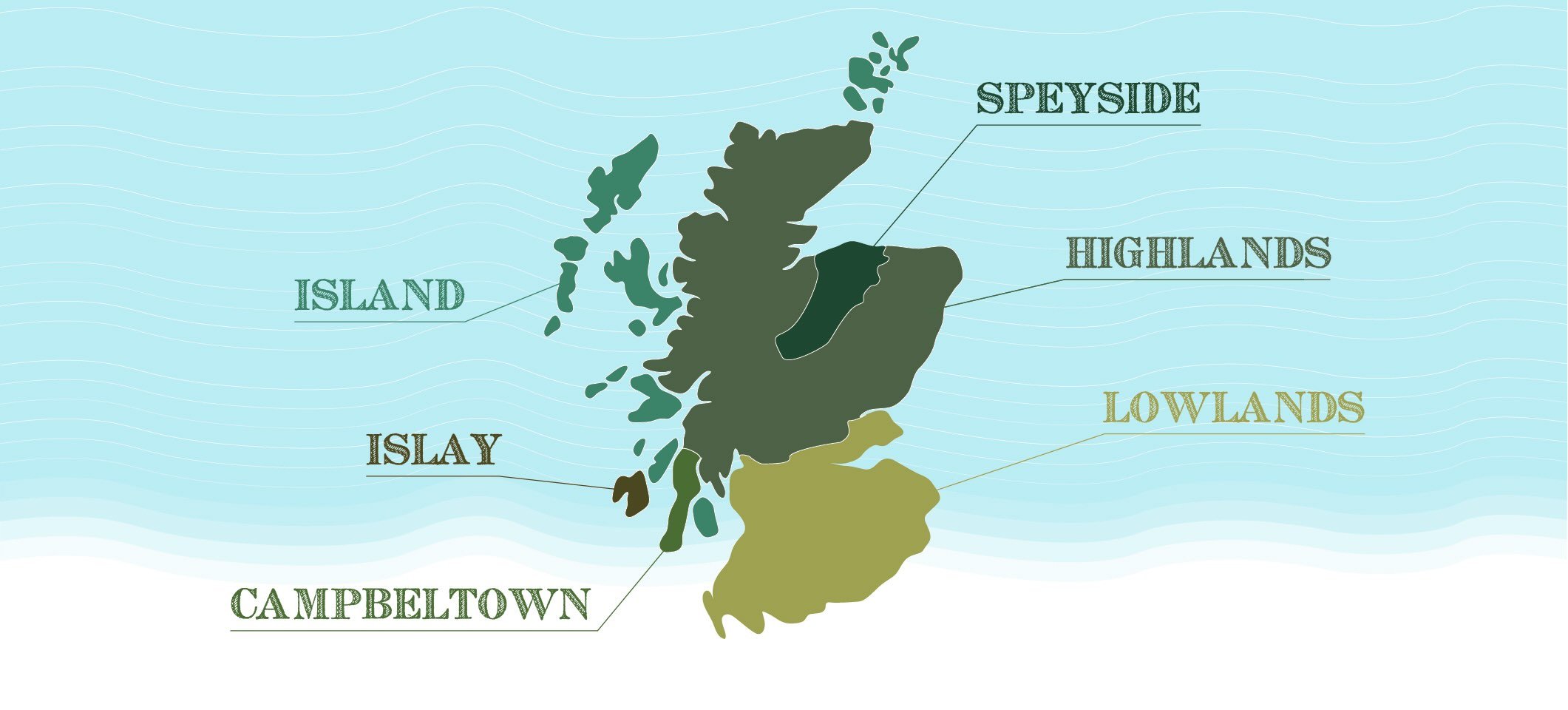
Each is associated with a certain generalised style: Highland single malts are often typed as robust and full-flavoured and Speysiders as fruity and luxurious. The Islands and Islay are strongly associated with coastal and often smoky drams. Campbeltown, the smallest region, is known for old-fashioned and idiosyncratic whiskies.
However, the truth is that the character of a whisky is much more influenced by how it’s made than where it’s made. There are elegant, unpeated whiskies from the islands and smoky whiskies from Speyside. The regions give us a way to navigate the whisky world, but they’re not definitive when it comes to flavour.
Types of Scotch whisky
Single malt Scotch whisky
If a producer follows all the steps detailed above then they will have single malt Scotch whisky. But, there are a few key things that define this type of whisky in the eyes of the law. It must be made exclusively from malted barley, distilled in a pot still, and created at only one distillery (but it may, and almost always is, a blend of malt whiskies from that distillery). The final ABV of the spirit cannot be less than 40% and nothing can be added except water and flavourless caramel colouring.
Read more in our guide to single malt whisky here
Grain whisky
Born in the heat of the industrial revolution, grain whisky was a monumental development. Because it is made using column stills (which can run continuously) rather than pot stills (which can only distil in batches) it allowed for whisky to be produced on a larger scale than ever before.
Today, they are usually made from wheat or corn, but a proportion of malted barley will often feature to aid fermentation. As columns can be used to make spirit of much higher purity they tend to be lighter in flavour than malt whiskies. Almost all grain whiskies are combined with malt whiskies to create blended whiskies – more on that in a moment. However, some are bottled as single grain Scotch whisky, or combined with other grain whiskies to make blended grain Scotch whisky.
Blended Scotch whisky
By combining efficiently produced grain whiskies with a range of more strongly flavoured malt whiskies, producers are able to create consistent mass-produced blends. It was this style that earned Scotch whisky fame around the world and made brands like Johnnie Walker and Chivas Regal household names. Though they’re far less likely to offer a sense of distillery character than single malt, blended whiskies are capable of delivering layers of different flavours. Today, blended whisky is by far the most consumed style of Scotch the world over, accounting for at least 85% of all sales internationally.
Read more in our guide to blended whisky here
Blended malt whisky
This slightly more unusual style is made by marrying together malt whiskies of different origins. If even a teaspoon of malt whisky from a second distillery is added to a cask of single malt it immediately becomes a blended malt. As blended malts don’t contain any lighter grain whiskies, they have the potential to deliver great complexity. In recent years, many older blended malts have made their way to our shelves, providing the opportunity to taste very mature whiskies at a fraction of the cost of a single malt of equivalent age. It is a lesser seen but very interesting style of Scotch whisky.
Peated whisky
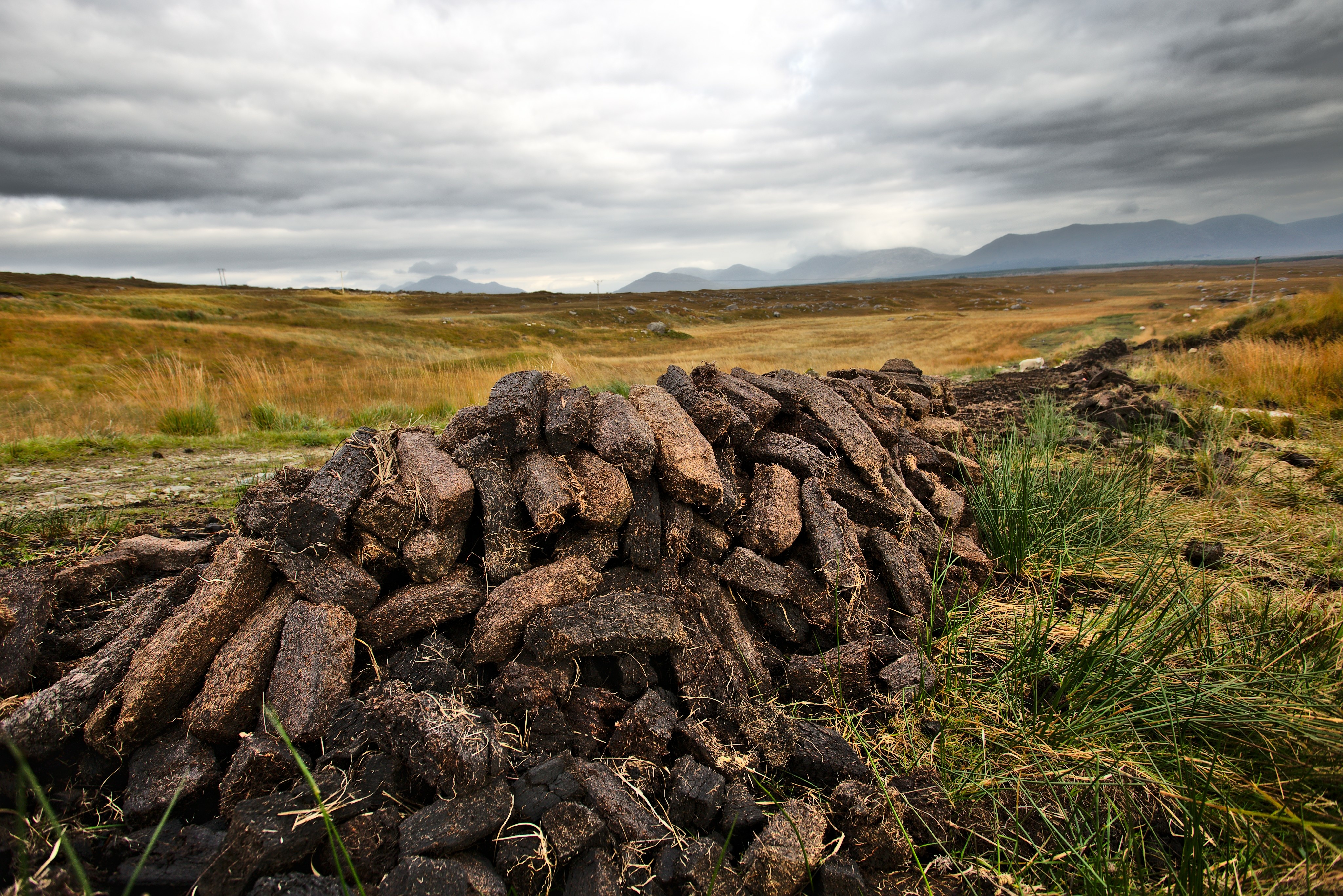
If you taste smoke in a whisky, it’s almost certain that it was made with at least some peated malt. Peat is partly decomposed organic matter that forms in certain areas and be cut, dried and burned as fuel. It was a traditional source of heat in Scotland, especially where coal and firewood were scarce, for generations. When its used to dry barley after malting, it imparts a smoky flavour that carries through into the mature whisky.
How to drink Scotch whisky
If you want to really unpick all the nuances in a whisky, then drinking it neat, from a tulip shaped tasting glass is the way to go. You can always add a little water to adjust the ABV slightly, you might be surprised by how much this can bring out new flavours for you to experience.
That said, there’s no right or wrong way to drink Scotch whisky. Over ice, served long with ice and soda water in a Whisky Highball, in cocktails, with a beer on the side – as long as you enjoy it (and enjoy in moderation) you can’t go wrong.