


 United States — would you like to set this as your default country of delivery?


 Trade
Trade  Shops & Events
  Customer Service
 How Is Champagne Made? A Guide to the Sparkling Wine
Everything you need to know about the world’s favourite sparkling wine, from the vineyard to the glass

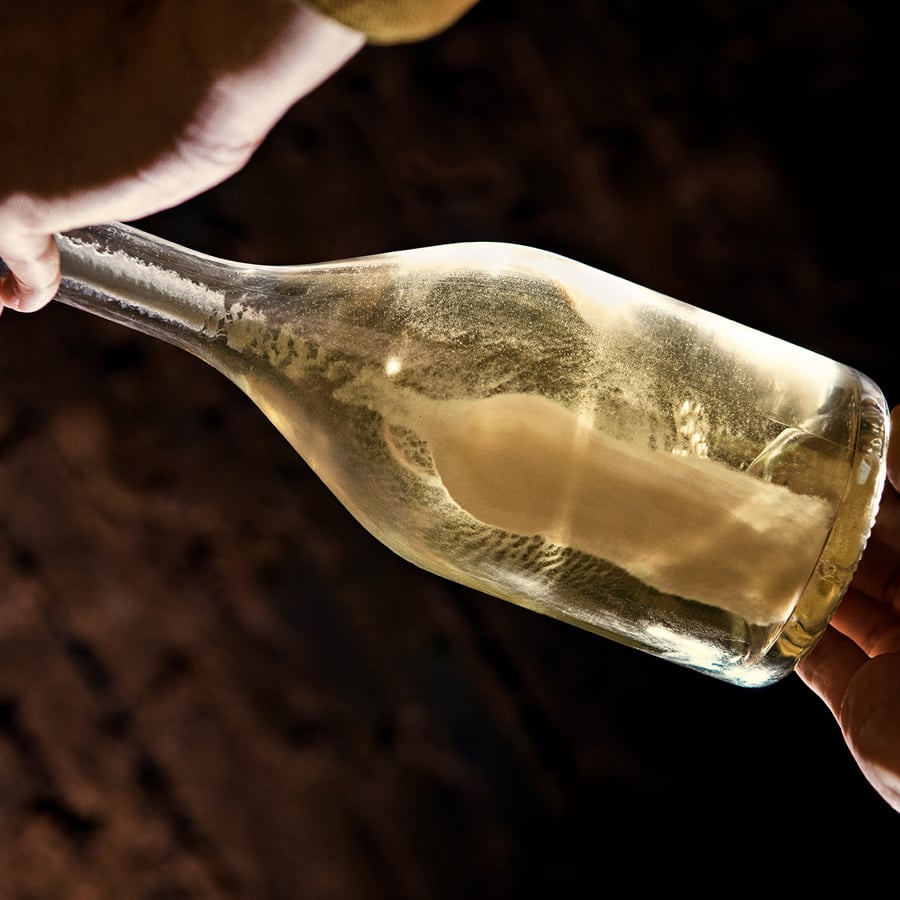
Champagne ageing on the lees
For centuries, Champagne has been synonymous with celebration. Even today, when quality sparkling wine is being produced around the world, it retains its reputation as the very best. This is largely due to the fact that Champagne is made to exacting standards, using methods dating back to the 18th century.
Champagne takes its name from the region of north-east France where the oldest house, Ruinart, began production in 1729. By definition, Champagne can only come from Champagne, as this wine is regulated under an appellation d'origine contrôlée (or AOC), which strictly defines the origins of certain foods and drinks. Overall, there are more than 100 prominent Champagne houses, but more than 19,000 individual producers growing grapes and producing Champagne, usually under a family name.
The fact that the world’s favourite sparkling wine comes from this place is no coincidence. The combination of climate, landscape and soil – a set of factors known as terroir – are perfect for making sparkling wine. Low chalk hills and a cooling coastal influence allow grapes to achieve the barest minimum of ripeness. This makes them suited to creating fresh, acidic wines that the ideal base for sparkling wines.
The grapes of Champagne
There are three main grape varieties in Champagne: Chardonnay, Pinot Noir and Pinot Meunier. Chardonnay is a white grape, while the two Pinots are both black-skinned. These three are often used together and each brings their own character to a blend. Chardonnay is structured but can be delicate, with notes of flowers, vanilla and honey; Pinot Noir is earthier, rootier and more rounded; and Pinot Meunier adds fresh, appley notes.
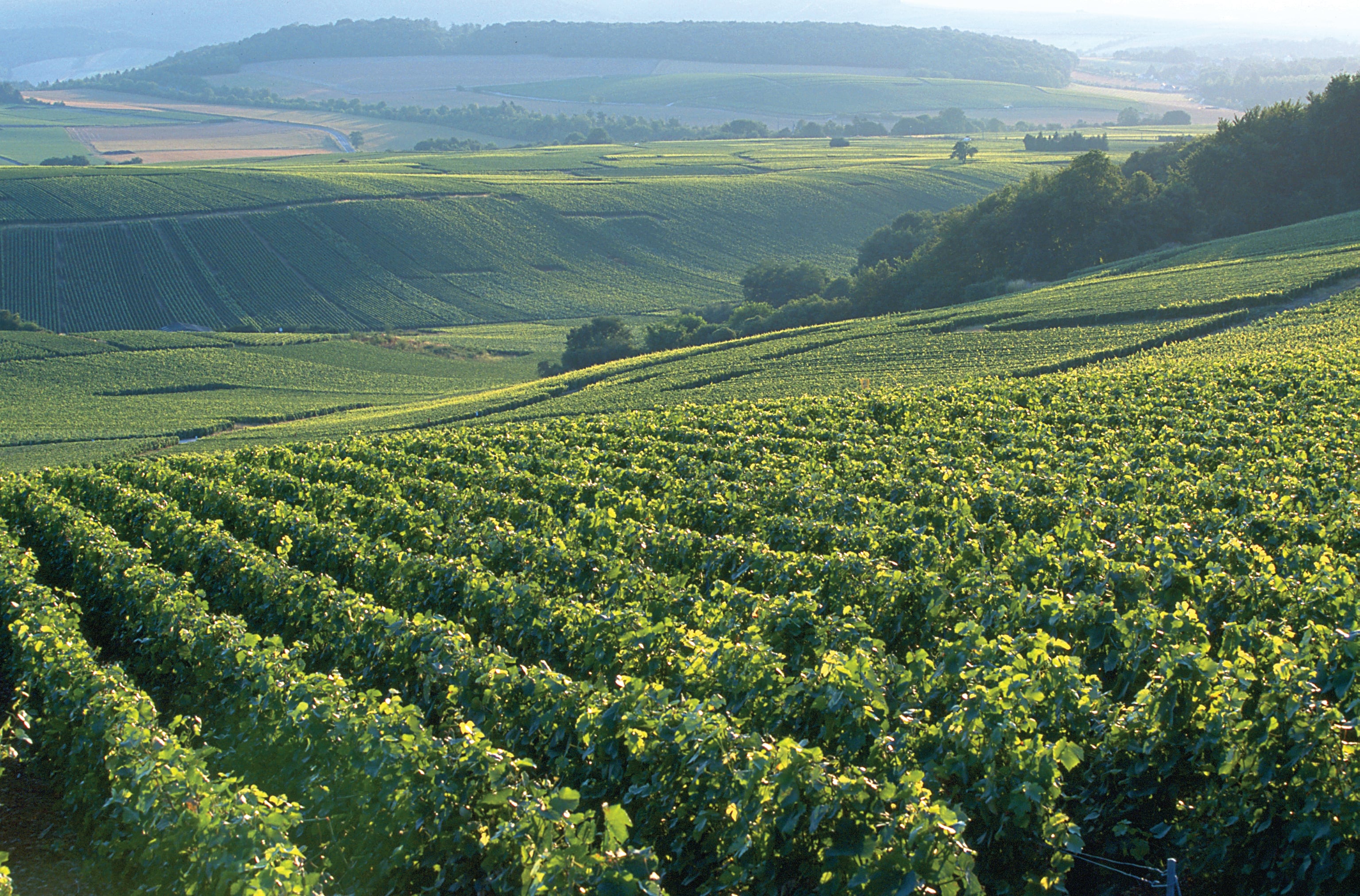
The differences between them are more obvious when drinking a Blanc de Blancs (made only with white grapes, usually Chardonnay) or a Blanc de Noirs (made with black grapes).
Interestingly, while one or a combination of the aforementioned three grapes make up the vast majority of Champagne (around 99%, in fact), there are a few more permitted by the rules of the Champagne AOC – namely Arbane, Petit Meslier, Pinot Blanc and Pinot Gris. The biggest brands tend to stick to the traditional trio, but occasionally you’ll find one or more of the lesser-known Champagne grapes in the blend, especially from grower Champagnes.
How is Champagne made?
After harvesting grapes are pressed to extract their juice, or ‘must’. This highly acidic grape juice is then transferred to stainless steel or oak containers to ferment, converting its sugars into alcohol. The choice to vinify in oak or steel can greatly impact the character of the finished Champagne, causing it to accumulate toasty wood notes or potentially retaining a cleaner expression of fruit and terroir. Once the fermentation is complete, we’re left with a base wine of about 8% ABV known as vins clairs – not particularly good to drink at this point, but the perfect starting point for what comes next.
The chef de cave (or cellar master) of a Champagne house will blend vins clairs together, often supporting the wine from one harvest with reserve wines – stocks of vins clairs from previous vintages – to achieve consistency. However, in years when conditions have been especially favourable, they may choose to use wine from a single harvest to make vintage Champagne (more on that later).
When the time is right, base wine is put into individual bottles with a little extra sugar (known as liqueur de tirage) and yeast, so that the wine can undergo a secondary fermentation. These bottles are then sealed with a crown cap – just like a bottle of beer – and laid down in deep, cool cellars cut into the chalky soils of the Champagne region. Very slowly, the yeast ferments the sugar, producing alcohol and carbon dioxide. Since the bottle is sealed, the CO2 has nowhere to go and is forced into the wine.
This is known as the Champagne method, or methode champenoise. While this technique is used by producers in many regions outside of Champagne, they will always refer to by a different name, usually ‘the traditional method’ or methode traditionnelle.
This secondary fermentation leaves yeasty sediment, called the lees, which imparts extra flavour as the Champagne ages. Throughout secondary fermentation and the ageing process, bottles are kept facing slightly downwards and regularly turned. More prestigious Champagnes will often have spent many years ageing on the lees, accumulating rich notes of brioche and toasted nuts.
Dosage: dry or sweet Champagne
After at least twelve months on the lees (but usually far longer), the Champagne is ready to be disgorged. The bottle is upended so the sediment settles in the bottle’s neck. The neck is then frozen, and the cap removed. The pressure of the CO2 in the wine then fires out the frozen sediment, leaving us with perfectly clear champagne. Before the bottle is quickly resealed, the chef de cave will often add a little extra sugar to cut the wine’s bracing acidity – a practice called dosage.
The level of dosage ranges from absolutely nothing to as much as 50g at the high end. Brut nature champagne (which contains 3g of sugar or less) is an excellent aperitif, while sweeter styles including sec and demi-sec are well-suited to pairing with deserts.
The most widely seen style of Champagne is non-vintage brut: a blend of wines made in different years, with a sugar content of about 15g per litre. Nearly all houses will produce such a cuvee, with many considering it their flagship bottling. These include Moët & Chandon’s Brut Imperial or Bollinger’s Special Cuvée.
Ageing and vintage Champagne
A vintage (or millésime) Champagne reflects a single year in which the weather conditions have given rise to good grapes and great wine. Vintage Champagne is generally aged much longer on the lees and commands a higher price. Champagne producers won’t declare a vintage every year, but each harvest will still provide valuable reserve wines for the future.
Some houses also produce multi-vintage Champagnes. A little like non-vintage, these are made by combining wines from different years. But whereas non-vintage Champagnes tend to draw on reserve wines to express a consistent house style, these prestige cuvées showcase vintage wines in balance with one another. Ideally, this means that a single glass of Champagne can offer a harmonious blend of different vintage characteristics. A good example of this is Laurent-Perrier’s Grand Siècle.
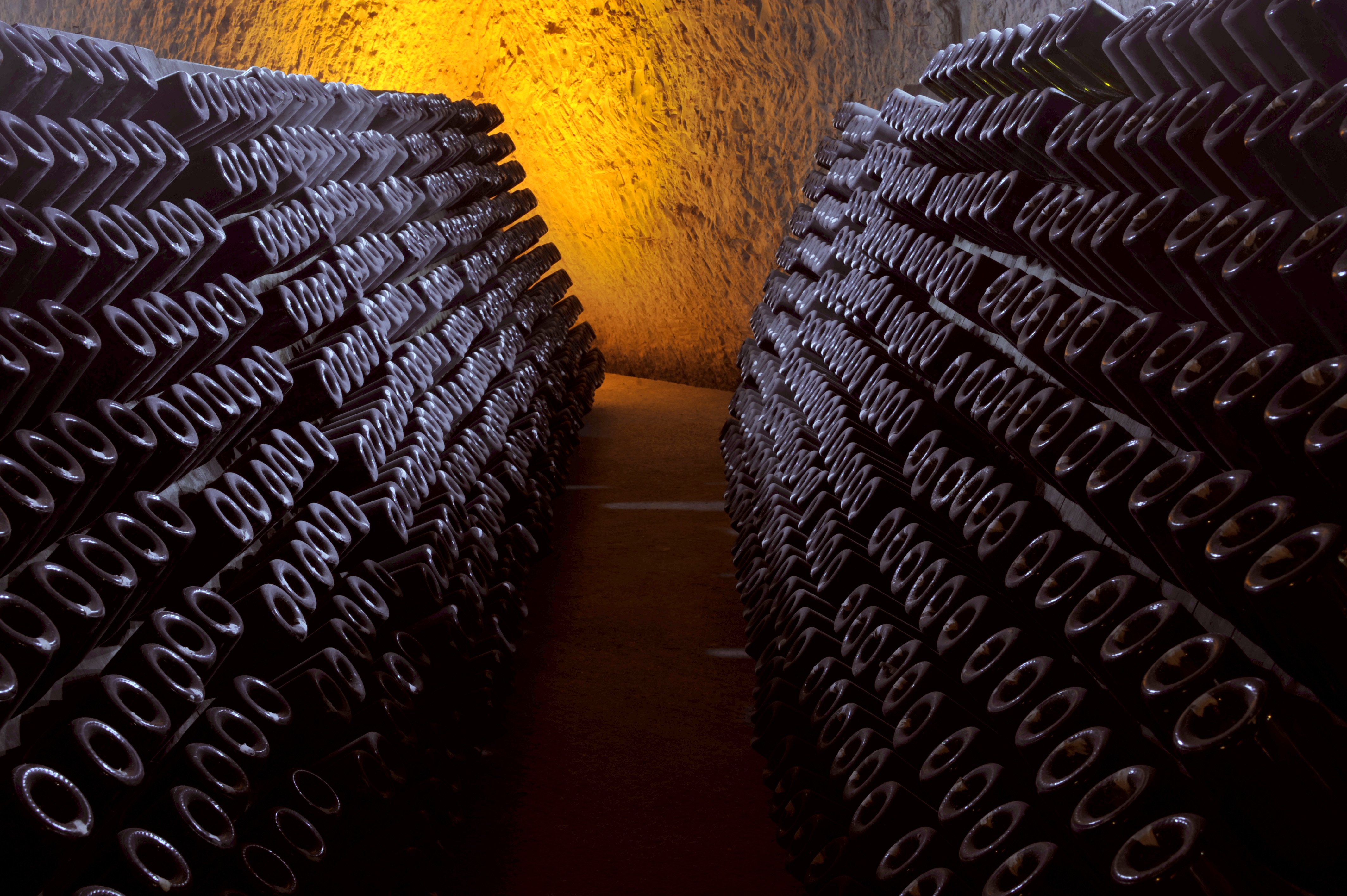
Generally speaking, only the finest Champagnes are suitable for long ageing in the bottle after release. Many of the best – especially in the vintage category – are sold as late-disgorged Champagnes, meaning they’ve been kept ageing on the lees for significantly longer than the average.
While many of these Champagnes will be ready to drink as soon as they’re bought, another benefit of longer lees ageing is that as well as developing flavour it also enhances the longevity of the wine. As a result, it’s possible for a vintage Champagne to age beautifully for decades after release, providing it’s kept in the right conditions. Great examples of late-disgorged Champagnes include Bollinger’s RD and Dom Pérignon’s Plénitude 2 and Plénitude 3 cuvées.
How is pink Champagne made?
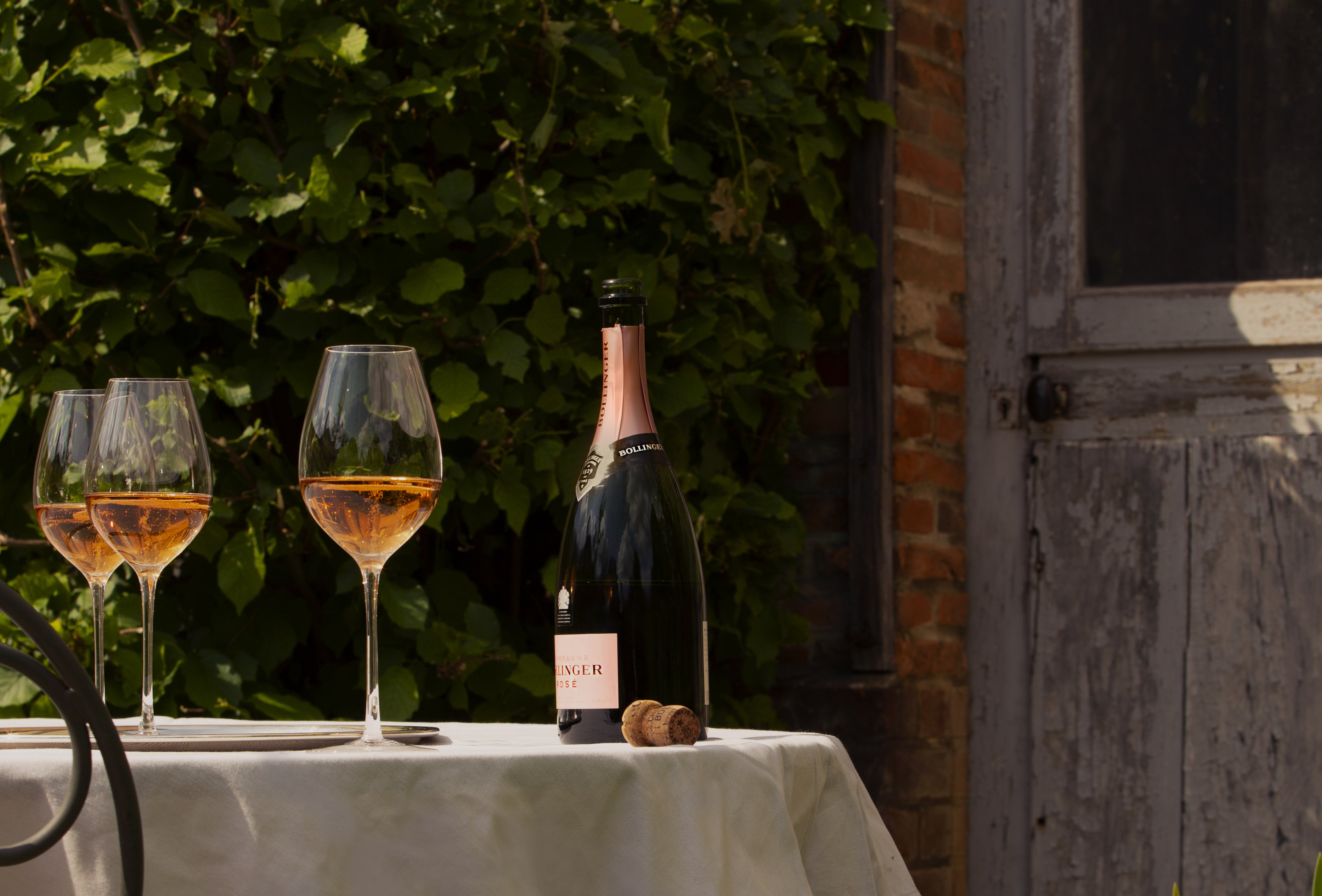
Rosé Champagnes are normally made by blending in a small quantity of red wine from the region with the white wines prior to secondary fermentation. Some producers favour the saignée method, used to make still rosé wines, in which wine from black grapes is left in contact with the skins for a short period. During this time, the wine will pick up colour, flavour and tannins that carry through secondary fermentation and ageing. Rosé Champagne is produced in a number of styles, from light, fresh cuvées to vintage offerings capable of long ageing in the bottle.
Where is Champagne made?
You’ll find vineyards throughout the whole of the Champagne region, which measures around 34,300 hectares. Within the region are five subregions, named Montagne de Reims, the Marne Valley, Côte des Blancs, Côtes de Sézanne, Côtes des Bar, and 319 named villages, or crus. The region’s largest city is Reims, which has been a historic centre of business for Champagne, and where many of the largest houses are headquartered. Other towns of note include Epernay and Ay – both also home to household names in Champagne.
Champagne made from the region’s best vineyards is labelled Premier Cru or, better still, Grand Cru. The most luxurious Champagnes are often released as prestige cuvées, which have no officially regulated set of definitions, but can be longer-aged, made from a smaller or higher-quality vineyards, made from only Grand Cru grapes, or a combination of the above. Examples include Louis Roederer’s Cristal and Veuve Clicquot’s La Grande Dame. Many are wines from a single vintage and are blended from the finest parcels of vines and the most successful wines of the year.
Grower Champagne and Grandes Marques
The Champagne business is dominated by 24 houses known as Grandes Marques, a group of longstanding producers, many of whom have been making wine in the region for centuries. Famous names with networks of growers, large stocks of reserve wines and an international reach, Grandes Marques produce Champagne in a variety of styles.
The full list of the Grandes Marques Champagne houses is: Ayala, Billecart-Salmon, Bollinger, Canard-Duchêne, Charles Heidsieck, Deutz, GH Mumm, Gosset, Heidsieck & Co Monopole, Joseph Perrier, Krug, Lanson, Laurent-Perrier, Louis Roederer, Mercier, Moët & Chandon, Perrier-Jouët, Piper-Heidsieck, Pol Roger, Pommery, Ruinart, Salon, Taittinger and Veuve Clicquot.
Generally speaking, the biggest Champagne producers may own some of their own vineyards, but getting to the millions of bottles a year they produce cannot be achieved by their plots alone, so they enlist the help of négociants – grape growers and wine producers across the region grow grapes or to produce vins clairs to their specification (a model also common in Cognac production). Far from diminishing the quality of the blends, they make use of the experience of these négociants (many of which have been in the business for generations) in grape-growing or winemaking, and the expertise, or savoir-faire, they have in producing on their specific plots.
On the other end of the spectrum are small houses which own their own vineyards and make their own Champagne. These are typically known as grower Champagnes and are increasingly popular among enthusiasts looking for unusual styles and particular expressions of terroir. They are typically produced in small quantities and are often a good choice if you’re interested in organic or low-intervention winemaking.


