


 United States — would you like to set this as your default country of delivery?


 Trade
Trade  Shops & Events
  Customer Service
 A Guide to American Whiskey: Bourbon, Rye, and More
From classic Kentucky bourbon to rye whiskey, Tennessee whiskey and more, we chart the history and the modern identity of American whiskey distilling in its many styles and variations

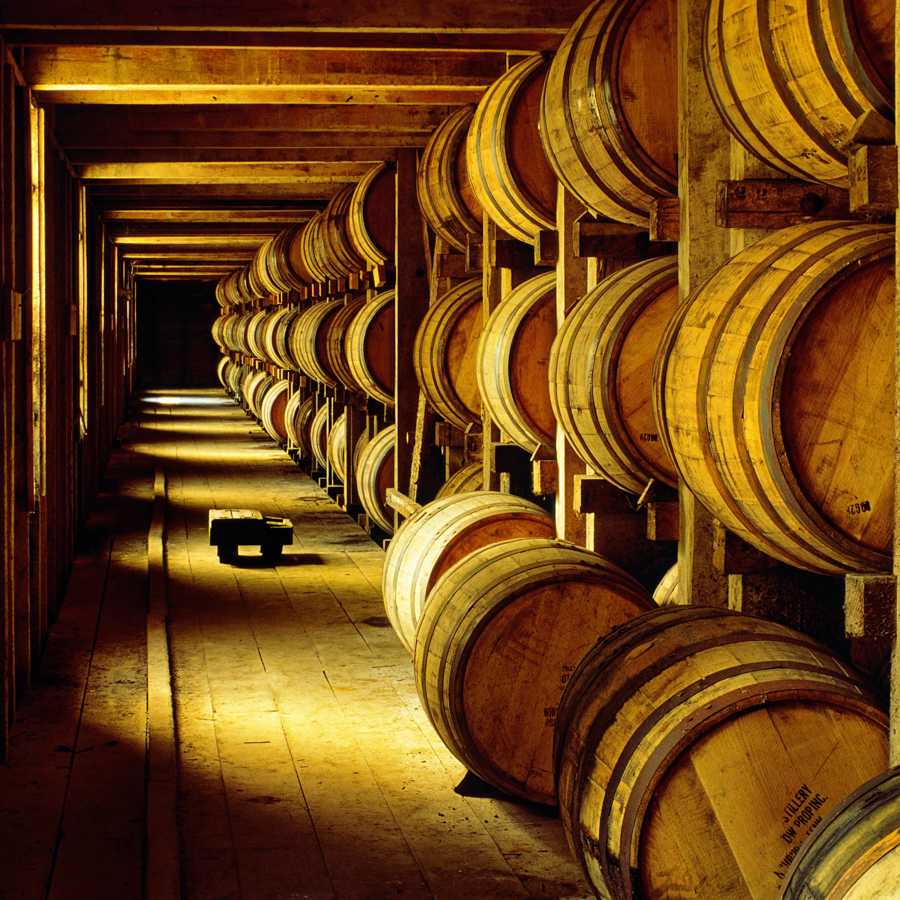
Barrels ageing at a distillery in Tennessee
David Matthew Lyons - stock.adobe.com
The United States is home to one of the largest and most vibrant whiskey cultures in the world. It produces distinct styles that evolved in the nation’s formative years and enjoyed today all over the world including bourbon and rye whiskey.
The origins of American whisky
Modern American whiskey can be traced back to the farm distillers of Ireland, Scotland and Germany, among others. Early settlers to cross the Atlantic scratched out a living by cultivating imported crops such as rye and barley, which took well to the land in what we know call Pennsylvania, New York and Maryland.
Some of these settlers arrived with their own stills and time-honoured techniques, enabling them to convert surplus grain into spirits, which were easier to store and trade. Thus, a proto American whiskey was born and quickly grew in prominence. This popularisation was further accelerated by the Revolutionary War, which cut Americans off from their former favourite drink – rum from British colonies in the Caribbean. From that point on, the fledgeling United States was a nation of whiskey drinkers.
Corn (also known in the UK as maize) would prove to be the star grain of American whiskey. The now ubiquitous grain was at first unfamiliar to Europeans, despite native peoples having cultivated it in the region since around 2,500 BCE. Originally used by the settlers to produce beer for clean drinking water, corn’s significance would grow over time. But initially at least, they added small amounts to their prototypical rye whiskies, which aided fermentation and rounded out the spicy character of the rye.
Inevitably, the settlers moved westwards, primarily from Virginia, North Carolina and Pennsylvania, where they discovered a rich, fertile land with the ability to grow maize – which we'll continue to refer to here as corn. The Virginia General Assembly enacted a law known as 'corn patch and cabin rights,' permitting settlers to lay claim to 400 acres of land if they constructed a cabin and cultivated corn. This helped to establish commodity agriculture in the region, settlers grew in number, and the state of Kentucky was born.
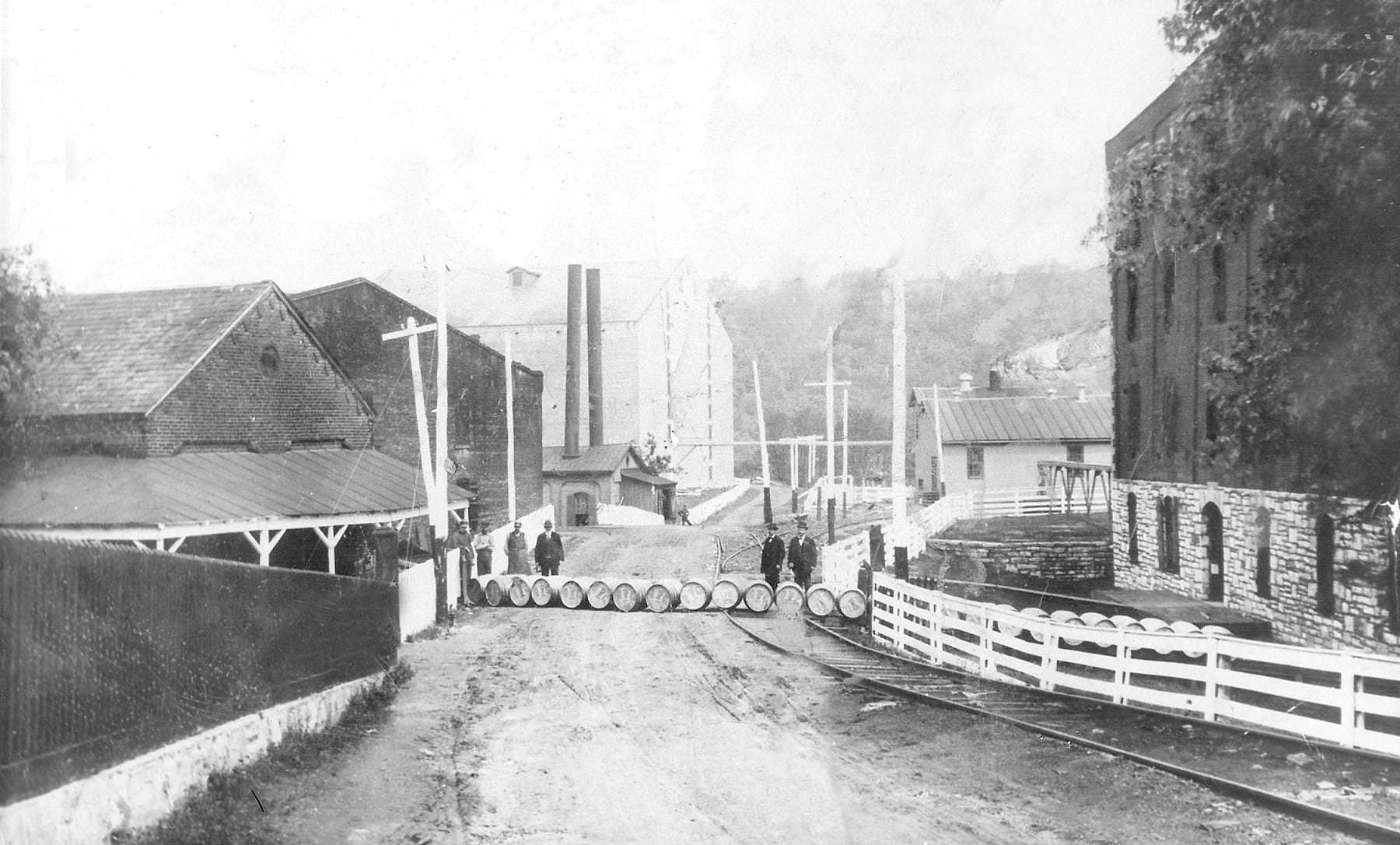
Today, Kentucky stands as the epicentre of American whiskey production and the birthplace of bourbon, but American whiskey is made across the country in many different styles.
American whiskey styles
Bourbon
Bourbon can be made throughout the U.S. and its mash bill (the specific combination of grains used in the whiskey) must be a minimum of 51% corn – often supplemented by a carefully considered ratio of wheat, rye and malted barley. It must be aged in new charred oak containers – this is usually in a 200-litre barrel, but there is technically no limit on the size. The spirit must be distilled to no more than 80% ABV and entered into the cask at no more than 62.5% ABV.
While bourbon is most frequently associated with the state of Kentucky – and the vast majority of bourbon is produced in the Bluegrass State – whiskey made anywhere in the USA can be called bourbon if it conforms to the above regulations. Bourbon is the whiskey of choice in many classic cocktails, most notably the Old Fashioned, Whisky Sour and Mint Julep.
Straight bourbon and bonded whiskey
If a bourbon is sold as straight bourbon this means that it has been aged for a minimum of two years. Any straight whiskey that has been matured for less than four years must state its age on the label. This is a rule meant to incentivise producers to hit a slightly higher age and, broadly speaking, denotes quality. You will also see the term ‘bonded’ on the labels of American whiskies, which means that they have been aged for a minimum of four years in a government bonded warehouse and bottled at not less than 50% ABV.
American rye whiskey
Rye whiskey is all about rich spice, power, structure and a distinctive herbal finish. It must have a mash bill of at least 51% rye. If aged for at least two years in new charred oak barrels and bottled at not less than 50% ABV, it earns the name ‘straight rye’ – a sign of quality. Rye whiskey is the spirit of choice in many classic cocktails including the Sazerac (which it shares with Cognac) and the Manhattan.
American single malt whiskey
American single malt may have only gained a formal legal definition in 2025, but it’s a style that has existed for a while and a category that has always shown remarkable diversity. Distilled from 100% malted barley at a single distillery, it draws on traditions from both sides of the Atlantic. Some producers lean into pot stills and fermentation-driven character, while others incorporate practices like sour mashing or column still distillation, more commonly seen in the US.
American single malt must be matured in new charred oak casks, new uncharred oak casks or used casks, with a maximum size of 700 litres – giving distillers a big canvas to work with. This category is poised for global recognition and continues to evolve on its own terms.
American wheat whiskey
A small but growing category, wheat whiskey must be made with a mash bill of at least 51% wheat. If aged in new charred oak barrels for at least two years, it may also use the designation ‘straight wheat whiskey’.
This is a style that can also trace its roots to the frontier era. Historically, wheat was less commonly used as the dominant grain in whiskey production – largely due to its cost and limited availability compared to corn and rye. What sets wheat whiskey apart is its soft, rounded character. Expect creamy textures and buttery notes layered with caramel, toffee, popcorn and cereal. It's an approachable style that lends itself beautifully to both enjoying neat and mixing in cocktails and makes a fun alternative to your favourite bourbon.
In recent years, there’s been a modern revival of the category, with names like Rebel, Bernheim Original and Star Hill Farm – produced by Maker’s Mark – helping to bring wheat whiskey back into focus.
American corn whiskey
To be labelled as ‘corn whiskey’ the spirit’s mash bill must contain a minimum of 80% corn. If aged, it must be in either uncharred or refill casks – preventing it from sitting in both the bourbon and American corn whiskey categories. Buttery and sweet, this spirit makes for a light sipping experience and mixes well into cocktails.
While early corn whiskey had a rough-and-ready character, it carried its own unique charm. Much of this "hooch" was distilled, aged in casks, shipped, and enjoyed with little fuss. Today, modern corn whiskies often pay homage to this "moonshine" heritage with their packaging.
Tennessee whiskey and the Lincoln County Process
American whiskey is almost always matured in charred white oak barrels. The charring process primes the oak to interact with the spirit, unlocks sugars and flavour compounds in the wood, and creates carbon that strips out unwanted sulphur. In Tennessee, this fundamental concept has been developed into what is now known as the Lincoln County Process. Unaged spirit – or ‘white dog’ – made with at least 51% corn and distilled in Tennessee, undergoes a special filtration process. It is passed through three metres of maple sugar charcoal– a process that can take between three and five days to complete. The resulting spirit has had much of its rougher edge smoothed away and is now ready for maturation in new charred oak barrels.
American whiskey in the modern era
The American whiskey landscape is constantly in flux and today it is made and enjoyed everywhere from Washington to Pennsylvania, and from Texas to Tennessee. It is a diverse spirit and even the more conservative of American whiskey lovers will be just as likely to pour it into a shaker or stir it down with vermouth as they are to taste it neat.
The burgeoning of craft distilleries in the late 20th century has led to innovations in flavour and technique, with an added emphasis on transparency. Research into different cask types, and even the concept of American single malt, have proved to be fertile ground for experimentation. This progressive outlook is being adopted by the more established producers but is especially common among the new distillers and blenders, who wish to unshackle themselves from the constraints of existing styles. Overall, the American whiskey industry remains dynamic, constantly evolving and increasingly driven by the demand for quality, tradition and experimentation.


