


 United States — would you like to set this as your default country of delivery?


 Trade
Trade  Shops & Events
  Customer Service
 A Comprehensive Guide to Sherry: Styles and Production
Discover one of the oldest and most sophisticated winemaking traditions in the world in Jerez, born from the unique landscape and intertwined with local culinary traditions

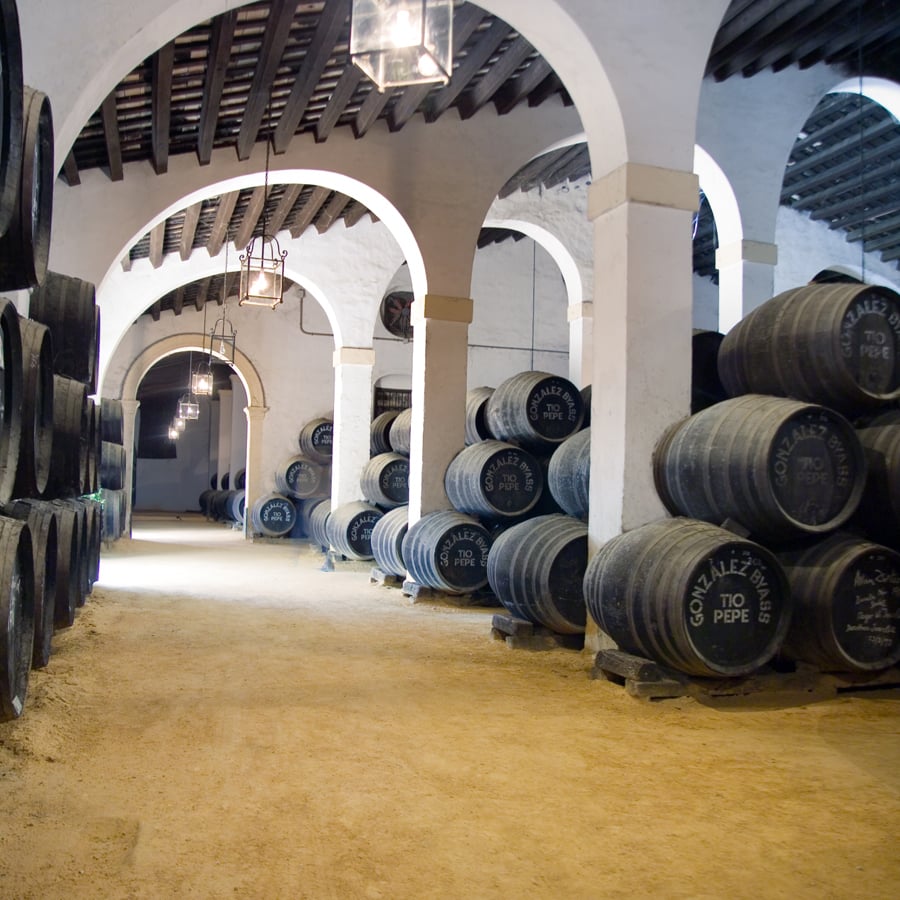
Sherry casks at Gonzalez Byass
Sherry is the umbrella term for fortified white wines that originate in the Sherry Triangle of southern Spain. This protected region falls between the cities of Jerez de la Frontera, Sanlúcar de Barrameda and El Puerto de Santa María.
Though there’s a common misconception that all sherry is sweet, the majority of styles are exceptionally dry. They’re also packed with flavour and excellent with food. In Andalusia you’ll see people enjoying glasses of light fino sherry with olives and jamón ibérico, and dark and nutty amontillado with rich stews and grilled meats.
At one time, sherry was among the world’s favourite wines. This was largely due to its distinctive character and relatively stability, both qualities achieved through fortification. Where many wines struggled to survive long periods in transit, rich oxidised sherry could be shipped from Southern Spain to ports in Britain and even the Americas and arrive in perfect condition.
Sherry retained its international popularity well into the 20th century, but in Britain the name became strongly associated with sweet blended styles that fell out of fashion in the 1980s. However, today a new generation of enthusiasts, sommeliers and bartenders are rediscovering these distinctive wines and the traditional forms of sherry that have been made in and around Jerez for centuries.
How is sherry made?
While sherry varies widely in terms of style and flavour, we can break it down roughly into three categories. Oxidatively aged sherries, which are matured in cask and allowed to react with the air – this includes oloroso, amontillado and sweet Pedro Ximénez – and biologically aged sherries, which are protected as they age by a layer of yeast known as flor. Sherries aged under flor include the very driest styles, fino and manzanilla. Lastly, we have blended sherries which combine dry and sweet styles. While this category is strongly associated with the cream sherries once popular in Britain, many producers still release excellent-quality blends made with well-aged wines.
Biologically aged sherries: fino and manzanilla
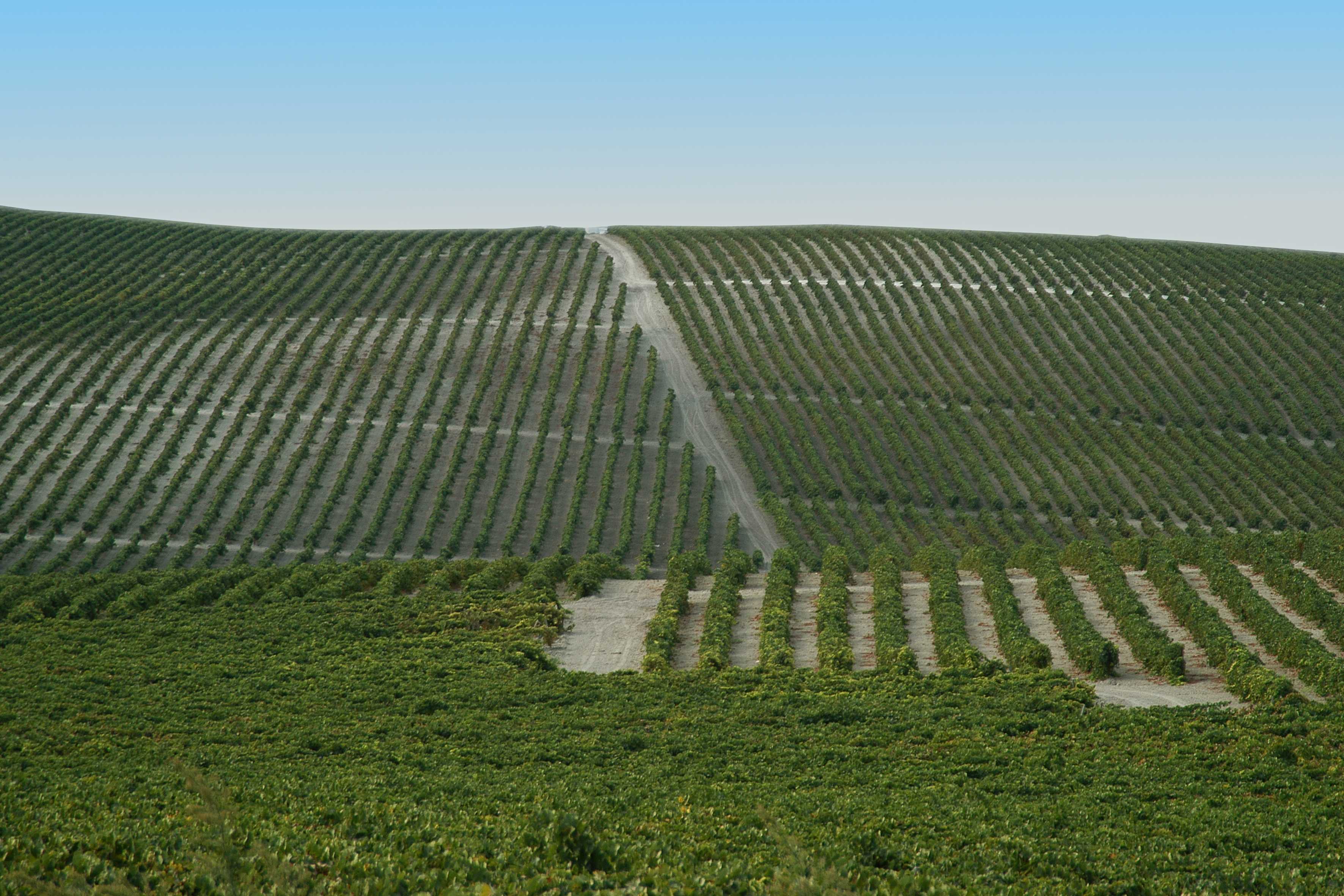
Most sherry begins with Palomino grape vines, planted in the chalky soils of southwestern Spain. This local soil composition is similar in places to that in Chablis, Champagne and the sparkling wine producing regions of the south of England. It provides the perfect conditions for creating light, dry wines that can be further developed through fortification and ageing.
These white Palamino grapes are pressed to extract their juice which is then fermented, traditionally in oak vats, but more commonly today in stainless steel vats. Fermentation is allowed to continue until almost all the sugar in the grape juice (or ‘must’) has been converted into alcohol, resulting in a light dry white wine. These wines are then fortified by the addition of grape spirit, raising their ABV to a relatively stable level of around 15%. At this point the base wines are ready for ageing, which is where the magic of sherry takes place.
The base wines are then filled into sherry butts, large casks with a capacity of around 600 litres that are never completely filled. By leaving headspace in the top of the cask, sherry producers leave the surface of the wine exposed, allowing for the growth of a thin layer of yeasts known as flor. This protective layer allows the wine to age without oxidisation and causes the wine to reduce and concentrate over time. The indigenous yeasts of the sherry bodega, the balance of temperature and humidity, and the level of alcohol and acidity in the base wines must all be in harmony to make flor thrive.
As well as protecting the maturing sherry, flor consumes any residual sugars, making for bone dry wines. It also increases the concentration of organic compounds corresponding to fino and manzanilla sherry’s distinctive flavours – nuts, proving bread dough, overripe fruit, and a sense of sea air and woody herbs.
Fino and manzanilla are made in this same basic way, and each begin with the finest grade of base wines (hence ‘fino’) as the character of the grapes and the terroir will be more prominent in the finished product. Manzanilla is distinct in that it is vinified and matured in the coastal town of Sanlúcar de Barrameda, where it is said to take on a more subtle character and maritime influence.
When these wines have reached the desired maturity, they are filtered and bottled. Sometimes producers may choose to present these sherries unfiltered, in which case they are called ‘en rama’, a style sought-after by fans of the drink. Arguably the best-known example of fino and manzanilla is made under the name Tío Pepe by historic producer Gonzalez Byass, but you can find excellent examples across large and small producers.
Chilled fino and manzanilla sherries offer versatile food pairing opportunities, playing equally well with shellfish, ham and lightly aged cheeses. Although anything salty – crisps, olives, salted almonds or cured fish – will always work fantastically.
Oxidatively aged sherries: oloroso and Pedro Ximénez
Robust oloroso sherries begin in much the same way as fino and manzanilla, but when it comes time to fortify them, they are brought to a much higher ABV of around 18%. This prevents flor from forming in the cask and leaves the wine exposed to the air. As years pass, the wine will react with the atmosphere and grow dark in colour, taking on nutty, dried fruit and even leathery flavours. These are rich, intense wines well-suited to pairing with strongly flavoured foods.
Pedro Ximénez sherry starts with Pedro Ximénez grapes, which are often picked late in the season to ensure they are very ripe. These are then left to sun dry for several days prior to pressing, a practice known as the asoleo process. As the moisture in the grapes evaporates, the sugars inside become more concentrated, to the point where they resemble raisins. Pressing grapes that have undergone this process produces an extremely sweet must.
The high level of sugar present means that yeasts cannot ferment the must very efficiently. As a result, the lightly fermented wine is heavily fortified up to 15-17% ABV before undergoing oxidative ageing. PX, as it’s commonly known, is also capable of extremely long maturation as it’s high alcohol and sugar contents make it resistant to spoilage.
Once aged, filtered and a bottled, PX is among the sweetest wines on the planet, and often shows an intense dried fruit and nut character, while longer-aged examples will have more complex dark chocolate, leather and cigar box notes. This style of sherry is typically enjoyed after dinner, in relatively small measures, and makes great company for hard cheeses and vanilla ice cream.
Combined ageing: amontillado and palo cortado
Some sherries will begin life ageing under flor and then undergo a secondary, oxidative ageing. The most common of these is amontillado sherry, which starts out much like fino and is then fortified again during the ageing process to raise the ABV above 17% and cause the flor layer to die off. The more time spent ageing under flor can make for a fresher, citrus-forward wine more like a fino, while more time exposed to the air will result in a richer, nuttier wine closer to an oloroso.
The combination of different characteristics can make amontillados incredibly complex and as a result many are highly sought after by sherry connoisseurs. For food pairings here think game meats, oily fish and grilled chicken or mushrooms.
Historically, palo cortado referred to dry sherry in which the protective flor layer had died spontaneously during maturation. However, most modern examples start with more delicate base wines of the kind intended to age like fino, which are then fortified to a higher ABV like oloroso. This makes for fine, elegant wines that are aged oxidatively.
Even though modern palo cortado is not dependent on spontaneous activity, it remains a rare style of sherry. Its bright acidity, complexity and balance of different characteristics makes it the pinnacle for many sherry enthusiasts.
Sherry casks and the solera method
Another characteristic feature of sherry production is the solera, a system of casks containing young wines at one end and old wines at the other. As mature wines are drawn from the final stage of the solera, each stage is replenished from the one before it – no single cask in the system ever being completely emptied.
Soleras are used to age sherry biologically and oxidatively. The use of soleras allows for a protracted blending process in which style and consistency are maintained over many years. Even styles which producers typically seek to bottle relatively young – like fino and manzanilla – must age for at least two years in solera. In fact, the regular refreshment of the solera system with new wines is essential to maintaining healthy flor in the cask, building up a unique microfauna that gives each bodega – and indeed each solera – a particular character.
Because the influence of wood is minimal to the final product, sherry casks can be used across the solera system for decades. However, there is a longstanding history of casks formerly used to age sherry being used to mature whisky, particularly in Scotland and Ireland. Some distilleries maintain longstanding relationships with producers in Spain, such as Dalmore in the Highlands which ages single malts in Matusalem casks from González Byass and Midleton in County Cork, Ireland which offers Redbreast single pot still whiskies shaped by Lustau sherry butts. Often producers will use casks that have been ‘seasoned’ – filled with sherry for around two years, enough time for the sherry to influence the wood – although sometimes they will use a cask that has been used in the solera system for decades.
Other styles of sherry
Vintage sherry
The solera method is an essential part of the sherry industry, but by its very nature the traditional system isn’t suited to producing vintage wines. However, small quantities of vintage sherry – known as añada – is made in the region, by ageing wine in casks where it remains for the entire span of its maturation.
Cream sherry
Made by blending sweet and dry sherries, cream sherry was once immensely popular, especially in the UK. The proliferation of cheaply produced blends in the 20th century, some of them originating in places other than Spain, has meant that many people around the world still think of sherry as sweet. Though the more traditional styles are now experiencing a renaissance with wine lovers internationally, cream sherry production continues at scale. Some bodegas produce blended sherries of outstanding quality, including Equipo Navazos, Lustau and Gonzalez Byass – notably its Matusalem Oloroso Dulce VORS.
How to store and drink sherry
While some fortified wines are designed to further develop in the bottle, sherry is bottled when it’s ready to drink. While some enthusiasts report success with older bottles, it’s generally a good idea to enjoy your sherry soon after bottling. This is especially true in the case of fino and manzanilla where freshness is a virtue. Wines that have undergone more oxidative ageing like Pedro Ximénez and oloroso will keep their quality for much longer if left unopened. If you do want to save a bottle of sherry for a few years then make sure you store it upright in a cool, dry place without too much temperature variation and away from direct sunlight.
All sherry benefits from being served in the right glass to accentuate the aromas in the wine. A tulip-shaped copita is traditional, but any small wine glass will help your sherry shine. All sherry is intended to be enjoyed cold – fino and manzanilla should be well-chilled prior to serving, while darker styles like amontillado and palo cortado can be more cellar-cold than fridge-cold.
As previously discussed in this guide, sherry’s natural umami and flavour-enhancing qualities make it a great choice for food pairing. Think salty snacks and seafood for the lighter styles and richer more savoury foods for more robustly aged sherries.
Once opened, sherry will not last forever and should be kept refrigerated. Fino and manzanilla will retain their freshness for a couple of days. Amontillado, oloroso and palo cortado should stay fresh for a month at least and sweet Pedro Ximénez – with its high sugar content – can stay vibrant for several months. However, once you get a taste for these unique and delicious wines – and providing you have a few good friends and some nice food to enjoy them with – you may find yourself going back to that bottle in the fridge long before it starts to lose its charms.
Though its popularity internationally has ebbed and flowed over the years, we have access to more styles and better-quality wines than ever before. That means there’s never been a better time to get into sherry.