


 United States — would you like to set this as your default country of delivery?



 Trade
Trade
 Shops & Events
 Customer Service

Armagnac Guide: France’s Oldest Brandy Explained
The aged eaux-de-vies from Armagnac may not be as famous as their cousins from Cognac, but their rustic character and unique charm has earned them newfound popularity in recent years

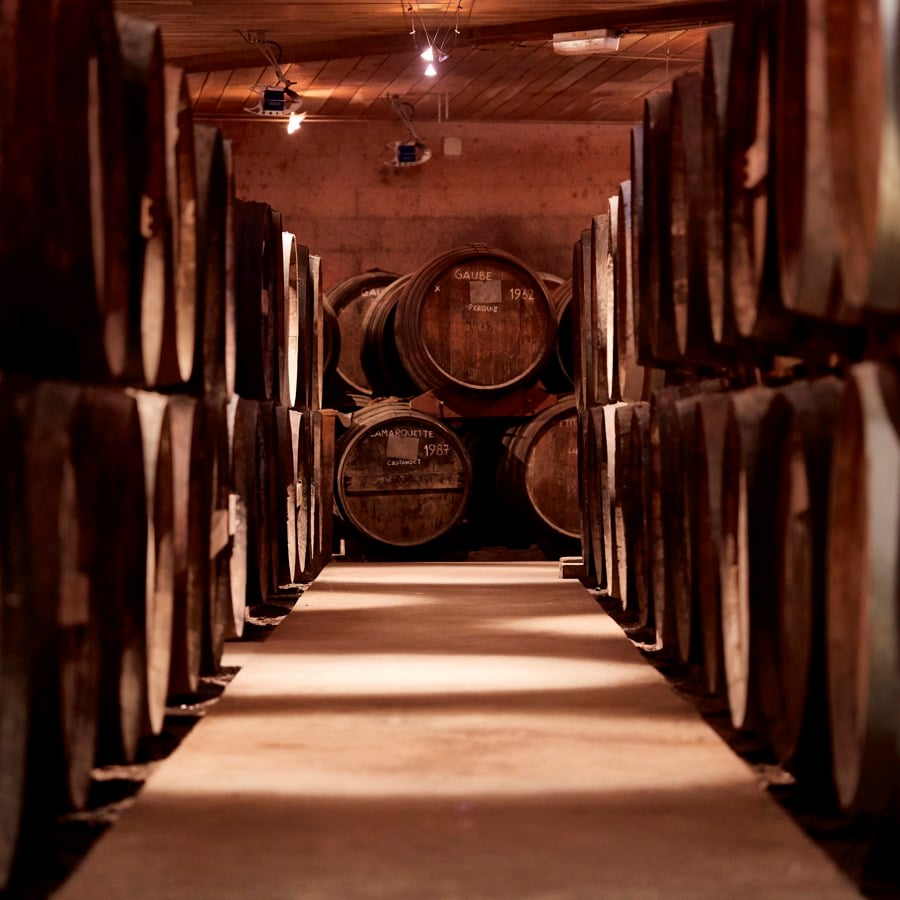
Armagnac barrels, also known as ‘pièces’, made from local Gascogne oak
The Armagnac region of Gascony is home to France’s oldest distilling tradition. Its local aged eaux-de-vie are made from one or more of ten grape varieties, normally distilled using a unique short column still and aged in French oak casks.
The history of Armagnac
The Vatican archives contain a 1310 document that extolls ‘the 40 virtues of Armagnac’, including its supposed ability to ‘render men joyous’ and ‘enliven the spirit’ alongside more dubious claims about preserving youth and curing disease. While it may not be totally accurate, the account by prior Vital Dufour does make a strong case for armagnac as one of the world’s first great spirits.
To understand armagnac the spirit, we need to look at Armagnac the place and its three sub-regions. Bas-Armagnac in the west, Haut-Armagnac to the east and south and Ténarèze in the centre each provide different growing conditions. Grapes from the tawny sands of Bas-Armagnac can be quite different to those grown in the chalk and clay of Haut-Armagnac. When these grapes are made into wine, which is in turn distilled into brandy, characteristics from their place of origin will carry through – a principle known in the wine world as terroir.
How is armagnac made?
One of the fundamental differences between armagnac and its famous counterpart cognac is the type of still usually used in its production. Armagnac is distilled with the armagnac still, and the lighting of the armagnac still is a ritual affair accompanied by music and feasting. During this time, it is not unusual to see distillers on the roads towing their distinctive alembic Armagnacais still between estates and small farms. These itinerant craftspeople are an important part of the local economy, allowing small houses without stills of their own to lay down armagnac for the future.
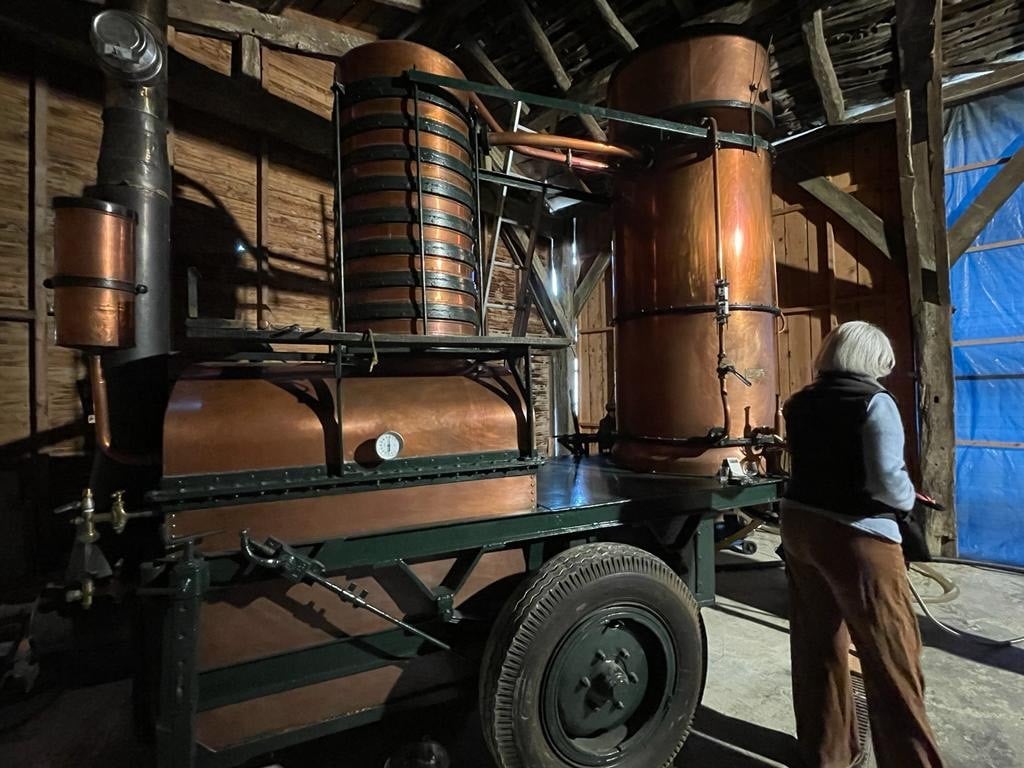
In addition to the five roving distillers, there are five professional distilleries – including the well-known and historic Laballe and Castarède – three cooperative distilleries, and 48 houses with alembics of their own. Though a small number of these maintain pot stills of the kind found in Cognac, the short-columned Armagnac still is responsible for over 95% of the spirit made in the region.
The alembic is capable of continuous distillation, meaning that as long as the fire is fed and the flow of wine remains constant, it can operate around the clock. In the case of traditional wood-fired designs, this means the distillers must carefully tend the boiler to maintain constant temperature, sometimes for days at a time.
The wines used in Armagnac
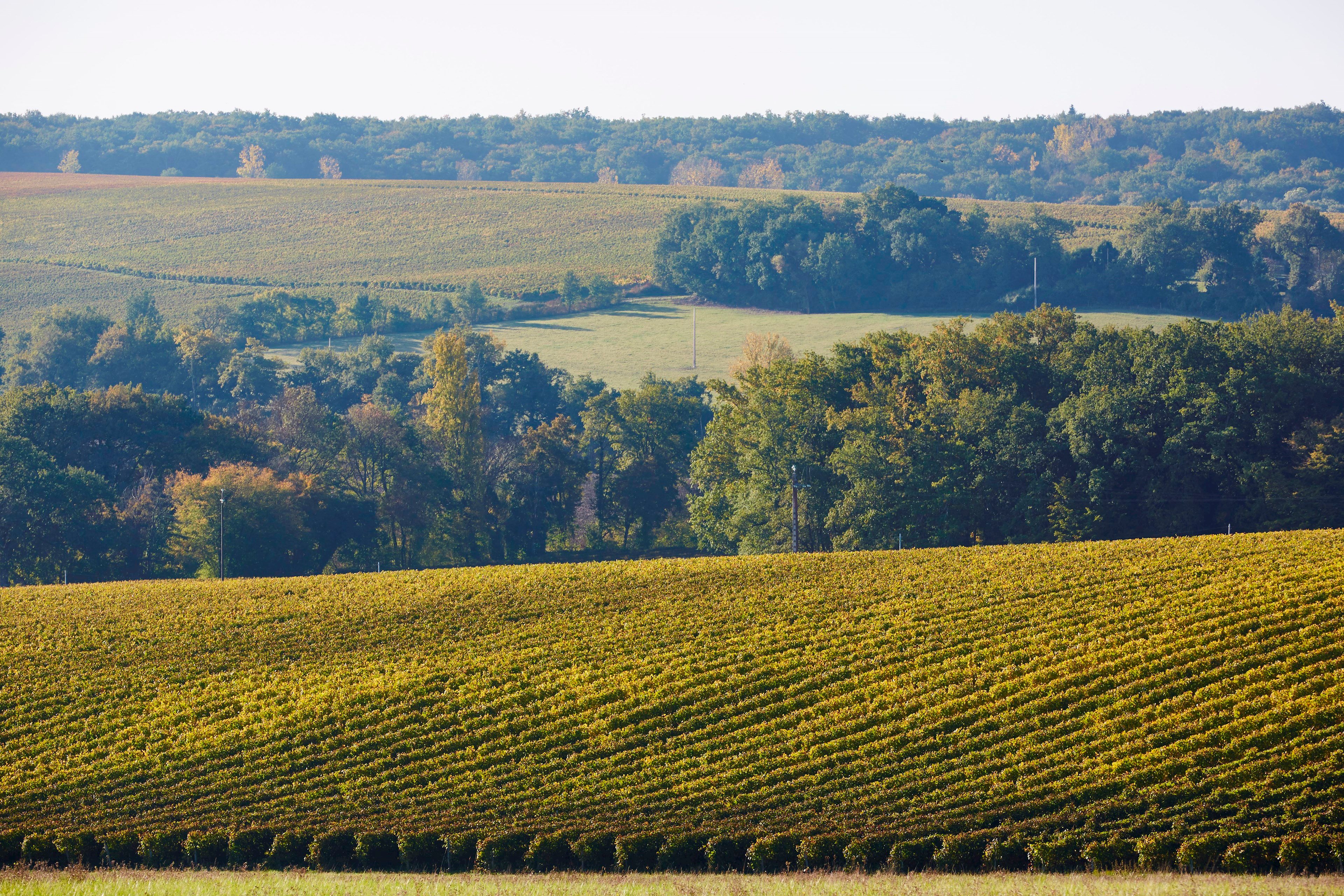
As summer comes to an end in Gascony, grapes are picked and pressed to extract their juice, known as ‘must’. Naturally occurring yeasts consume sugars in the grape must, producing alcohol and a vast array of flavour compounds. These microorganisms, present on the skins of the grapes and in the air, vary from place to place and bring their own aspects to the process.
Cultured yeast can be added, but no preservatives or additional sugars are permitted. As a result, these high-acidity, low-ABV white wines are bright, fresh and fragile. Generally, they will also be cloudy, with particles of spent yeast known as the fine lees left intact to promote complexity. Strict regulations state that these wines must be distilled before 31 March the following year to ensure their essence is preserved. As autumn sets in across the region, the distilling season begins.
Blanche Armagnac
Fresh eau-de-vie is clear, colourless and packed with flavour, coming in at between 52-72.4% ABV. One of the advantages of the Armagnac still is that it allows for distillation to lower strengths, which means greater concentration of the compounds responsible for aroma and texture. The profile of this unaged spirit will vary hugely based on the combination of still, grape, and terroir – but it often smells like blossoms, wildflowers, apples, pears or stone fruit.
If this eau-de-vie is rested for three months in an inert container, it can be bottled and sold as AOC Blanche Armagnac, which is traditionally taken cold as an aperitif or palate cleanser.
Armagnac ageing and blending
While Blanche armagnac is slowly growing, almost all eaux-de-vie produced in the region is destined for ageing in oak casks. Armagnac casks, known locally as ‘pièces’, will have different effects on eau-de-vie depending on their origins and treatment. Wide-grained pedunculate oak from Monluzun in Bas-Armagnac will have more abundant tannin than fine-grained sessile oak from Allier or Nevers. The level of toasting applied to the staves will also affect how tannins, sugars, and other compounds in the wood react with the spirit. The choice of cask – or indeed casks – that a producer uses will have an impact on their mature armagnac.
Eau-de-vie is filled into new casks for an initial period of up to two years. During this time, the wood will release compounds responsible for nuttiness and spice, and the spirit will take on a darker colour. To ensure the essence of the distillate isn’t overwhelmed by oak, the cellar master monitoring the maturation will transfer it into used barrels for further aging. The influence from these containers is gentler and more conducive to long-term development.
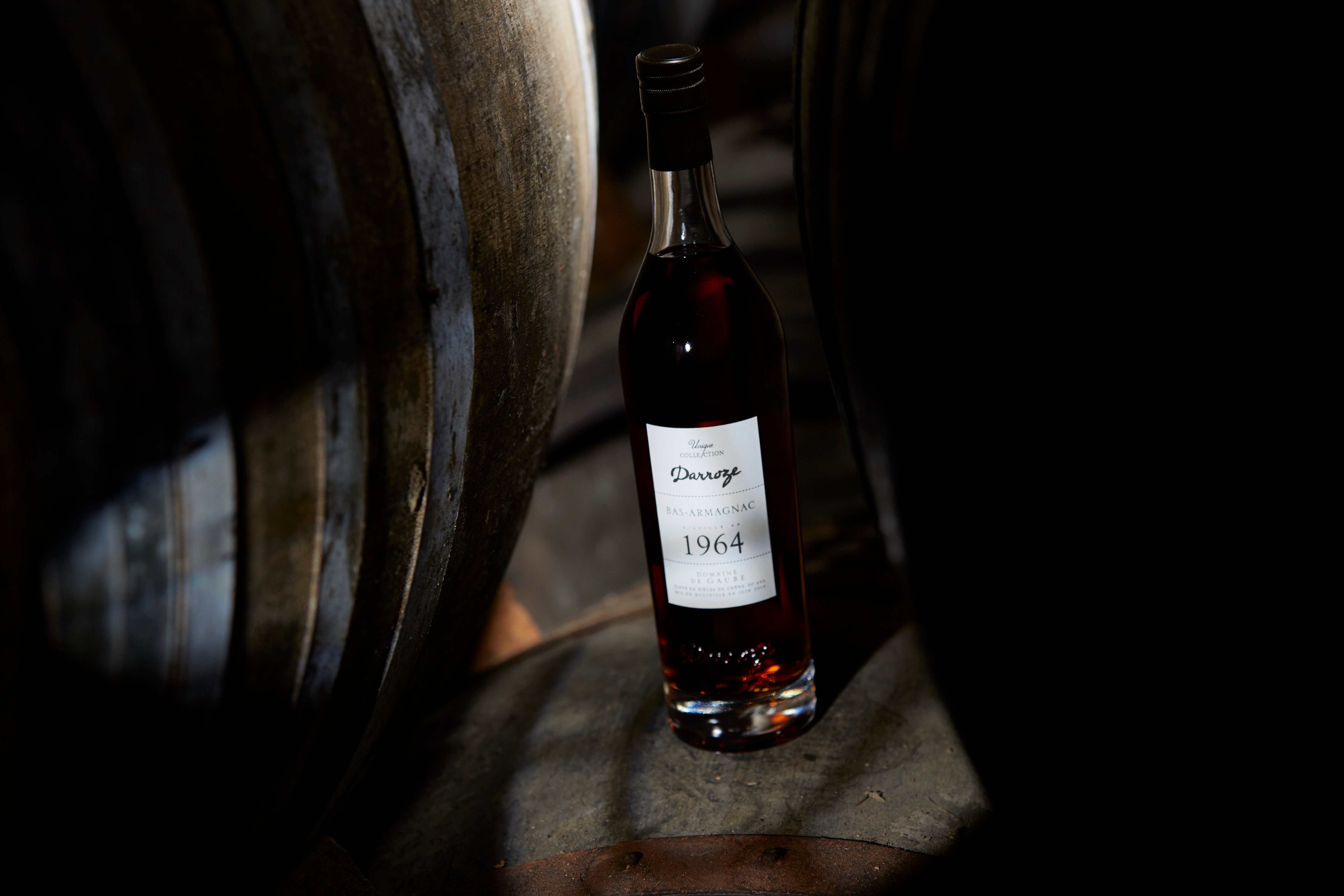
After one year of maturation, the spirit may legally be called armagnac, but many eaux-de-vie will be just starting their journey at this point. The cellar master may move the spirit from cask to cask to promote aeration and oak interaction. Some barrels will be marked for short-term maturation, others for long aging, and some exceptional examples for bottling as vintage expressions.
As years pass, the fresh notes of young armagnac will give way to more mature flavours like dried fruit, chocolate and nuts. Given enough time, aromas of tropical fruit can emerge along with flavours like leather and truffles – a set of characteristics known collectively as ‘rancio’.
Most commercially available armagnac is blended for balance and consistency, with different grape varieties, ages, and terroirs contributing individual aspects. While producers can reduce the strength of their brandies to as low as 40%, it is not uncommon to see armagnac bottled at natural cask strength. Blends in which all spirit is aged at least one year are labelled as VS or three star; in VSOP armagnac, the youngest component must be four years old; and XO or Hors d’Age will consist of spirits aged for 10 years or more.
Vintage armagnac, comprising eaux-de-vie from a single harvest, must spend at least a decade in oak, but many will age much longer. If casks are deemed to be at the very peak of their quality, meaning any more time in oak would be detrimental, their contents are filled into glass demijohns. Under glass, these precious spirits can be preserved until they are needed. Because of this practice, it is possible to find vintages dating back to the 19th century, each one a glimpse into Armagnac’s past.
How to drink Armagnac
The diversity of armagnac means that different styles are well-suited to different situations. Blanche armagnac makes great company for smoked salmon and oysters. It’s also an easy substitute for other clear spirits in cocktails and holds its own in a variation on the Daiquiri or Paloma. Armagnac with a brighter, fresh-fruit profile can be used to cut through fattiness in food and makes a nice foil for cheese, charcuterie, and chocolate. It is traditional to drink longer-aged examples after dinner, perhaps with coffee or a cigar. All of that said, though, you don’t need much to appreciate armagnac of any style. All it really wants is a tasting glass and some time to unfold.

