


 United States — would you like to set this as your default country of delivery?


 Trade
Trade  Shops & Events
  Customer Service
 A Guide to Pineau des Charentes: The French Aperitif
Discover the ins and outs of this cult liqueur, made in the Cognac region by combining eaux-de-vie with grape juice and enjoyed as a refreshing aperitif

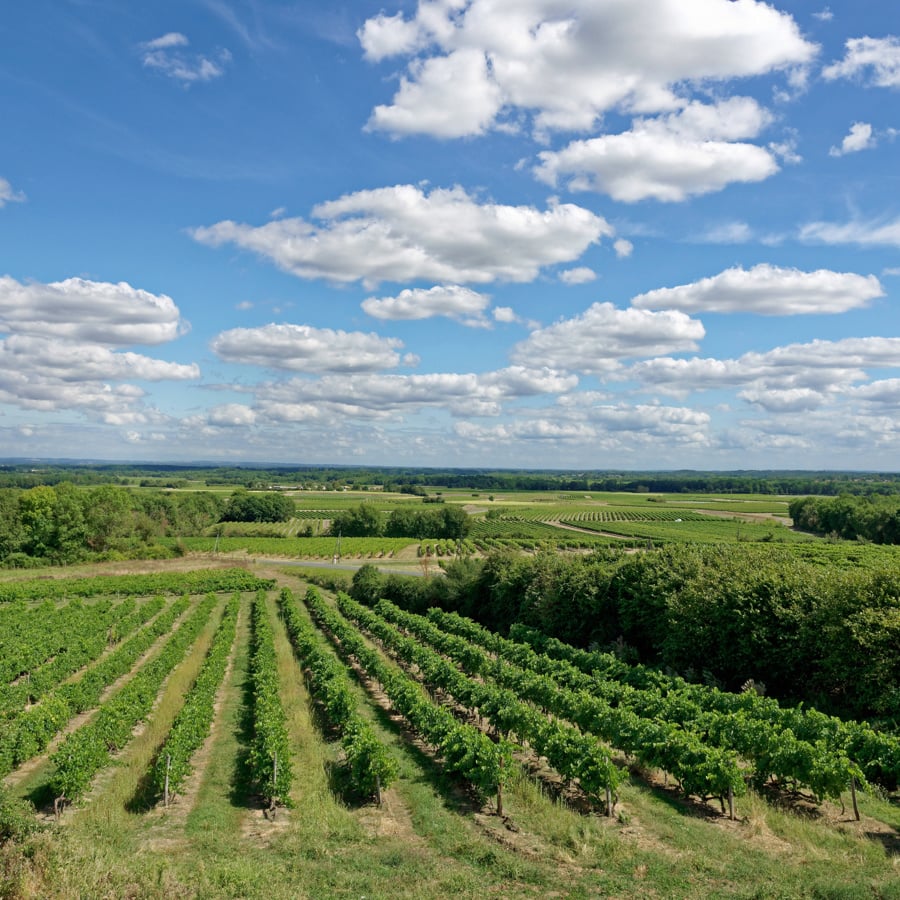
Vineyards in the Charente-Maritime region
Bernard 63 - stock.adobe.com
A delightful aperitif, Pineau des Charentes is made by adding Cognac – distilled eaux-de-vie – to the fresh juice of crushed grapes. The Charente-Maritime, better known to drinks enthusiasts as the Cognac region, is not well suited to producing table wines, so this local liqueur plays an important role in the food and drink culture of the area.
The history of Pineau des Charentes
Legend has it that the first Pineau des Charentes was created 400 years ago through a happy accident in which grape must was poured into a cask that held eau-de-vie and was left to mature in the cellar. On later inspection, the cellar master found neither a wine to distil nor an aging brandy, but instead a sweet liqueur. A more likely story sees the addition of fortifying spirit to the still wines of the region as a way to make a sweet wine and was also more stable for shipping, a similar origin to port.
How is Pineau des Charentes made?
Though there are several styles of Pineau des Charentes, the basic principle for making them is the same. The grapes are picked, processed and then crushed and pressed. The must will start fermenting into wine unless steps are made to restrict that. Fortifying eau-de-vie from the Cognac region’s famous stills is added to preserve both the must’s sugar content and bright fruit character. The resulting vin de liqueur displays beguiling sweet and fruity notes when young, but can take on more mature flavours of dried fruit, leather and nuts as it ages in cask.
Among the different styles of Pineau, there are variations on colour. The vast majority of the vineyards of the region are planted with white grapes intended for Cognac production. Those plantings are dominated by one variety, Ugni Blanc, although some Folle Blanche and Colombard are also seen. These will yield a white Pineau, which in youth will be full of citrus and stone fruit notes.
There are also some plantings of the black-skinned varieties Merlot, Cabernet Sauvignon and Cabernet Franc in the region as well – due in part to its proximity to Bordeaux. By leaving their grape must in contact with the skins, producers can extract colour and tannin to create red Pineau, which often shows notes of berries, stone fruit and spices. Some producers will use red grapes but allow only short skin contact, creating rosé Pineau, which is a less common sight outside of Cognac but can be absolutely delicious.
Some producers mature their Pineau in oak casks, especially Cognac houses who produce this local aperitif as a sideline as they’re able to make use of existing cellars and cooperages. Among these, some are exploring the potential of ageing for Pineau, namely Château de Beaulon, Vallein-Tercinier and Remi Landier. As a result of their efforts, we are now seeing Pineau with age statements and even vintages. Long-aged examples are fantastic alternatives to sweet wines like tawny port, as time in cask sees them taking on oxidative notes of dried fruit, nuts, cigar boxes and earthy forest floors.
It is worth noting that similar liqueurs are also made in the Armagnac region to the south – Floc de Gascogne – and also in Champagne and Burgundy as ratafia.
How to drink Pineau des Charentes
In its native region, and across France, Pineau is drunk without any ceremony. Chilled down and taken as an aperitif, this is the sort of thing you enjoy in the moment when afternoon slips into evening. The sweetness of Pineau also makes it suitable to serve with dessert. More youthful styles would certainly suit berry summer puddings, while mature versions can stand up to savoury dishes and mature cheeses.
In the Cognac region, pineau is also served long with tonic water, making for a lightly bittersweet drink that’s comparable to a spritz. Bartenders are also exploring the possibilities of Pineau as a cocktail ingredient in a variety of long and short serves. As the trend for lower-ABV drinks continues, the ability of this aperitif to deliver punchy flavours without being too strong is seeing it make its way onto cocktail menus around the world.