


 United States — would you like to set this as your default country of delivery?


 Trade
Trade  Shops & Events
  Customer Service
 A Guide to Port Wine: Styles and Fortification
Discover more about the strong, sweet fortified wines of northern Portugal, from ruby to tawny, LBV and more, with a storied history and a longstanding connection to Britain

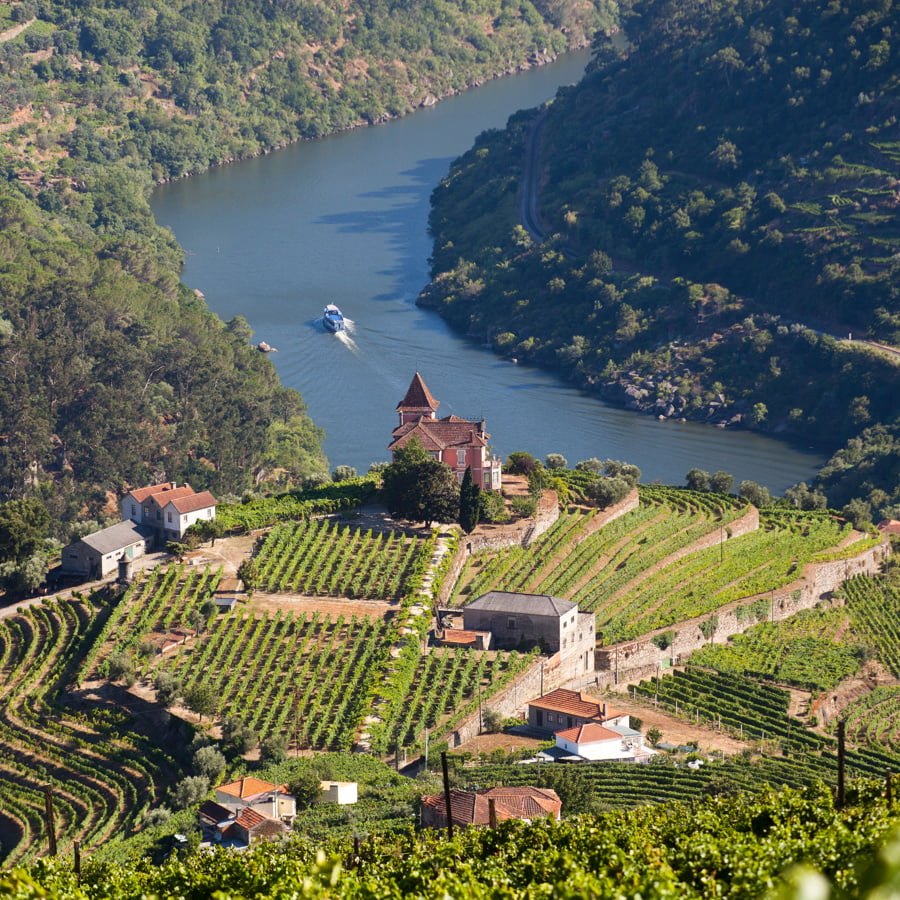
A quinta surrounded by vineyards in the Douro Valley
visualcortex - stock.adobe.com
Port varies enormously in style and character, but fundamentally speaking port begins with wine from the Douro Valley, fortified with grape-based spirit to arrest fermentation while it still contains residual sugars.
On our shelves, you will find easy-drinking white ports with notes of peaches and blossoms, juicy ruby ports reminiscent of red fruits and berries and cask aged tawny ports with a distinctive nutty character. Then there are the so-called ‘'special categories’ which include various styles of tawny port – including some derived from single harvests or specific vineyards – and vintage ports intended to age and develop over many decades in the bottle.
The history of port
If you are fortunate enough to find yourself in the Douro – or browsing the port section of our website – one of the things that leaps out is the curiously high proportion of English names on display: Taylor’s, Graham’s, Cockburn’s and Churchill’s, to name a few. The reason for this is that Portugal and England have been bound together since the 14th century by the longest-running economic alliance of any two nations. These commercial and cultural ties reached their peak in 1703 with the Treaty of Methuen, which saw Portuguese wines charged duty at an exceptionally favourable rate, causing them to become the cheapest on the market.
Following this new business opportunity, English shippers moved in and established lodges in Villa Nova de Gaia, directly across the Douro River from Porto. As well as being centres for maritime trade, these twin cities on the Atlantic coast proved ideal places to mature wine, as they had a cooler, wetter climate than the Douro Valley itself. From this vantage, the first port houses took an increasing share of the trade in Portuguese wines, working their way up the supply chain and into the Douro Valley.
These fledgeling producers needed to create wines that would appeal to palates around the world but also survive long periods in transit. The solution lay in fortification, a technique in which spirit is added to wine in order to make it more stable. By fortifying at the right time, they were able to halt the fermentation process early and preserve some of the natural sugars present in the grapes. This created sweet wines that suited the tastes of the sugar loving British.
How is port made?
Historically, grapes were brought into wineries, crushed and then fed into a lagar – a stone trough – where they would be trodden by foot. In modern times, foot treading is reserved for only the most prized of vintage wines, and producers have mechanical lagars that use machines with silicon feet, stainless steel pistons and even pressurised auto vinifiers, to do the work once undertaken by teams of vine hands.
After a couple of days, the maximum amount of colour, tannins, and flavour is extracted from the crushed grapes as yeasts consume their valuable sugars. Once the wine has reached the required level of alcohol and sweetness, it is drawn off and the fortifying spirit is added.
The spirit used to fortify these base wines is around 77% ABV. Since Portugal joined the EU, producers have been able to source their own grape-based spirit and some have been able to experiment with its impact on the character of their wines.
Where is port made?
Port – or vinho do porto, as it’s known in its home country – takes its name from the city of Porto (or Oporto), a historic city at the mouth of the Douro River in the north of Portugal. But they actually originate upriver in the Douro Valley.
It is hard to imagine a more inhospitable place to grow grapes than the upper reaches of the Douro. Blisteringly hot in summer and biting cold in the winter, the region is prone to drought but also spells of poor weather that hamper flowering and the early development of grapes on the vine. Add to this the fact that the valley itself is sparsely populated and made up of dramatic peaks and slopes and you have one of the most difficult to work wine regions in the world.
Close to the Atlantic Ocean, in the sub-region of Baixo Corgo, the climate is noticeably cooler and wetter. Many of the famous quintas – or estates – can be found upriver in the much warmer Cima Corgo. Beyond that, the Douro Superior is the hottest and driest of the sub-regions.

The soil and growing conditions vary across the three sub-regions, but beneath all of them is a type of rock formation known as vertically arranged schist. Resembling a deck of cards standing on end, this structure is what allows vines to survive in this otherwise inhospitable region by allowing roots to delve up to six meters into the ground to locate water.
The multiple tributaries of the Douro river create a host of side valleys that each have their own microclimates. An important part of viticulture in the Douro is being able to manipulate these conditions to the winemaker’s advantage, with cooler vineyards likely to deliver grapes with higher acidity, warmer spots with higher levels of sugar and sites with greater exposure to sunlight offering riper aromas.
The grapes used in port
There are a plethora of grape varieties permitted for use in port production. However, there are a few key varieties that are most prominent.
Touriga Franca
Affectionately known as the Merlot of the Douro, this is a black skinned grape that has come to dominate plantings in the valley. It has good acidity, strong tannins and brings notes of dark fruit. It is perfectly happy in the hot conditions of the region but can struggle in cooler, wetter sites.
Touriga Nacional
This variety is relatively low yielding, so plantings the Douro are sparse. However, Touriga Nacional is strongly associated with the very best quality Port wines. Its fruit is small but it still carries plentiful tannins, good acidity and notes of liquorice.
Tinta Roriz
Something of an interloper, this is Tempranillo of Rioja fame. It does better on cooler sites where it can maintain its colour without becoming overripe.
Malvasia Fina
This pale-skinned grape – also known as Bual – is used to make white port. This style is light and approachable and is fantastic served long with ice and tonic water, but some examples are designed for long ageing, which sees them turning dark gold in colour and taking on savoury, earthy notes.
The different styles of port
Broadly speaking, there are two styles of port, those designed to age in the bottle – in which the chief characteristics come from the grapes – and those aged in cask prior to bottling in which oak and oxygen shape the wine. These two styles are respectively referred to as being made protectively or oxidatively.
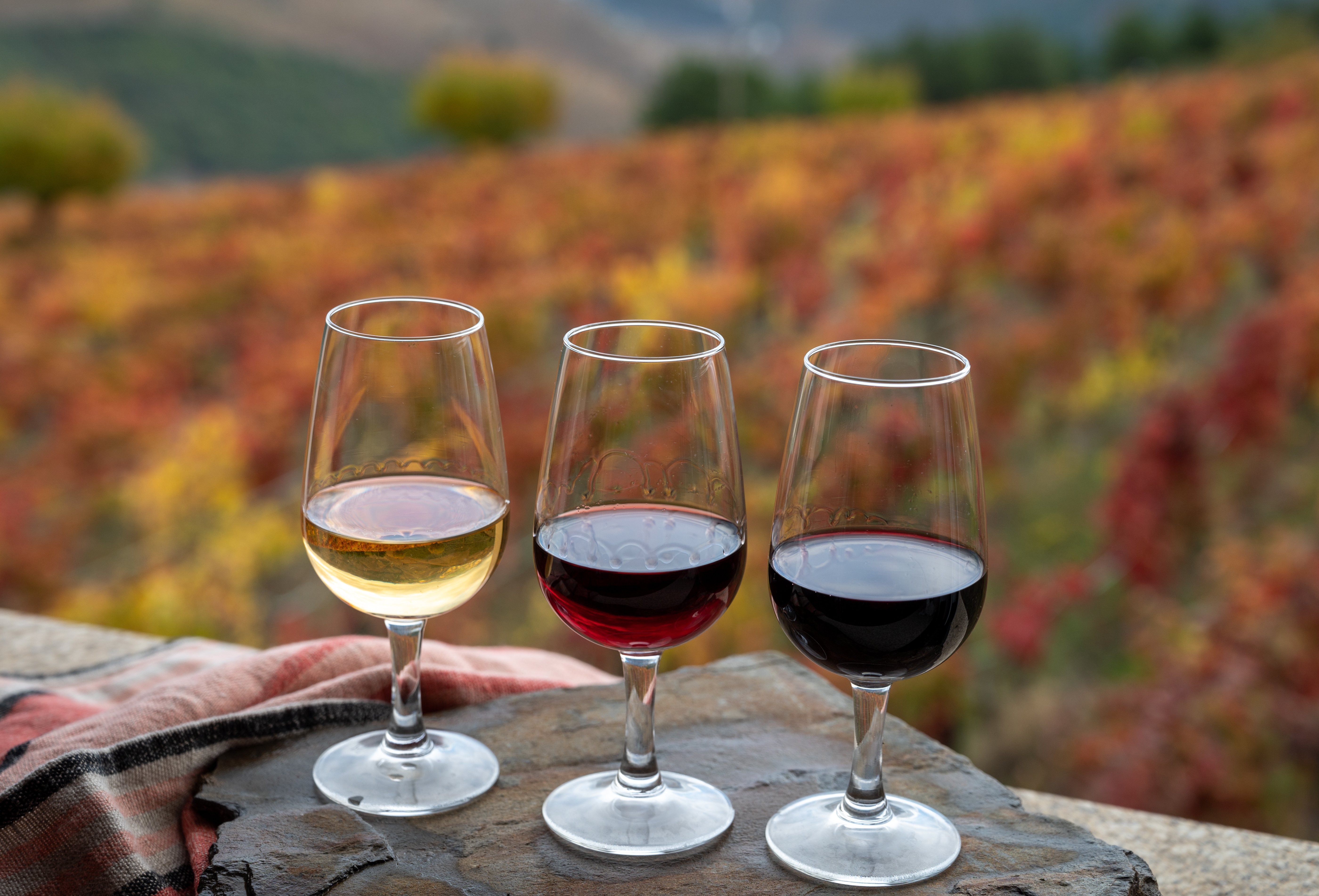
Ruby port, vintage port, LBV and more
Protectively made styles of port include ruby and reserve ruby – which are not designed to age in the bottle – but also fine styles intended for long maturation in glass. The most prestigious protectively made style is vintage port, which is derived from a single harvest and traditionally represent the pinnacle of the Douro’s wines. Producers must declare a vintage in the two years after harvest and the quality of the wines has to be confirmed by the a regulatory body named the Instituto do Vinhos do Porto e Douro. Different lodges may declare in different years, and by no means is it always a uniform decision.
Typically, vintage ports spend two winters ageing in large oak vessels, which hold up to 10,000 litres of wine and allow exceptionally gentle oxidation and settling to take place. In their youth, they are highly-concentrated and intensely tannic, but after decades in bottle they mellow into some of the finest sweet wines, often fruity and lightly savoury with notes of prunes, raisins and forest floor.
At the other end of the spectrum are ruby ports. These are released for immediate enjoyment and have a bright palate packed full of juicy fruits reminiscent of a summer pudding. These sit at the more affordable end of the spectrum, but well-made examples can still be a real joy. White and pink ports are made in a similar way, intended to be enjoyed young, and make ideal aperitifs.
Between the relatively simple rubies and the venerable vintage styles, there are LBVs (Late Bottled Vintage), single quinta and crusted ports. LBVs are something of a halfway house between the general styles. They are aged further in oak than a vintage, and typically in smaller vessels that speed up the maturation process for between five and six years. The wine can be filtered or not, and is usually released ready to be enjoyed immediately.
Single quintas are typically a single-year release from a port lodge in a year that has not been declared a vintage. These can represent particularly good value and a slightly more accessible style but will still need some bottle ageing in order to soften the tannins.
Crusted port is something of a curio: non-vintage releases that like vintage ports are unfiltered and will show some of the development associated with bottle ageing. A crusted port will typically be released ready to drink, but like a vintage port will have a thick sediment that will need decanting off or straining.
Tawny, colheita and other oxidative port
The other family of styles are oxidatively aged, which means that once the wine is made it is matured in smaller oak casks – typically the 600-litre pipe – that allow the ingress of oxygen. This leads to a series of chemical reactions that lighten the colour of the wine, soften the tannins and develop the fresh fruit notes of the wine into richer dried fruits and then with further ageing into a mellow nuttiness. Unlike vintage ports, these styles are not intended for bottle ageing and will be unlikely to improve in glass.
Tawny port is available in a variety of styles from basic and reserve releases without age statements, though to 10, 20, 30, 40 and 50-year old bottlings that show increasing concentration and development. It is also possible to find white port that has undergone this development, although very old white ports are exceedingly rare. An additional oxidative style is colheita port, single-year releases that must have been aged in oak for at least seven years.
A final category that is a relative newcomer are the Very Old and Very Very Old releases, which are in excess of 50 years. Examples include Taylor's 1896 Very Special Single Harvest Tawny.



