


 United States — would you like to set this as your default country of delivery?


 Trade
Trade  Shops & Events
  Customer Service
 A Guide to Blended Scotch Whisky: Brands and Production
One of the world’s most diverse forms of whisky, blends are capable of expressing a near-limitless range of flavours. Learn more about this fascinating style, from its origins in Scotland’s grocers and wine merchants to its international future

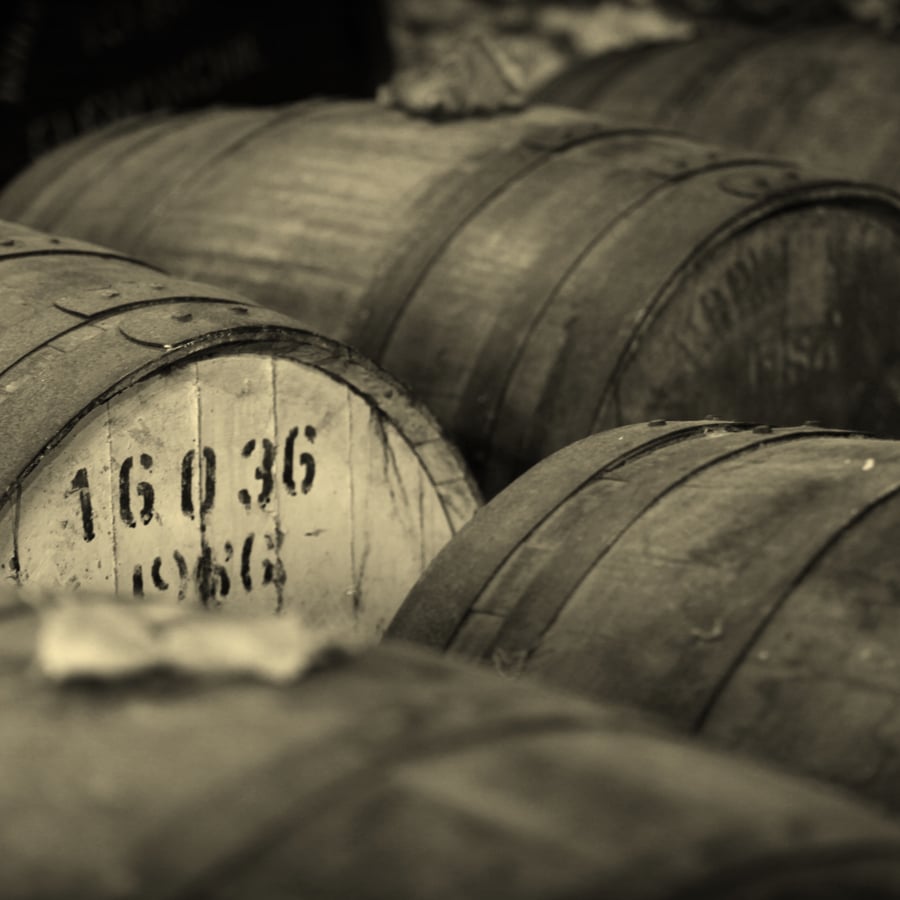
Casks used for Johnnie Walker's blends
Blended whisky, in the simplest possible terms, is made by combining one type of whisky with at least one other whisky of a different style or origin – and occasionally with other spirits as well. This makes it distinct from single malt, single pot still whiskey and many other styles, which must come entirely from one distillery.
In Scotland, the term ‘blend’ is specifically used for a combination of malt whiskies – distilled from malted barley using pot stills – with lighter grain whiskies, which generally use wheat or other grains and use continuous column stills. These can come from one distillery or multiple distilleries.
The ability to create layered and consistent blends helped the whisky industries in Scotland and Ireland to bring their wares to the world stage. When whisky production began in Japan in the 20th century, producers there sought to emulate this tradition of blending, creating both malt and grain distilleries in the process. Though malt whiskies may carry a greater sense of prestige, blends are overwhelmingly more popular around the world in terms of sales.
Though the success and ubiquity of blended whisky has led to a common feeling that they are a cheaper alternative to single malts, there are great advantages to blending. By combining different styles of spirit from different origins, blenders can create an amazing range of flavours. This is true of the oldest producers in the business, drawing on vast portfolios of distilleries and casks to create their product, and upstart blenders pushing the boundaries of flavour.
The history of blended whisky
Whisky making in Ireland and Scotland began as an agricultural craft, a means by which farmers could wring extra value from their surplus grain. But the industrial revolution in the 18th century brought larger distilleries, more efficient production, and new forms of whisky making. The arrival of the column still in the midst of all this provided a ready supply of light, inexpensive whisky that could be used as a foundation for more flavoursome malt and pot still whiskies.
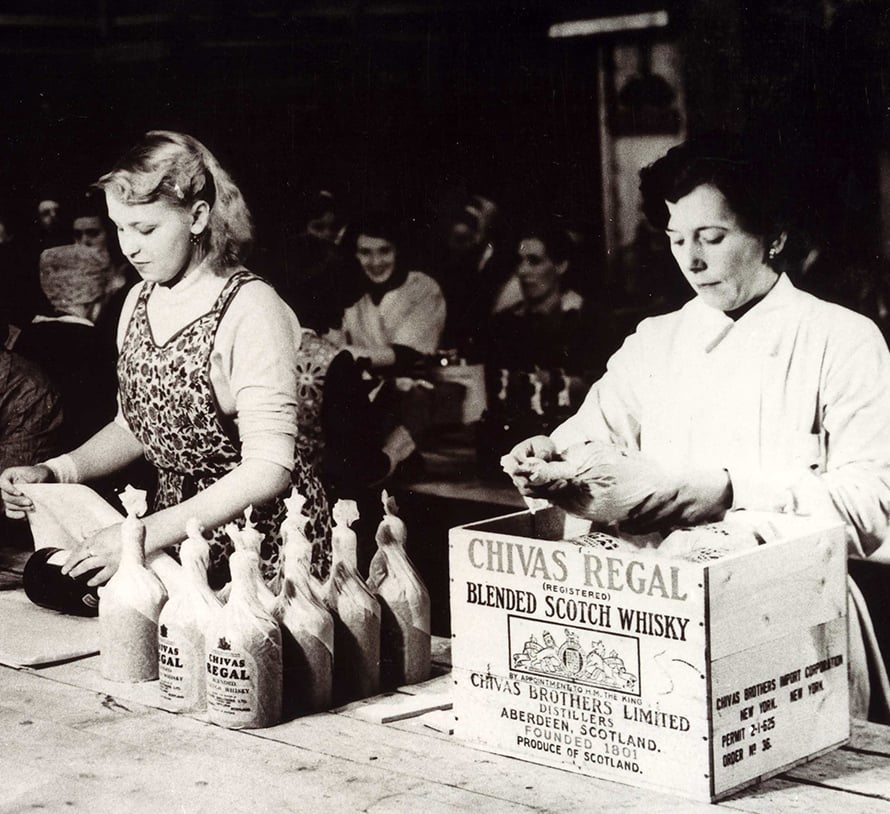
At this time, single malt was not a common sight, as drinkers bought their whisky from wine merchants or grocers, who generally sold blended whiskies. Sourcing whisky from different producers, meaning different styles and flavours, allowed them to create signature blends and also let them adjust their creations to follow trends and appeal to different palates. These skills, gleaned through working with tea, coffee, and wine made names like Walker, Buchanan and Dewar internationally famous. Today, the table of most popular whiskies in the world is dominated by blends, with names like Johnnie Walker, Chivas Regal and Ballantine’s far exceeding even the most famous single malts in terms of sales – testament to the enduring appeal of blended whisky.
Blended whisky around the world
Blending is a common practice associate with many different drinks from around the world including rum, wine and brandy. Given its influence on the way whisky making in Scotland and Ireland evolved, its no wonder that emergent whisky cultures around the world have adopted it.
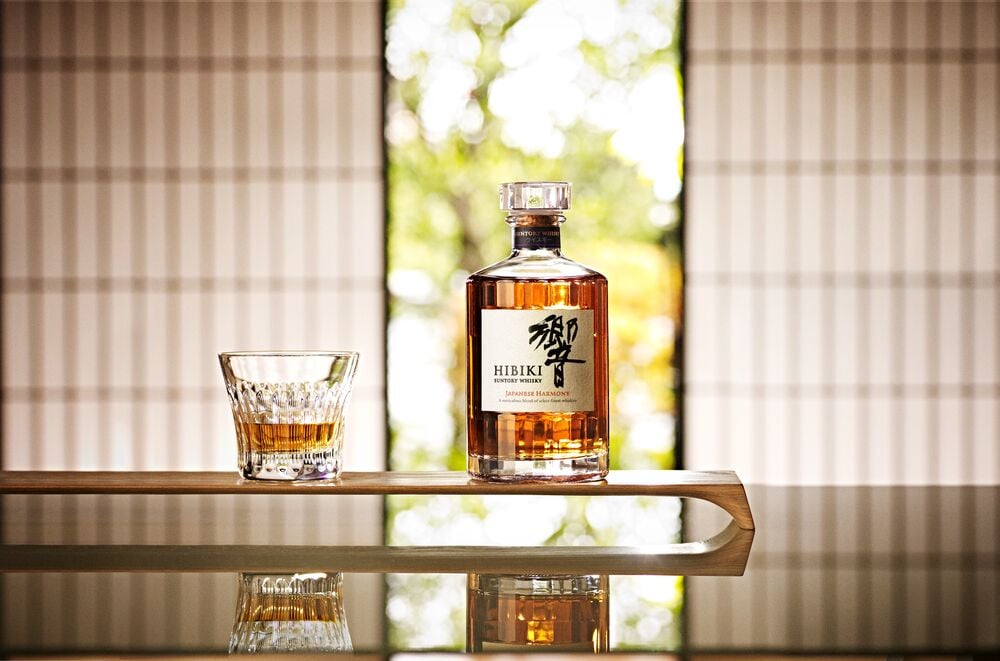
In Ireland, the rise to prominence of Jameson was arguably the kick-starter of the revival of Irish whiskey as a whole, while the pioneers of Japanese whisky were inspired by Scottish blends and built their empires accordingly. Suntory and Nikka – the two biggest players in the industry – each operate multiple sites capable of producing different malt and grain whiskies to support their blends. Today, Japanese blended whiskies are held up as some of the best in the world, with Nikka from the Barrel a favourite at entry level and the Hibiki age-statement blends having become more sought-after and risen in value in recent years.
Cash-strapped distillers in the post-prohibition United States blended precious stocks of mature whiskey with neutral spirit to make ends meet. Over time, these blended American whiskies fell out of fashion in favour of more robust ‘straight whiskies’ consisting of bourbon or rye from one distillery. However, the style is still recognised by law as a blend of not less than 20% straight whiskey, combined with other whiskies or neutral spirit. Despite its somewhat dubious reputation historically, some producers are rediscovering the American blend and combining casks from different distilleries to create whiskies with depth and integrity.
World blended whisky
With more distilleries making whisky in more parts of the world than ever before, blended whiskies will likely continue to evolve, crossing national borders and uncovering new flavour combinations. Boutique blenders like Compass Box have been showing what this style of whisky is capable of since the early 2000s, while Ichiro Akuto of Chichibu distillery – widely regarded as one of the greatest living whisky makers – has created a number of blends over the years, including the Ichiro’s Malt & Grain World Blended Whisky, a versatile dram that contains casks from Ireland, Scotland, Japan and North America.
Even relative newcomers like Edinburgh-based Woven or the distillers/bottlers Thompson Bros in Dornoch are reminding us that blends from across whisky-making countries' borders represent great possibility and diversity.
Blended malt whisky
Blended whisky – as defined in law – is a combination of malt whisky and other styles, typically lighter column-distilled grain whiskies. However, some blenders choose to use malt whiskies from multiple distilleries to create their blends and forego the grain, in which case they will release them as blended malt whisky.
Due to these blends being made solely with malt whiskies, which are typically more flavoursome than grain whiskies, they tend to be richer and fuller in style. Some good examples of blended malt are Thompson Bros' SRV5, or the Elements of Islay series from Elixir Distillers.
How to drink blended whisky
While many blended whiskies are very enjoyable to drink neat, their balance and relative affordability makes them a great choice for mixing. For instance, Jameson and Johnnie Walker Black Label are quite different creatures, but they both share an affinity for ginger ale, ice and citrus. Try your preferred blended Scotch in a Whisky Sour or classic Rob Roy.
The Whisky Highball, in which whisky is served long with ice and soda, is enormously popular in Japan – with the key ingredient of choice being blended whisky. They can be found everywhere from rowdy izakaya to the highest of high-end bars and are even sold canned in vending machines. You can make one at home by combining a blend of your choice with soda (two parts whisky to one part soda water is a good place to start but you can always adjust the levels) and serving it with lots of ice and a twist of lemon peel.


