


 United States — would you like to set this as your default country of delivery?


 Trade
Trade  Shops & Events
  Customer Service
 The Complete Guide to Irish Whiskey Styles
Discover Ireland's unique, historic and newly reinvented distilling scene from its origins to the present day, including single malt, pot still whiskey and more

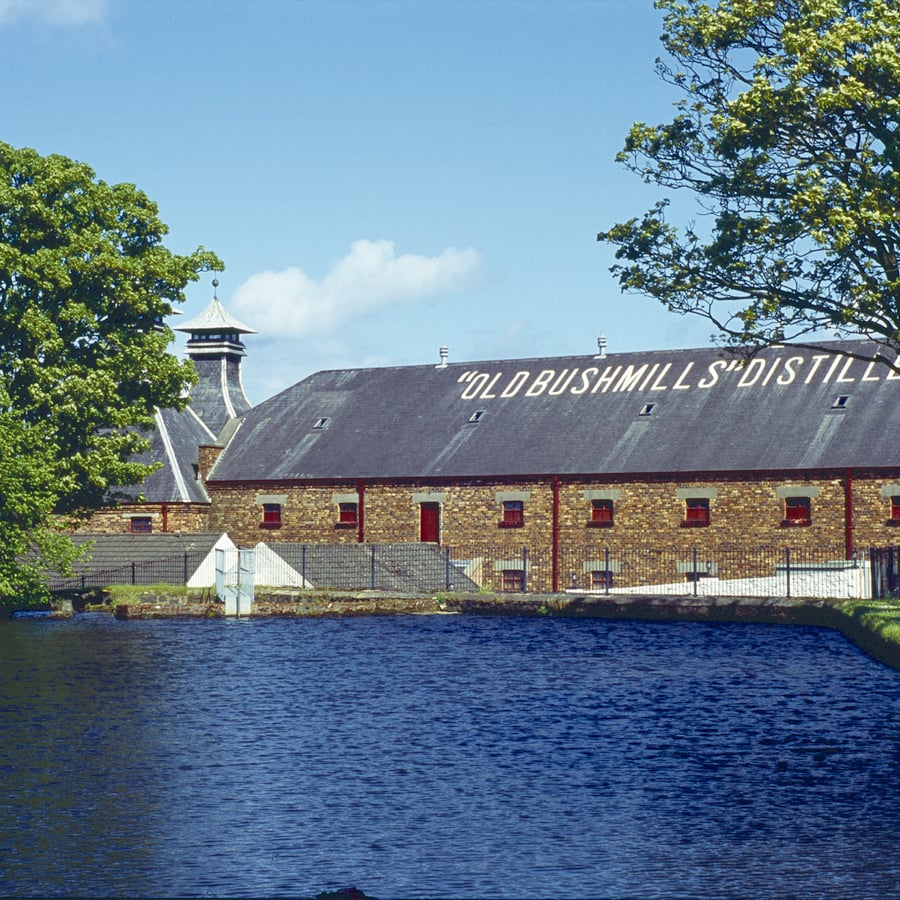
The Old Bushmills Distillery in County Antrim
In many ways, the story of Irish whiskey is the story of whisky itself. In essential terms, it’s a spirit made from fermented grains, distilled and aged in wooden casks for a minimum of three years. Those are the basics, but this simple definition conceals a rich culture, an incredible spectrum of flavours, and the significance of Ireland to the history of whisky the world over.
While Irish whiskey is often stereotyped as light and delicate as compared to Scotch or bourbon, it actually encompasses a great breadth of styles. These range from richly sherried pot still whiskies with a distinctive spiciness, to bright and tropical blends and even robustly smoky single malts. This guide will help you navigate this beautiful spirit and the culture that brought it life, beginning with the arrival of the first pot stills in Ireland in the 12th century.
The history of Irish whiskey
Ireland’s first distillers were clerics who carried early alembic stills there from monasteries in mainland Europe. The translation of Islamic alchemical texts into Latin made distilling accessible to a network of holy orders that stretched from the frontiers of Christendom to the island of Ireland.
At this time, distilling was more associated with medicine and ritual than beverages. But as knowledge of distilling spread, it was perhaps inevitable that people who made beer from barley and oats would turn these into spirit. We start to see mention of Irish uisce beatha in the 17th century, referring to spirits made from grain and flavoured with botanicals. With a pot still, anyone growing cereals could convert surplus grain into spirit that could be traded, shared and stored away for the hard times. Over the course of just a few generations, such spirits became an indelible part of life in Ireland.
The 18th century saw dedicated distilleries and professional distillers emerge as an early industry took shape around Irish towns and cities. Whiskey began to separate conceptually from Ireland’s ancestral grain spirits. A tax placed on malt by the British Parliament in 1785 encouraged distillers to rediscover the mixed mashes of malted and un-malted grains that their forebears had used, and Irish pot still whiskey as we know it today took shape.
It was in the 19th century that Dublin and Cork became hubs of whiskey production. Pioneers like John Power and John Jameson built large modern distilleries unlike anything seen before. Wine merchants and grocers became whiskey bonders, buying spirit distilled elsewhere, ageing it on their own premises and in their own casks, and acting as the essential route to market. In his essential book A Glass Apart, Fionnán O’Connor paints a picture of the early 19th century in Ireland as a time of rapid expansion, in which the number of registered distilleries jumps from 32 to 93 between 1821 and 1835.
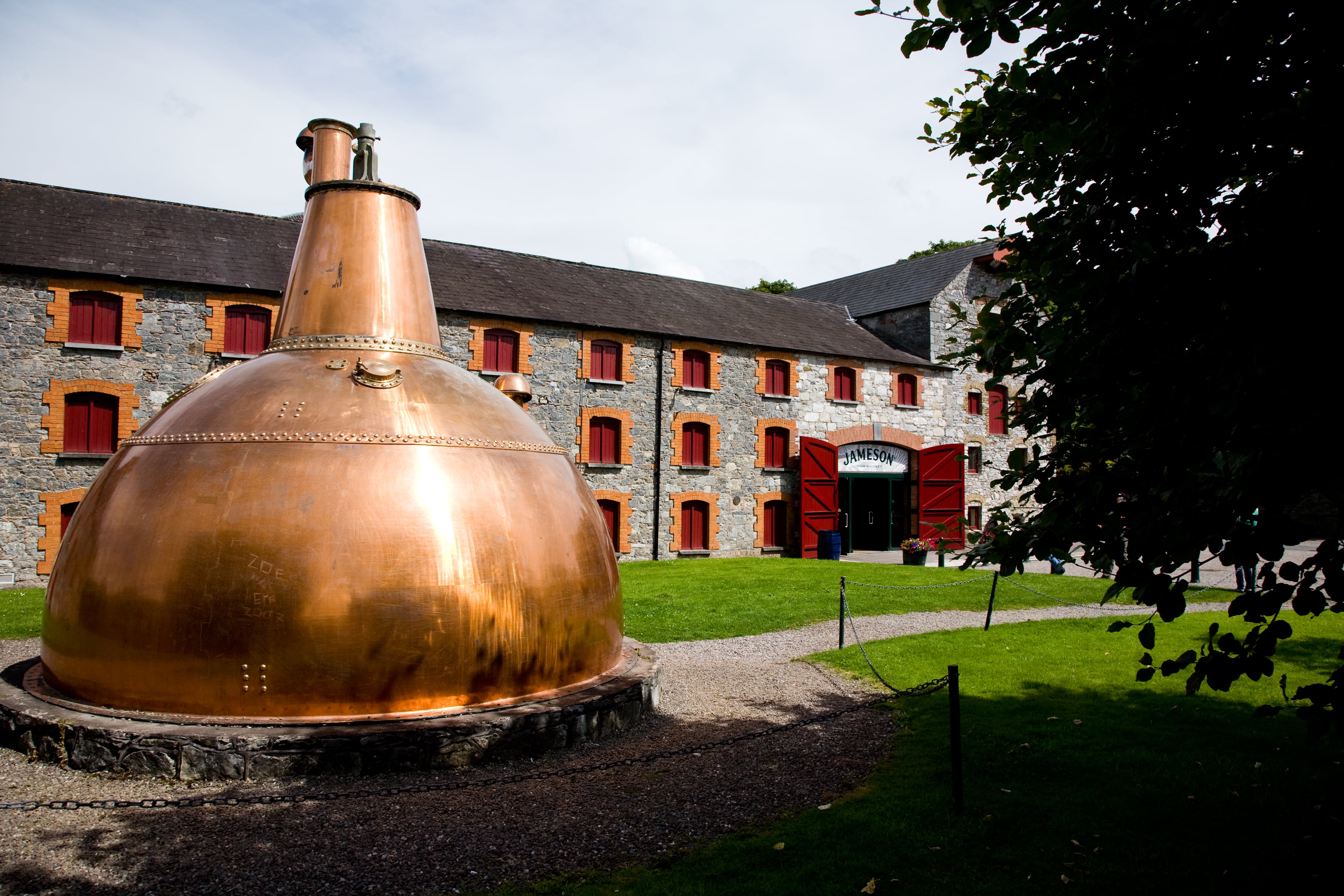
For nearly a century, Ireland produced the world’s favourite whiskies, far eclipsing those from Scotland and the United States. But sadly, the good times were not to last. The 20th century brought world wars, trade wars, prohibition and temperance movements, as well as fuel and grain shortages. Counterfeit Irish whiskeys and competition from cheaper Scottish blends cut chunks out of the once prosperous industry. In the 1920s and 1930s former titans of distilling – like Royal Irish in Belfast, Jones Road in Dublin and Old Tullamore in County Wexford – were closed, never to reopen.
By 1966, only Midleton in County Cork and Bushmills in County Antrim remained. They adopted column stills to make grain whiskey and began reinventing the great old names of Irish whiskey as more affordable blends that could compete on the world stage. Jameson, Bushmills, Powers and a handful of others were able to retain their place on shelves around the world until the turn of the 21st century, when a glimmer of hope emerged at last.
Renewed interest in whiskey of all kinds meant opportunity for Irish distillers. Beloved single pot still whiskies like Redbreast returned after decades of absence, and new distilleries began to pop up across Ireland. Today, we are living in a fully fledged Irish whiskey renaissance. A new generation of distillers is drawing on the past and looking to the future in equal measure as they write a vibrant new chapter in their history. Far from the footnote it appeared in the 1990s, Ireland’s whiskey industry is once more among the most exciting in the world.
Types of Irish whiskey
With a new wave of distilleries all over Ireland firing stills and filling casks, we have a greater diversity of styles on our shelves than ever before. There are, however, four basic categories of Irish whiskey.
Single malt Irish whiskey
Irish single malt whiskey is made in much the same way as in Scotland – which shouldn’t surprise us, as these two great traditions share a great deal of common history.
The process begins with barley, which is malted to help convert the starches within into fermentable sugar. This malt is then dried – usually with warm air, although sometimes with burning peat – and then ground into grist. Next, the grist is mixed with warm water to finish the process of first converting and then extracting its sugars, producing a sweet liquid called wort. Yeast is then added to the wort and fermentation begins. During this crucial phase, the yeasts convert sugars in the wort into alcohol and create countless organic compounds that provide flavour and aroma. After fermentation, we are left with wash, a form of beer intended for distilling. The wash is then transferred to a copper pot still, which is heated to concentrate flavour and alcohol, selecting the desired elements and leaving everything else behind.
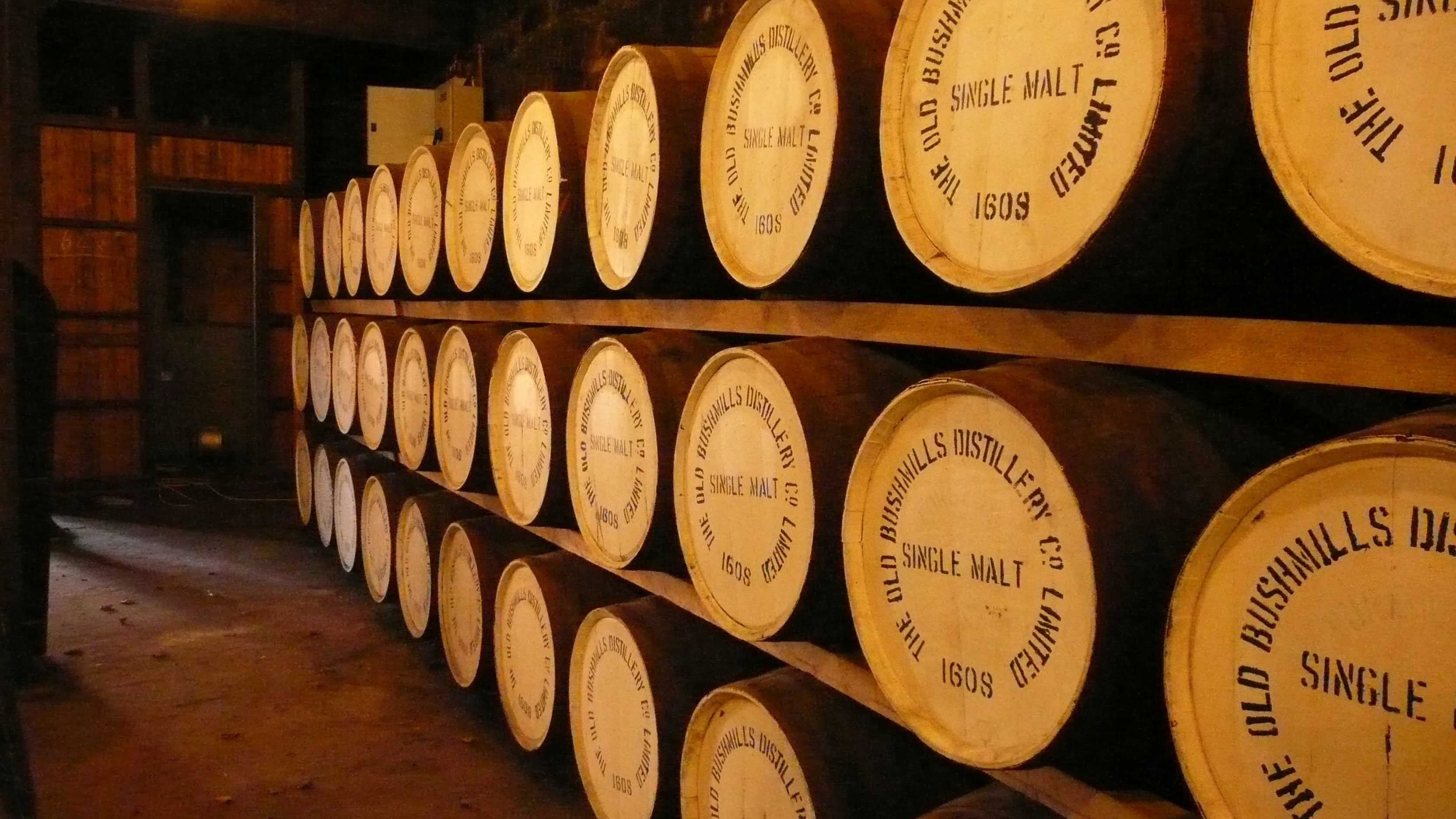
In this initial distillation run, so-called ‘low wines’ flow from the still via a cooled condenser – not yet strong or concentrated enough to be whiskey at 25-30% ABV. A second run gives us new-make spirit: much stronger, intensely aromatic and ready to be filled into casks for maturation. However, many Irish distilleries feature three stills rather than two as is the standard elsewhere. One of the reasons whisky the world over is made using copper stills is because the copper reacts with heavier elements in the wash and spirit, stripping unwanted flavours from the distillate. By distilling a third time, producers can create particularly light and elegant spirit, which is why Irish single malt is often characterised by vivid fresh fruit flavours. Triple distilling has featured so prominently in the way Irish whiskey is marketed that it has led may people to think that all Irish whiskey is triple distilled. However, there are many examples of double-distilled Irish single malt.
Read more about single malt whisky here
Single pot still Irish whiskey
Richly textured with a distinctive combination of fruit and spice, pot still is arguable Ireland’s signature whisky. In terms of production, it differs from single malt in that the grain used is not 100% malted barley. Most pot still whiskey today is made with a combination of malted and unmalted barley, but some newer producers are experimenting with more complex recipes inspired by historical records.
Ireland has a tradition of making spirits with mixed grains, stretching right back to the earliest days when oats, wheat and barley were all used. It was the aforementioned malt tax of 1785 that caused the Irish whiskey industry to rediscover mixed mash bills. Thereafter, pot still whiskey became an inextricable part of the culture.
This was the style that made Irish whiskey famous around the world, eclipsing both Scottish and American whiskies for decades – and the style that’s come to exemplify the much of the most exciting Irish whiskeys of the last two or three decades, most notably from Irish Distillers Limited brands including Redbreast, Midleton, the Spot Whiskeys, and Method and Madness (all made at Midleton Distillery), but also from newer distilleries like Teeling, Boann, Dingle and more.
Grain whiskey
The arrival of the column still in the mid 19th century was revolutionary, as it allowed for more efficient continuous distillation. The new-fangled columns were mainly fed with much cheaper cereals than malted barley and so produced light and affordable grain whiskies, sometimes referred to as ‘silent spirits’ at the time. Distillers in Scotland adopted the column still and began to use grain whisky as a base for blends flavoured with more expensive malt whiskies.
As Irish pot still whiskey was world-beating in those days, the industry was reluctant to adopt the new technology and compromise on quality. Many distillers of the time railed against these silent spirits in response. It was only in the 20th century when Irish whiskey was foundering and Scotch was ascendent that grain whiskey became a crucial part of the culture.
Though bottlings of unblended single grain Irish whiskey are unusual, there are some examples available, including a soft and fruity example from Teeling, finished in Californian red wine casks.
Blended Irish whiskey
In a very real sense, blending saved Irish whiskey. In their 20th century guise as blends, Jameson and Bushmills remained popular internationally and kept the culture of Irish whiskey alive. When the 20th century brought hope to the industry, the success of these blends allowed the industry to expand once again.
As blending has become ingrained in Irish whiskey culture, many of the new wave of producers offer their own examples of the style. These include modern examples like those from Two Stacks, Teeling and boutique bonder JJ Corry. There are also a number of blends that sit at the very top of the spectrum in terms of quality such as Midleton Very Rare, which comprises the finest casks from this storied Cork distillery.
How is Irish whiskey aged?
One of the things that separates modern whiskey from its ancestors is a specified minimum ageing period. As with Scotch, Irish whiskey must be aged in wooden casks for at least three years before bottling.
By far the most common casks you’ll find in Ireland are ex-bourbon barrels from whiskey makers in the United States. If you’re tasting an Irish whiskey and you detect notes of vanilla or coconut, chances are they came from reliable American white oak barrels. Sherry butts, rum barrels, port pipes and many other wine and spirit casks are also used to mature Irish whiskey, and the previous contents of the cask will contribute to the overall character of the finished article. For instance, Redbreast whiskies have a rich vein of dried fruit and nuts gained through ageing in sherry casks – particularly its Lustau Edition.
Irish whiskey will almost always be aged in some variety of oak. However, the regulations do allow for Irish whiskies matured in non-oak casks such as chestnut, cherry wood and maple. These experimental expressions are most notably released under the Method and Madness label by Midleton.
Whiskey vs whisky
While this question of spelling is much debated, it’s worth remembering that knowledge of distilling was present in both Scotland and Ireland long before the first modern whiskey/whisky was made. Ireland was certainly the first to develop a modern industry capable of significant global trade and when spelling the name it uses the version with an E, but this doesn’t mean whiskey was invented there. In fact, whiskey wasn’t really invented at all – rather, it evolved and was shaped by the flow of history. So, while there are more in-depth ways to answer this question, it’s best to think of these two spellings as a case of regional variation rather than a matter of right and wrong.
Read more about whisky vs whisky here
How to drink Irish whiskey
Though it is called for in classic cocktail recipes less often than bourbon or rye whiskey, Irish whiskey shines in a wide range of drinks. Simple highballs like Jameson and ginger ale are classics for a reason. Green Spot single pot still whiskey, with its layers of fruit and spice absolutely shines in a Whiskey Sour, while more robust expressions bottled at higher ABVs can more than hold their own in stirred drinks like the Old Fashioned.
That said, all that’s really essential to appreciate Irish whiskey is a good glass – tulip-shaped to concentrate the aromas, ideally – and some water on the side. That and some good craic, and you’ll have everything you need to get to know one of the world’s great spirits.
Shop Irish whiskey here




