


 United States — would you like to set this as your default country of delivery?



 Trade
Trade
 Shops & Events
 Customer Service
A Guide to Mezcal: Production, Agave, and Flavours
Get to know Mexico's national drink, distilled in nine Mexican states – often smoky, always vibrantly flavoured and a pure expression of the agave plant

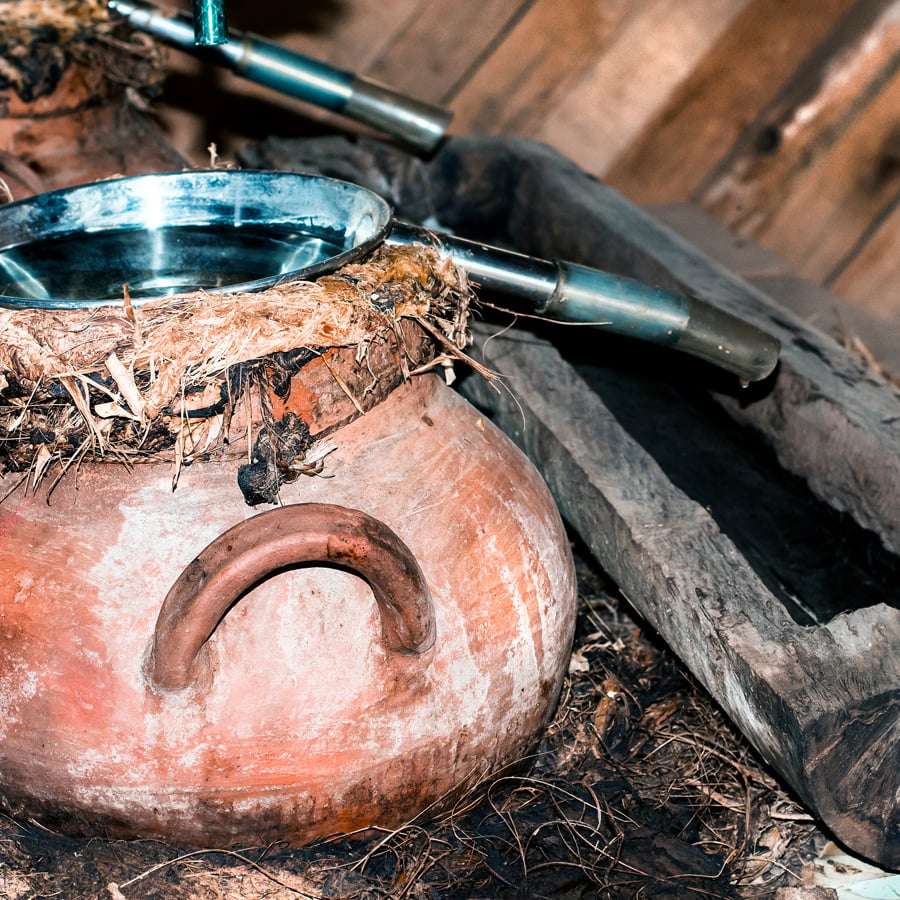
Mezcal artesenal in traditional clay pot still
dlrz4114 - stock.adobe.com
While tequila is without a doubt Mexico’s most famous export, there’s an argument to be made that the real national drink is mezcal. This traditional spirit has been enjoyed by people at all levels of Mexican society for generations – starting when the first pot stills arrived from overseas and were put to work distilling the local agave wine. Though it is often defined as smoky in character, mezcal is one of the most diverse spirits on earth, ranging in style from delicate and tropical to robust and earthy.
The word mezcal derives from the pre-Hispanic Nahuatl's words metl (agave) and ixcalli (cooked or baked). It is a spirit made in nine Mexican states – Oaxaca, San Luis Potosí, Puebla, Durango, Guanajuato, Guerrero, Tamaulipas, Michoacan and Zacatecas – from an alcoholic liquid produced from the agave plant, a succulent that looks a bit like a cactus but is in fact of the same botanical family as the Yucca plant.
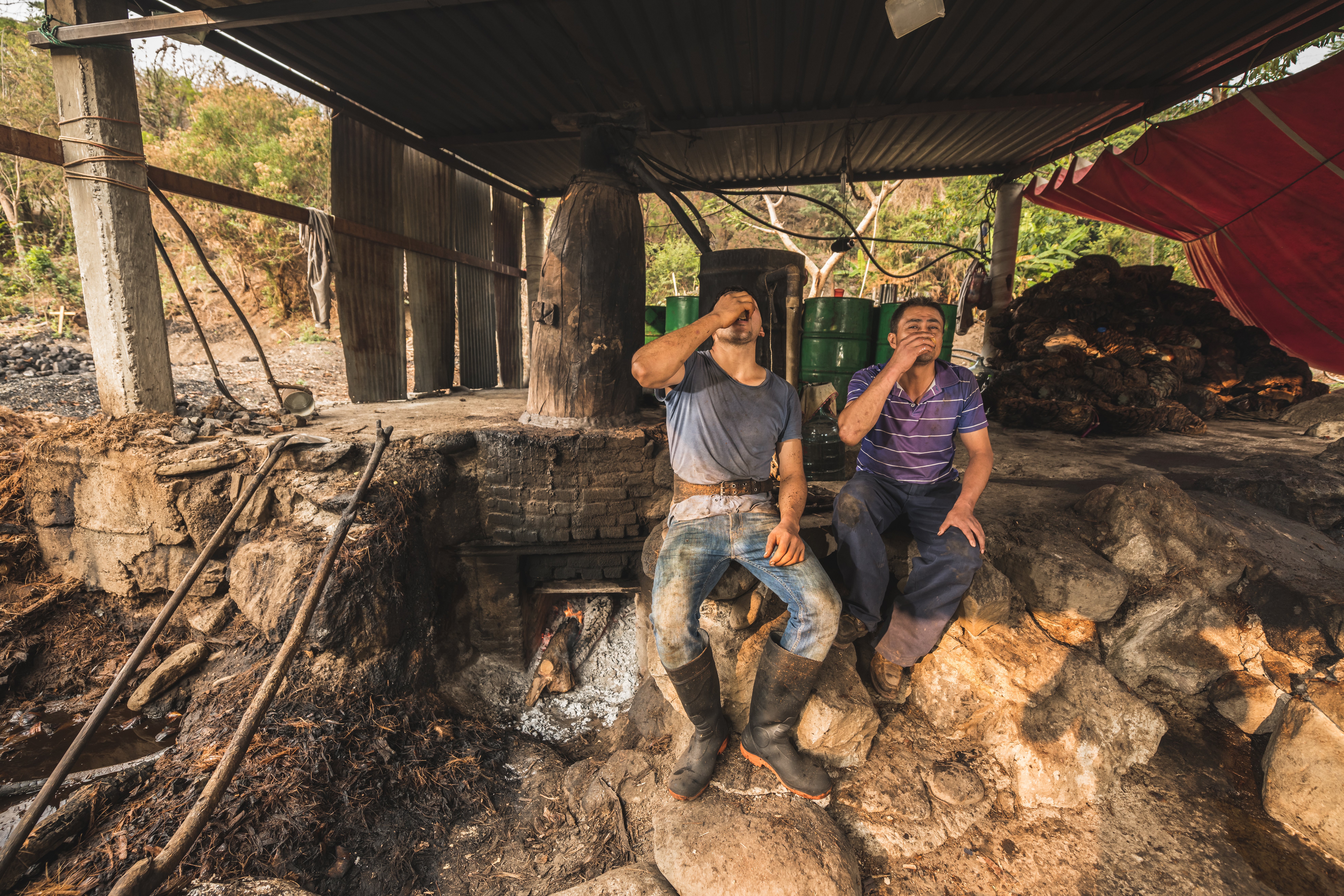
If all this sounds familiar it is because tequila is made in a very similar way using very similar ingredients (with tequila made only with Blue Weber agave in Tequila and the Jalisco Highlands). In contrast to most tequila, mezcal is a rugged and rustic spirit often made using traditional methods and equipment with few concessions to modern technology. As a result, it can offer us a clear connection to the people that made it, the types of agave plant they have used and their origins in the fertile Mexican soil. Perhaps more than any other spirit, mezcal comes with a sense of place.
The history of mezcal
Until relatively recently, it was widely believed that distillation technology arrived in Mexico with the Spanish conquistadors in 1519. But emerging evidence suggests that distillation may have existed in pre-Hispanic Mexico, introduced by Filipino sailors.
There is however no doubt that the Spanish spread distilling technology upon their arrival, using it to distil the local agave drink, pulque, a sweet, beer-like beverage made by fermenting agave juice, pulque was sacred in Aztec culture. The maguey plant even had its own goddess, Mayahuel.
Pulque didn't distil well, but it was soon discovered that cooking the agave before extracting its juices made the mash sweeter, resulting in more fermentable sugars and higher yields. As distillation techniques spread across the country, indigenous Mexicans began using simple clay pots to distil their cooked agave juice. These early proto-mezcals became known as vino mezcal.
After the Mexican Revolution in 1810, distillation by farmers and villagers became more widespread. Much like the history of single malt whisky, these early stills were often operated in secret, hidden in remote locations to evade taxation.
Unlike their counterparts in Jalisco – where, thanks to comparatively advanced infrastructure, their vino mezcal had come to be known as 'mezcal de tequila', and then just 'tequila' – the mezcals from southern Mexican states, primarily Oaxaca, lacked access to the railroad for transporting their goods. As a result, their producers continued to rely on traditional small-scale methods of production. Even today, most mezcal producers are small-scale operations in villages dotted throughout Oaxaca, continuing the tradition of roasting their agave in earthen pits and many distilling in clay pot stills.
How is mezcal made?
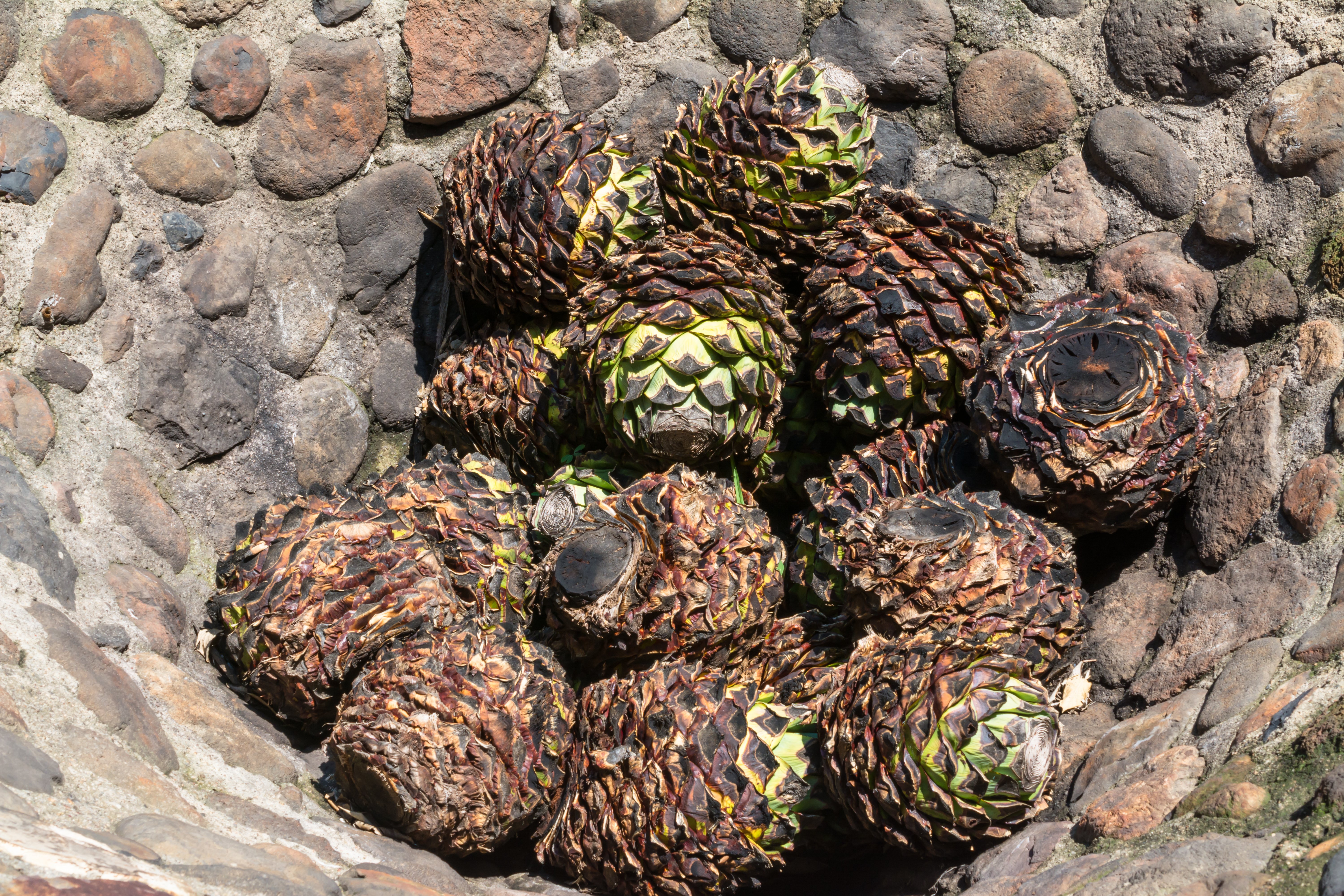
While tequila can only legally be made with one species of agave, mezcal producers regularly use more than 30 varieties, each one deriving its character from particular combinations of landscape and climate. It can take a decade or more for the agaves to reach maturity, at which point the heart or ‘piña’ of the agave is harvested and roasted to develop the sugars within. Traditionally, this takes place in wood burning ovens or pits known as hornos where many mezcals acquire their distinctive smokiness.
While the world’s increasing thirst for mezcal has given rise to large industrial distilleries, many producers still work on a small scale with pot stills made of copper or clay. The roasted agave hearts are crushed to release their juice which is then fermented until it reaches an alcohol content of about 5-10%. Producers then twice distil this cane wine – or mosto – to create mezcal. In their purest form, these spirits are a perfect synthesis of the terroir, the agave and the craft of the mezcalero.
Types of mezcal
Mezcal has been enjoyed un-aged for centuries and most producers release their creations after only a short period of resting in clay or glass. In recent years brands have created aged expressions like those pioneered by the tequila industry. We are now able to see how these ancestral spirits evolve during oak ageing thanks to the arrival of reposado and añejo mezcals – an exciting new chapter for this traditional Mexican spirit.
Joven and blanco mezcal
Blanco, or joven (‘white’ or ‘young’), mezcal is a clear spirit that accounts for 95% of all mezcals. Its allure stems from the choices made in production, the producer's terroir and the essence of its raw materials.
Agave contains an array of complex flavours, which is why many traditional producers choose to not age their spirit, electing instead to let the agave’s character stand on its own. It’s difficult to codify the diverse flavours of joven mezcal, but it can run the gamut from fruity and grassy to savoury, mineral, funky and spicy.
Joven mezcal may be an un-aged spirit, but time is still a huge factor in its production as it can take from five to 35 years – depending on the species and variety – for agave plants to reach maturity. It is the qualities of the agave plant and the decisions made during distillation that make joven mezcal such an expressive spirit.
Reposado mezcal
Reposado – literally ‘rested’ in Spanish – is the term used to refer to mezcal that has been aged in oak casks for no less than two months and no more than one year.
This may not sound like much, but Mexico’s climate supercharges the ageing process, altering the character of a spirit greatly in relatively short time. A classic reposado is a marriage of agave character and oak, which adds complexity and tempers the spirit without overpowering the essence of the agave.
Cult favourite producer Ilegal offers a great example of the style that spends six months in bourbon barrels. This bottling manages to retain green fruit flavours from the agave alongside the vanilla and butterscotch notes from the American oak.
Reposado mezcal – like its younger sibling, joven mezcal – is also fantastic in cocktails. Its smoky and earthy flavours work particularly well in stirred-down variations on drinks like the Manhattan or Old fashioned – a wonderful gateway into the world of agave spirits.
Añejo mezcal
Añejo mezcal – ‘old mezcal’ – is matured in oak casks for one-to-three years, giving it a deep, golden hue. This type of mezcal takes on a noticeable oak character, with flavours such as vanilla, honey, toasted nuts and baking spices becoming more prominent.
This style is capable of showing incredibly complex flavours and reflects mezcal’s growing status as a luxury spirit.
Regulations and styles of mezcal
Mezcal regulation has changed a lot over the past few decades, with rules set in the 1990s overhauled in 2017 to give a framework for three different categories of spirit based on how they are made.
Mezcal
The first category is the least regulated. The agaves can be cooked in traditional fire pits as well as large industrial autoclaves and brick ovens. Almost any means can be used to crush the agave, almost any type of vessel can be used for fermentation, and both pot and continuous stills may be used.
Artisanal mezcal (mezcal artesenal)
This category imposes additional rules to create a more traditional mezcal. Only fire pits and ovens can be used to cook the piña, and modern juice extraction machines are prohibited. Fermentation must occur in wood or traditional vessels, including stone or soil pits, masonry and clay pots, animal skins, and hollowed tree trunks, but not metal vats. Artisanal mezcal must be distilled in directly heated pot stills, with the pot made of copper or clay, while the head can be stainless steel.
Ancestral mezcal (mezcal ancestral)
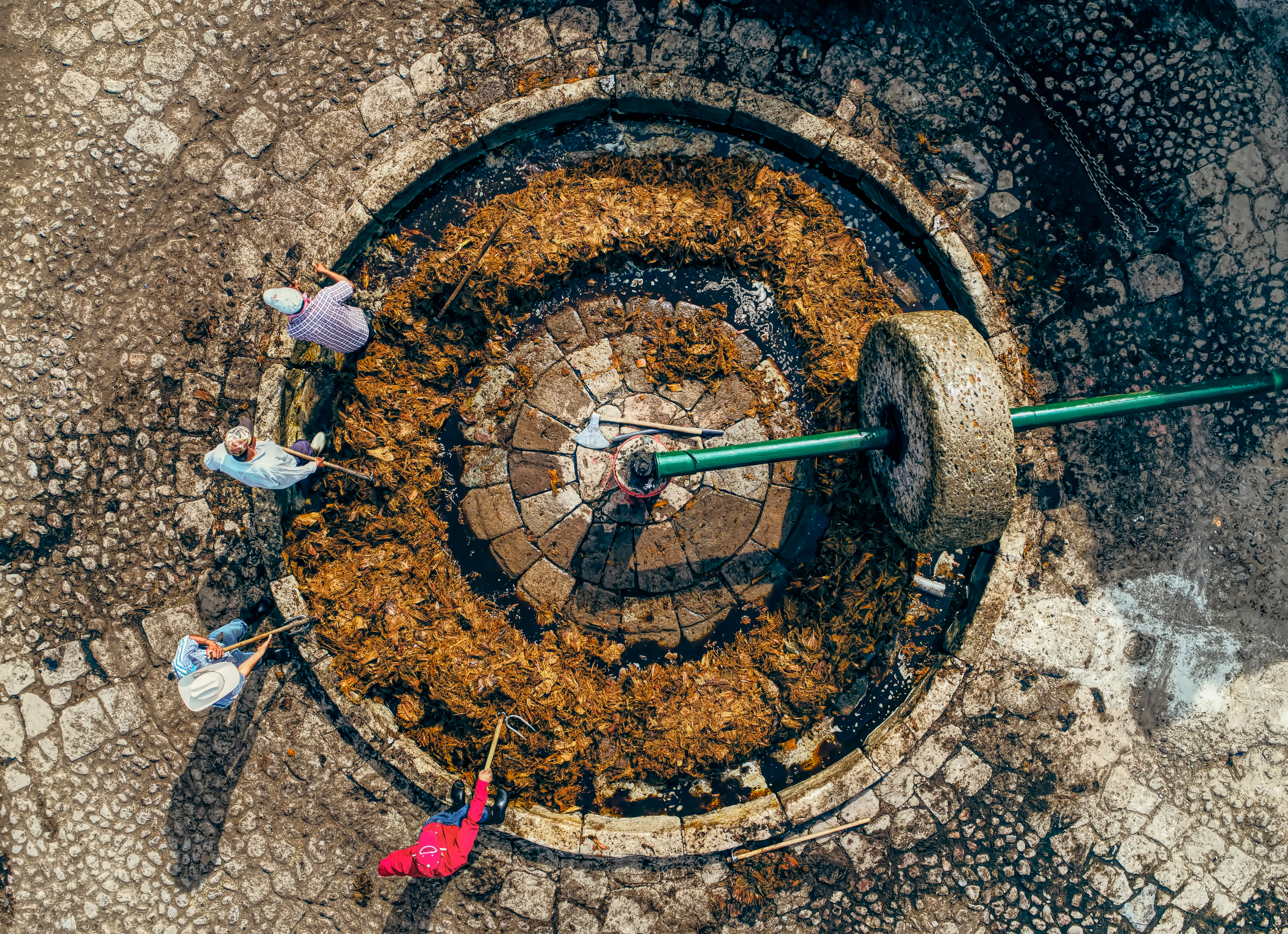
The strictest category enforces rules to create the most traditional mezcals. The agave must be cooked in fire pits and crushed with mallets or a large stone wheel called a tahona. The rules on fermentation are the same as for Artisanal Mezcal, but it must be distilled in a clay pot still with either a clay or wooden head. Bottler Derrumbes offers a selection of ancestral mezcals that showcase individual regions and mezcaleros. These are a great place to start if you want to explore the most traditional styles of this unique spirit.
Varietal Mezcal or ensamble mezcal
As the name might suggest, varietal mezcal showcases just one type of agave. There is plenty of diversity in this style, as there are hundreds of agave varieties to choose from and innumerable ways to process them. The most commonly used agave is Espadín, which comes from the angustifolia species. Its high sugar concentration gives good yields during fermentation and tends to produce mezcal with a good balance of herbal character and sweetness. Banhez, a cooperative of families, farmers and producers, is a good example of a producer that creates stunning single-variety mezcals as well as ensamble expressions.
Ensamble mezcal is a combination of two or more agave species roasted and distilled together in a single batch. This could be done to supplement rare agaves like the grassy and vegetal Tepextate, which takes 25-35 years to reach maturity and commonly grows in hard-to-reach places. While other producers prefer the flavour from their own proprietary blends of agave and choose to stick to a longstanding house style.
While producer Neta often works with multiple agave varietals, it bottles each expression from a single batch. Since each production is distinct and bottled at still-strength, the quantity that Neta is able to sell depends entirely on the number of agaves cooked in the oven and their respective yields.
Natural additives
While many mezcals are bottled without additives, some styles will have flavourings added during or after distillation.
Abocado con (flavoured with)
Mezcal can be flavoured with botanicals and other ingredients after distillation, including fruit or coffee. These styles still need to be made from 100% agave, but have an extra dimension thanks to what’s added after distillation.
Pechuga and destilado con (distilled with)
These are eclectic and contrasting spirits made by distilling mezcal with a variety of different ingredients inside the pot still. Historically pechuga was made in times of celebration and recipes can vary depending on the tradition of individual villages. It can be distilled with a wide range of botanicals and often some form of meat – chicken is the popular choice in Oaxaca, but other states and regions use venison, turkey, rabbit or even iguana.
Among the first to sell these pechuga globally was Del Maguey, but since then a number of other producers have hit the scene with a range of meat-free pechugas loaded with spice and additional flavours. QuiQuiRiQui replaces the traditional chicken with roasted cacao or coffee beans, imparting aromas of earthy dark chocolate to the sweet and smoky agave flavour.
The worm
This somewhat modern practise began in the 1940s or 50s, the addition of the gusano is often seen as a marketing gimmick by mezcal aficionados, but some well-made mezcals still embrace this custom. The worm is not actually a worm at all, it is typically the edible larva of the Hypopta agavis moth, which feeds on agave as a caterpillar and has been part of the Oaxacan diet for centuries.
How to drink mezcal
It’s perhaps useful to think of mezcal like a single malt whisky or Cognac, filled with complexity and worth taking your time over. As such a tasting glass and some like-minded friends are all you really need to enjoy it. That said, mezcal’s intense character has made it a hit with bartenders the world over who have incorporated it into riffs on classic drinks. Try substituting a quality joven mezcal for the gin in your Negroni – you’ll never look back.


