


 United States — would you like to set this as your default country of delivery?


 Trade
Trade  Shops & Events
  Customer Service
 Copperworks Distilling: Pioneers of American Single Malt
The innovative Seattle distillery and the winner of our New Wave Whisky of the Year award has been a key player in establishing the American single malt category, with a focus on fermentation, brewing techniques and vibrant, fruit-driven whiskeys

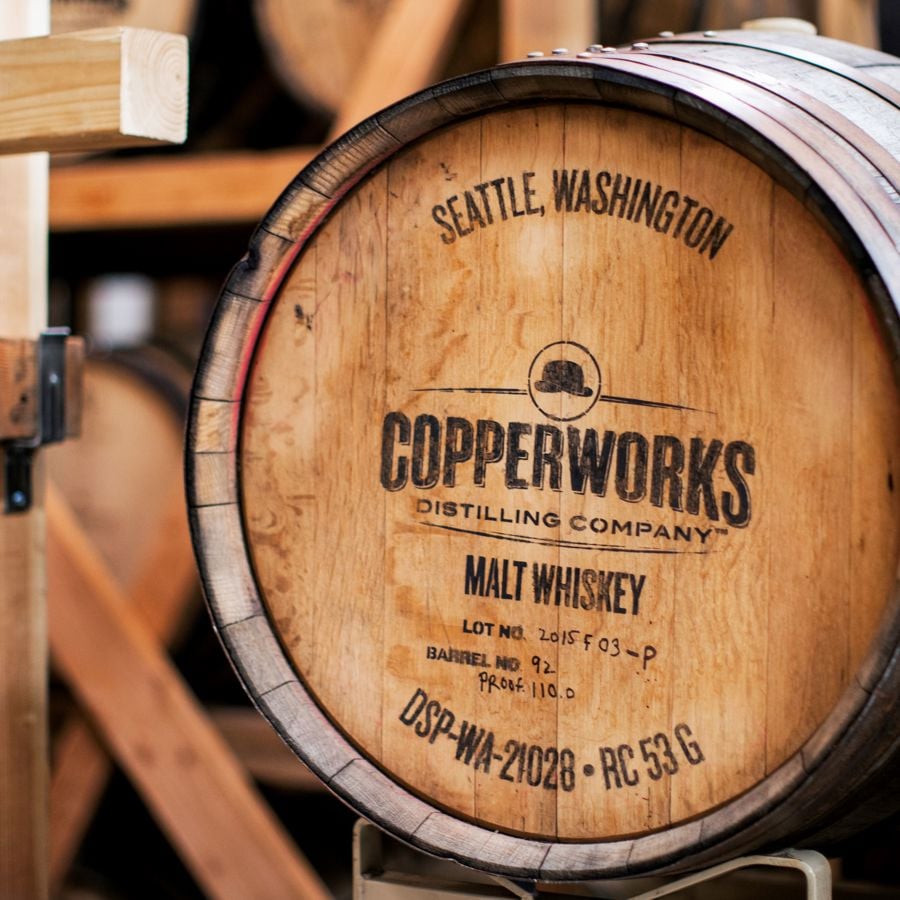
A barrel of malt whiskey ageing at the Copperworks distillery in Seattle
For the first time in more than half a century, a new category of American whiskey has been written into law: American single malt.
This might sound like simple bureaucracy, but it’s been a huge development for the nation’s drinks industry, with its previously well established repertoire of whiskeys.
It’s been years in the making, and it would not have happened without the efforts of a group of passionate producers united by the purpose of creating a movement around this exciting emerging style. “The goal was for us all to stand proud on grocery shelves together,” says Jason Parker, co-founder of Copperworks. “Not mixed in with bourbon, local spirits or international whisky, but as American single malt.” Founded in 2013, this distillery on the Seattle waterfront has been a leading light in the movement, prioritising great raw materials and using techniques and philosophies borrowed from the country’s booming craft beer industry.
These key points of difference from the regulations that govern more established American whiskeys – the most notable of which are bourbon, rye and Tennessee whiskey, made with one or a combination of corn, rye, malted barley and wheat – were crucial for the handful of distilleries who helped not only establish the style, but enshrine it into regulation. “What we expected to be a dragged-out fight was wrapped up in about 45 minutes,” says Parker, “with near-complete agreement.”
While the producers themselves were unified, it took subsequent years of lobbying with the Alcohol and Tobacco Tax and Trade Bureau. But in January 2024, the new regulations were set in stone. They draw heavily from the Scottish definition – with a few notable distinctions – and are designed to leverage the USA’s immense brewing talent.
A brief history
When Prohibition decimated the American brewing industry, those that lasted the long nights did so by innovating and diversifying into ice cream or soft drinks. The following decades weren’t much easier, even for the most intrepid of breweries, as good grain was understandably hard to come by during the Great Depression, Dust Bowl and World War II.
When the sky did begin to lighten for the thirsty folk of America, so too did their beers. The 1970s saw the rise of the immensely popular Miller Lite and in 1979 President Jimmy Carter created an exemption to excise taxes for people making beer and wine at home.
This lit a fire under an already existing grassroots movement, which paved the way for passionate home brewers to build micro-breweries across the US. The rapid growth encouraged craft producers in other countries to innovate, but today this craft-beer producing nation is decades ahead of the rest of the world.
Copperworks and better breweries
Even by American standards, few whiskey producers take fermenting as seriously as the Seattle-based distillery Copperworks. Led by Jason Parker, Micah Nutt and Jeff Kanof, they have been at the vanguard of the USA's beer industry for the past 40 years.
To create malt whisky, you need a wash – a mixture of malted barley and warm water that’s fermented to a low strength to be distilled later, which is already analogous to an unhopped beer. Copperworks creates whiskey with a brewer’s mindset, transforming flavourful, craft beer-quality washes – something rarely seen in whiskey production – into exceptional single malts.
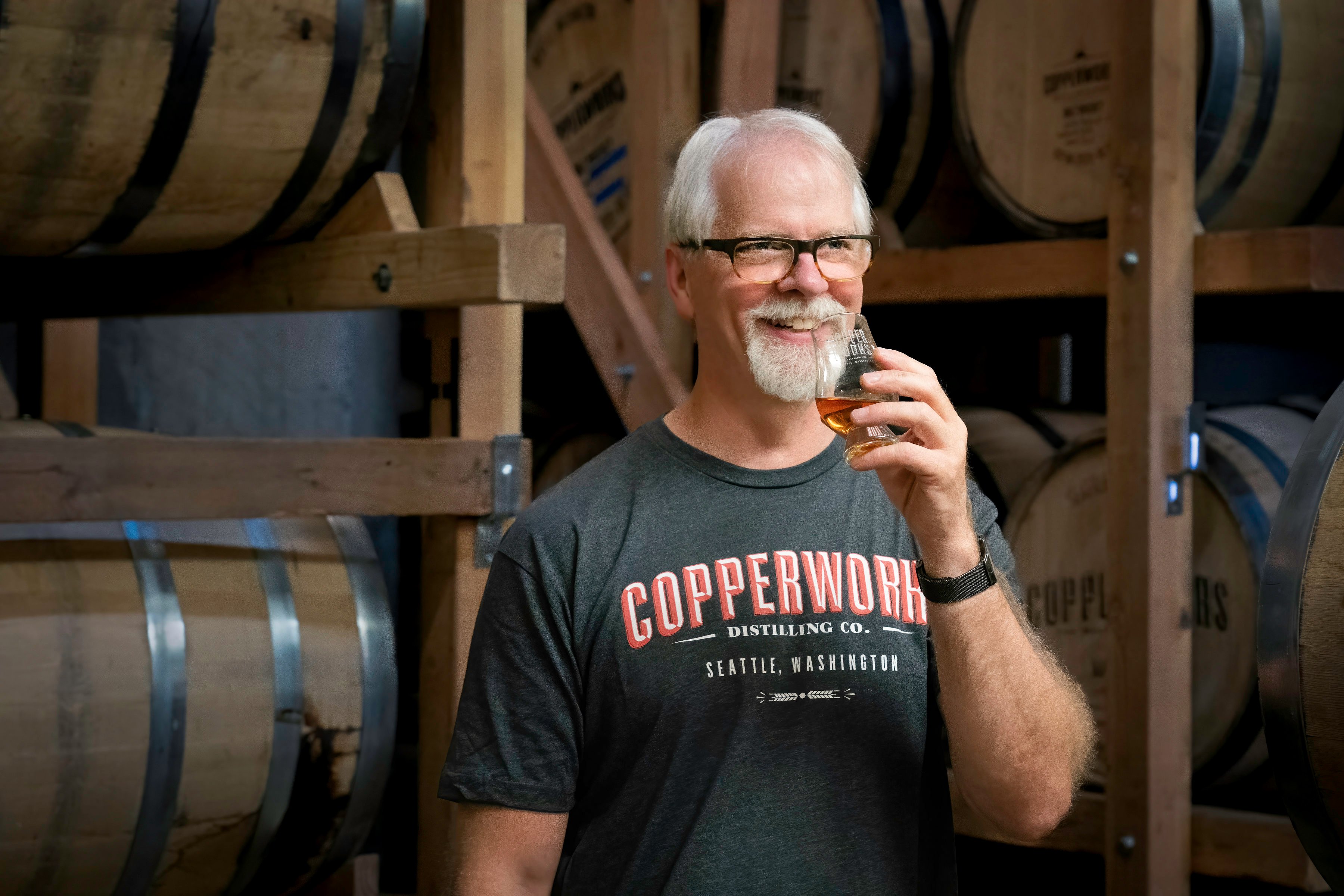
Distilleries have done an excellent job of showing whisky fans how maturation shapes flavour, but Copperworks emphasises the importance of what happens at the very beginning, understanding that great whisky is driven by a new-make spirit that’s full of character before it even touches a cask. Before any interaction with oak takes place, all of the raw spirit's flavour is created during fermentation, and selected by the stills, making this stage a process that demands patience and precision.
The importance of the fermentation process is why the team were instrumental in ensuring the recent American single malt regulations allowed distillers to work with multiple breweries, something not allowed in Scotland or Ireland. As Parker is quick to tell me, Copperworks' distillery “was built to work with much better breweries than we could afford to build ourselves.”
Leveraging a wealth of talented brewers allows Copperworks to continually explore new ways to create flavour in their whiskeys. While this process isn’t always done under one roof, they are meticulous about sourcing the barley, creating the recipes, and maintaining control over every parameter in each malthouse.
“The breweries usually buy pneumatic trucks full of commodity priced grain, and we're bringing in this really craft malt,” says Parker. “Often, this is the first time they’ve worked with it, and they’re surprised by how delicious it is – and how much we pay for it!”
Breaking from tradition
Scotland is known for crafting some of the world's most revered single malts and has refined the style for hundreds of years. The influence of Scotland’s single malt whisky is so profound that Masataka Taketsuru, a Japanese chemist and sake heir, travelled there in 1918 to learn about whisky-making, and later founded Suntory and Nikka. More recently, countries from England to France, Denmark and Taiwan have all built modern whisky identities using Scotland and Japan’s single malts as a jumping-off point.
I ask Parker whether the history of established single malt producers has ever influenced their approach to American single malt. “Early distillers were driven by the need to preserve grain – not generate flavour,” he replies. “They built a specific skill set around maximising alcohol yield. Over time, these distillers became brand owners. That meant they created a delicious and traditional spirit, which tended to focus on efficiency.”
While there are notable producers in Scotland and beyond that spend time and energy on their fermentations, it is true that the primary driver of whiskey wash production for many large producers is alcohol yield.
“Scottish distilleries are totally transparent with me about the ‘how,’ but when I ask ‘why’, their answer is always the same,” Parker continues. “It’s tradition. ‘We've always made it this way. It's been around for 150 years. Damned if I'm going to be the guy that's going to change that recipe.’”
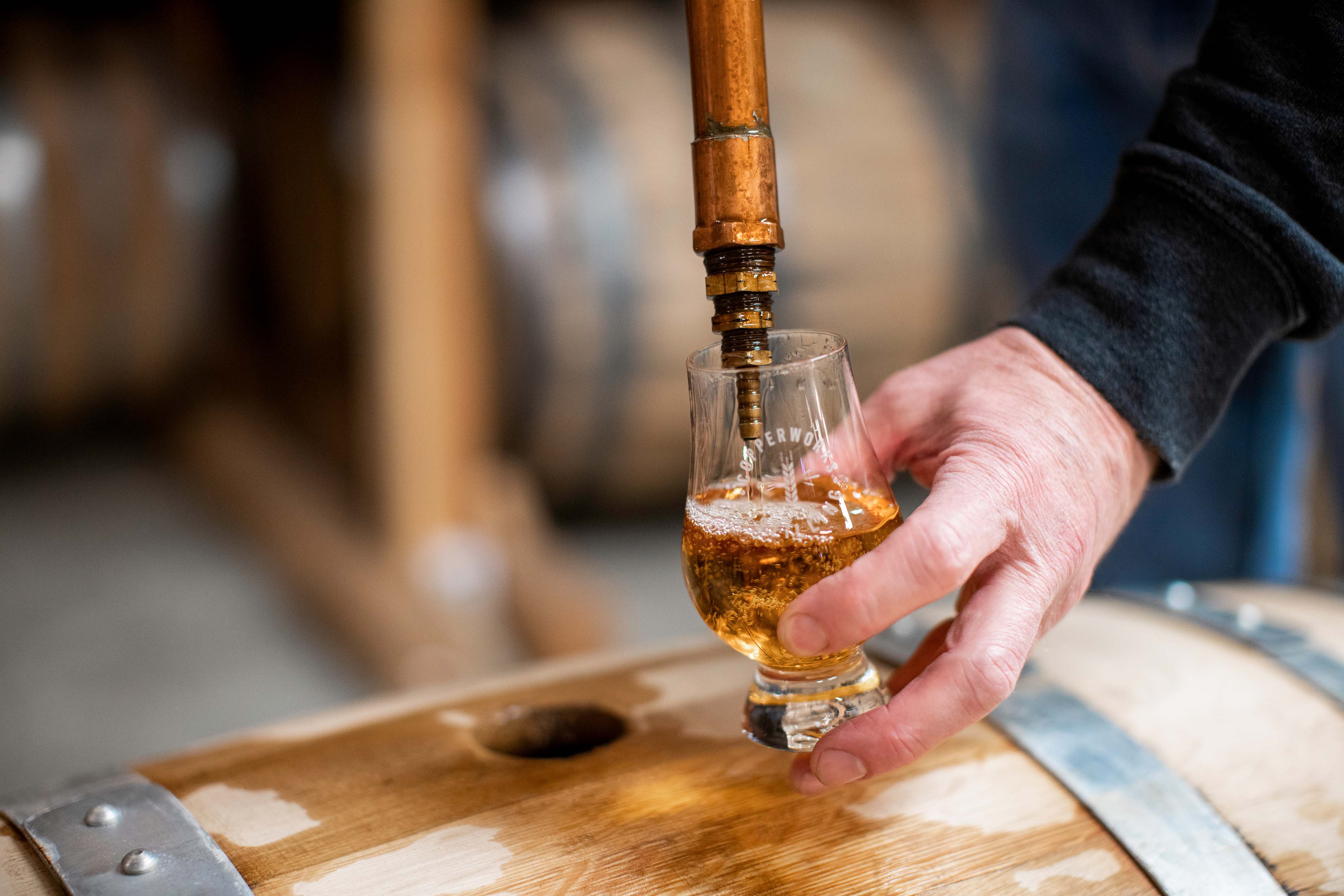
Recognising the missed potential in the style of whisky that he so clearly loves, Parker seized the opportunity to make single malt from a brewer's perspective, free from the constraints of traditional practices in other malt-producing distilleries.
“When we say we use craft beer with no hops and boil the wash, in Scotland, their minds blow,” Parker says. “They're like, ‘You can't do that, man, that's going to lower your yield.’ But when they come visit and they taste the new make spirit, they're like, ‘How the hell do you get these flavours?’”
To emphasise the point, Parker shares that when other distillers visit Copperworks, they drink beer directly from the fermenter. That would be quite difficult in a traditional single malt setup due to the high levels of lactic acid bacteria and wild yeast, which would upset the stomach as much as the taste buds.
This willingness to challenge conventional wisdom and play to their strengths is what sets Copperworks apart, resulting in bright, bouncy, and fruit-driven malts.
Field to glass
The Copperworks team try to treat grain much like winemakers approach grapes, sourcing single-variety, single-harvest barley from local farms, and fermenting to spec at multiple breweries. This allows them to control each stage from field to glass, expressing different barley varieties and terroirs along the way. For Parker, this marks the beginning of a multi-generational experiment.
“We need hundreds of distillers to be doing this for hundreds of years,” he says. "I think we'll start to see regional terroirs emerge, like wine, where certain flavours are tied to specific places."
This goal of expressing terroir in barley resulted in the creation of their permanent release, Farm Smith. This concept, released twice a year, features different barley varieties from numerous locations and harvest years. “It'll always be different, but we tell a story about why it’s different,” says Parker. “And we're proud of that.”
The same approach to good grain and long ferments was incredibly successful in bringing out the character of Genie barely in Release No.046 – the deserved winner of our New Wave Whisky of the Year award for 2025.
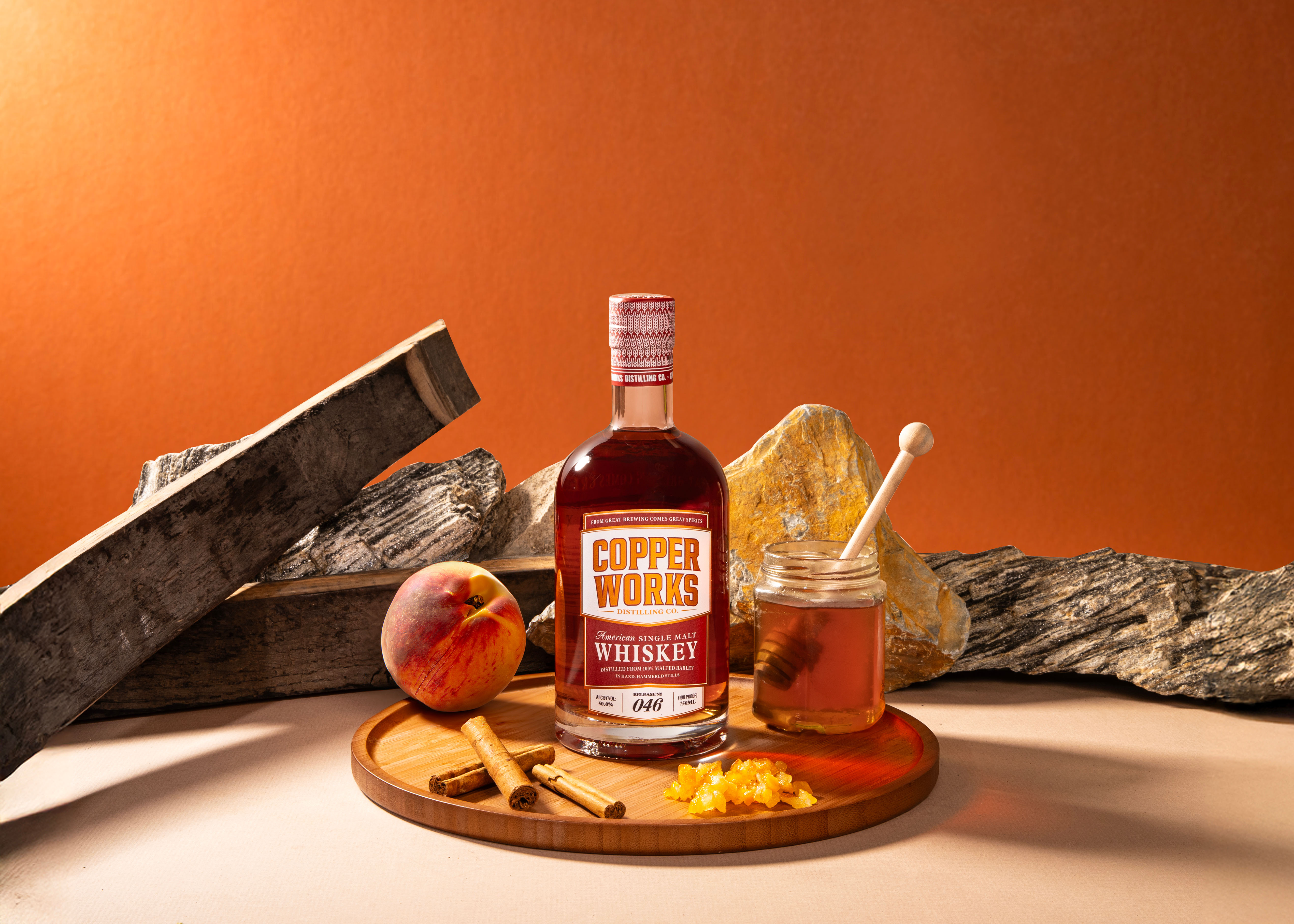
From the American single malt movement to new distilleries and regions capturing drinkers' attention, the world of whisky is at an exciting stage of its development, and the award aims to shine a light on the producers at the heart of it. The Whisky Exchange gathered a panel of industry experts for a judging event at Whisky Show in London in late 2024, they blind tasted a selection of drams from a shortlist of new-wave producers, and this expression was the clear winner.
“We’re delighted to champion Copperworks as our winner – they embody everything this award was created for,” says our buying director Dawn Davies MW. “I was introduced to them by Dave Broom. At the time their spirit was only two years old, but I could see the potential. It was so beautifully fruit-driven.
“When they hit three years, I was there waiting and I have not been disappointed. This small batch release has a wonderful note of peach ice tea and the wood is seamlessly woven into the fruit. It won the blind tasting hands down with its big fruit flavours – it was fantastic to see people’s reaction.”
While American single malt is still in its infancy, it’s a style that’s supported by the country’s unrivalled expertise in brewing. Parker’s vision of an environment where terroir, experimentation, and local collaboration are commonplace is an exciting prospect, in a future where prioritising the local will shift from being a preference to an essential practice. As a leading light in the movement, we believe Copperworks is poised to achieve extraordinary things in the coming years.
“New players are going to experiment with what they have locally and what their customers are passionate about,” says Parker. “I just have this feeling that when it comes to the idea of flavour in whisky, we're going to blow the doors off.”




