


 United States — would you like to set this as your default country of delivery?


 Trade
Trade  Shops & Events
  Customer Service
 New Riff Distilling: A Guide to the New Wave of Kentucky Bourbon
We catch up with master distiller Brian Sprance of New Riff to discuss our Whisky of the Year for 2025, the state of craft distilling in Kentucky and the rise of American single malt

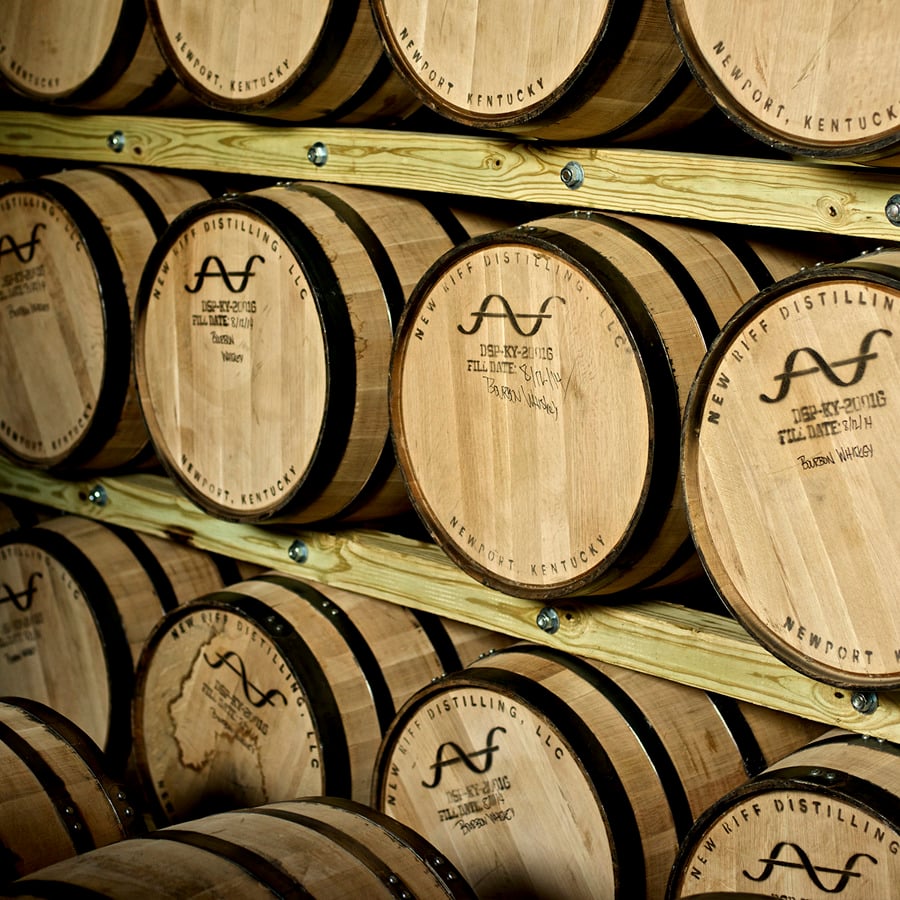
Barrels in the cellar at New Riff's distillery
Brian Sprance has been making whiskey at New Riff since they first fired the stills in 2014. But even so, he was apprehensive about being named its first master distiller. "It’s a big, heady job title and we’re pretty humble out here," he says. It was the brand’s "amazing" CEO Hannah Lowen who wanted to wanted him to take the title. "To get her off my back I said, jokingly, ‘Give us 10 years, let us put out a 10-year-old whiskey.' Guess who didn’t forget."
A decade on, and it’s not just Sprance himself receiving plaudits: New Riff’s Bottled in Bond Bourbon was voted The Whisky Exchange’s Whisky of the Year for 2025 following a blind tasting attended by industry experts and members of the public. It saw off competition from some of the biggest names in Scotland and Ireland to become only the second American distillery ever to take the award. This is all the more impressive when you consider that Sprance had no experience in whiskey before arriving at New Riff. As with many of the new generation of American distillers, he began his career in the craft beer world.
It was kind of a leap of faith," he says. "I think there was eight of us at in the beginning and nobody had any whiskey-making experience whatsoever. I wasn't even a whiskey drinker before I started learning how to make whiskey. So, we didn't have any good habits, but we didn't have any bad habits. I literally had no habits whatsoever."
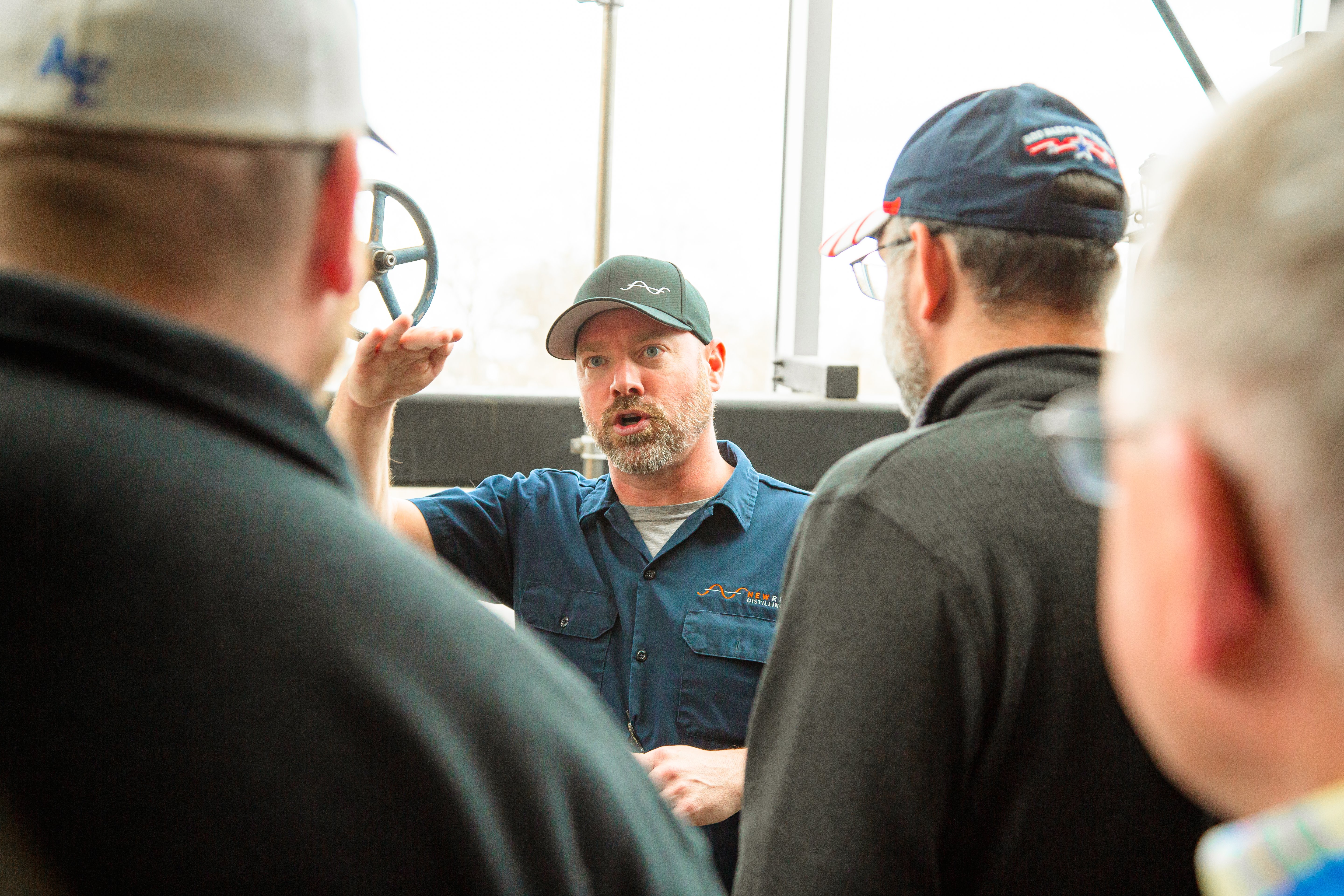
While the aforementioned job title is a more recent development, it follows a decade of Sprance shaping the brand and its whiskeys since industry legend Larry Ebersold first took a chance on him as a distiller. Following a storied career with distilling giant Seagram, Ebersold was brought in by New Riff’s owner Ken Lewis at an early stage to help build the company. "The way Larry always put it across is, if he had hired somebody from one the heritage distilleries, they would’ve come up and started making what they were used to," Sprance says. "But we really didn’t have any preconceived notions. A lot of things were completely new to us and nothing was off the table. We had a blank slate to work with."
While Ebersold been a constant source of guidance for Sprance and his crew, it wasn’t long before he stepped back to let them play in the sandbox he helped build, and the New Riff project began to take shape. "I was given the opportunity to start up a Kentucky bourbon and rye distillery with a small team," says Sprance. "I was terrified at times, but there was so much excitement. Those kinds of opportunities aren’t really going to present themselves too many times in life."
Made in Kentucky
When the team at New Riff filled their first casks, the whiskey scene in Kentucky was defined by a handful of big players. They have since established themselves as key name in a new wave of small distilleries. When they began, there were only a few dozen whiskey producers across the state of Kentucky. Now, there are over 100.
"When we opened in 2014, we were kind of the new kid on the block," Sprance explains. "There weren't a bunch of distilleries in Kentucky our size. So, we had a lot of people interested in us, a lot of distillers from the heritage distilleries down in Kentucky. We were kind of a novelty to them, but there was so much experience walking through the door here that we were able to show people around give tours, but also to put our work in front of them to get real-time feedback."
New Riff is located in Newport, just across the Ohio river from the city of Cincinnati. The setting, like the distillery itself, is a far cry from the bourbon trail and the distilleries that have defined Kentucky whiskey for centuries. Happily enough, the relationship between New Riff and the old guard has always been positive.
"It was really fun to sit and talk with distillers and all the people that run the businesses in Kentucky. It’s very much an open book around here. There's not a lot of questions that I won’t openly answer, and when I call other people they’re very forthcoming with information – sharing ideas and techniques. It’s just good to be part of the community and lift each other up. We're not here to try to kick other people off the shelf."
Talking to Sprance about New Riff, there’s an overwhelming sense of creativity and a fascination with newness. He’s quick to say that they are primarily a bourbon and rye distillery in the proud Kentucky tradition, but there’s an adventurousness to his work that’s fascinating. However, when I ask if New Riff is an experimental distillery, he assures me that the team are strategic in their creativity – it’s much more method than madness.
"I think a lot of times what I envision when people say ‘experimental’ is throwing a million things against the wall and seeing what sticks. We’re experimenting with a lot of things, but we do a lot of research and R&D on what we want to make."
His experience in brewing has hugely informed Sprance’s approach to whisky making. Conversation about whiskey flits between references to heirloom barley varieties, chocolate malt, barley wine making, native peat and wild yeasts. Across New Riff’s growing range of whiskies, this emphasis on grain and fermentation remains constant. "With my background as a brewer, everything starts with sourcing the highest quality raw materials – corn, rye and malted barley. We have the luxury of being able to search out exactly who and what we want to work with.

"One of the things I learned early on is that when you’re distilling, you’re not going to make the whiskey better, you’re more magnifying all the flavours that you’ve created through fermentation."
A key hallmark of the new American whiskey scene is this willingness to explore – and crucially to talk about – parts of the whisky making process that have historically been glossed over. Whether you’re making Kentucky straight bourbon or single malt Scotch, the handling of grain and fermentation is often characterised as a matter of yield and consistency. It’s not that the new wave of American craft distillers invented heirloom grain or creative fermentation regimes, but they are highlighting the importance of these things in creating flavour.
"I think Ken appreciated the fact that the brewers are particularly nerdy about their fermentation practise and have a lot of experience with raw materials," says Sprance. "There are just countless ways to influence flavour in your finished whiskey."
New Riff Bottled in Bond Bourbon is unmistakably a Kentucky straight bourbon, Sprance and co aren’t trying to reinvent the wheel in terms of style with this particular release. But there’s a thread of dark fruit and citrus running through it, as well as a herbal side that seems to come from the malted rye in the recipe, that speaks to a particular house style. That sense of distillery character is something that whisky drinkers often increasingly gravitate towards and New Riff has it in spades – impressive for a brand that’s only been around for 10 years.
"Once we dialled in on the flavour profile that we liked in our bourbon and then our rye, we made the same two whiskeys for probably the first three or four months, because the advice was to do it this way to figure out what this distillery was going to give us. Because whiskey’s flavour is so geographical. I mean, our windows are open, we have wild yeasts, we have all these bacteria, you just have to wait and see what the distillery is going to give you."
The old and the new
Another key feature of New Riff has been a willingness to explore styles outside the traditional whiskies Kentucky has produced for centuries. When regulations defining the nascent American single malt category came into effect in January 2025, New Riff already had such whiskies ready to go in cask and bottle.
"At the core of our business, we make Kentucky straight bourbon and Kentucky straight rye whiskey. That’s what pays the bills and keeps the lights on. It's also those things that allow us to kind of spread our wings and find some other things that we like to make. For example, our bourbon recipe is 5% malted barley. That's not a tonne, but knowing that malted barley is used in this process, we very quickly said ‘Why don’t we make 100% malted barley whiskey?'
"We didn't want to throw a million variables at the process. So, we just made 100% Marris Otter malted barley whiskey, ran it through the stills, and loved how it tasted. From there, we started getting a little bit more adventurous and then we were like ‘Alright, we really like Marris Otter, so let's try Golden Promise."
Golden Promise is the hybrid barley variety used historically in legendary distilleries like Macallan in Speyside and Karuizawa in Japan. By entering the world of single malt, with all its international heritage and prestige, New Riff is making a resounding statement about what it’s achieved and where it’s going. "It’s probably my favourite of our whiskeys, just because that was us venturing off into the unknown. To us it was the culmination of working with literally every single malted barley variety that we could think of. It’s become kind of like our playground. And it was seven or eight years in the making, learning about that whiskey and then being able to put it together."
At present, around 20% of the New Riff warehouses are dedicated to what Sprance calls ‘specialty whiskies’ – which includes variations on rye and bourbon and various forms of single malt. "We're not going bananas and deciding we're going to commit 50% of our production this year to something that's insane. It's very focused. But it also takes years to figure out what you're going to get out of your warehouse sometimes. Jay calls this the ‘bourbon binoculars’, where you just have to put your best guess at what you think will be relevant in years, if not decades, from now."
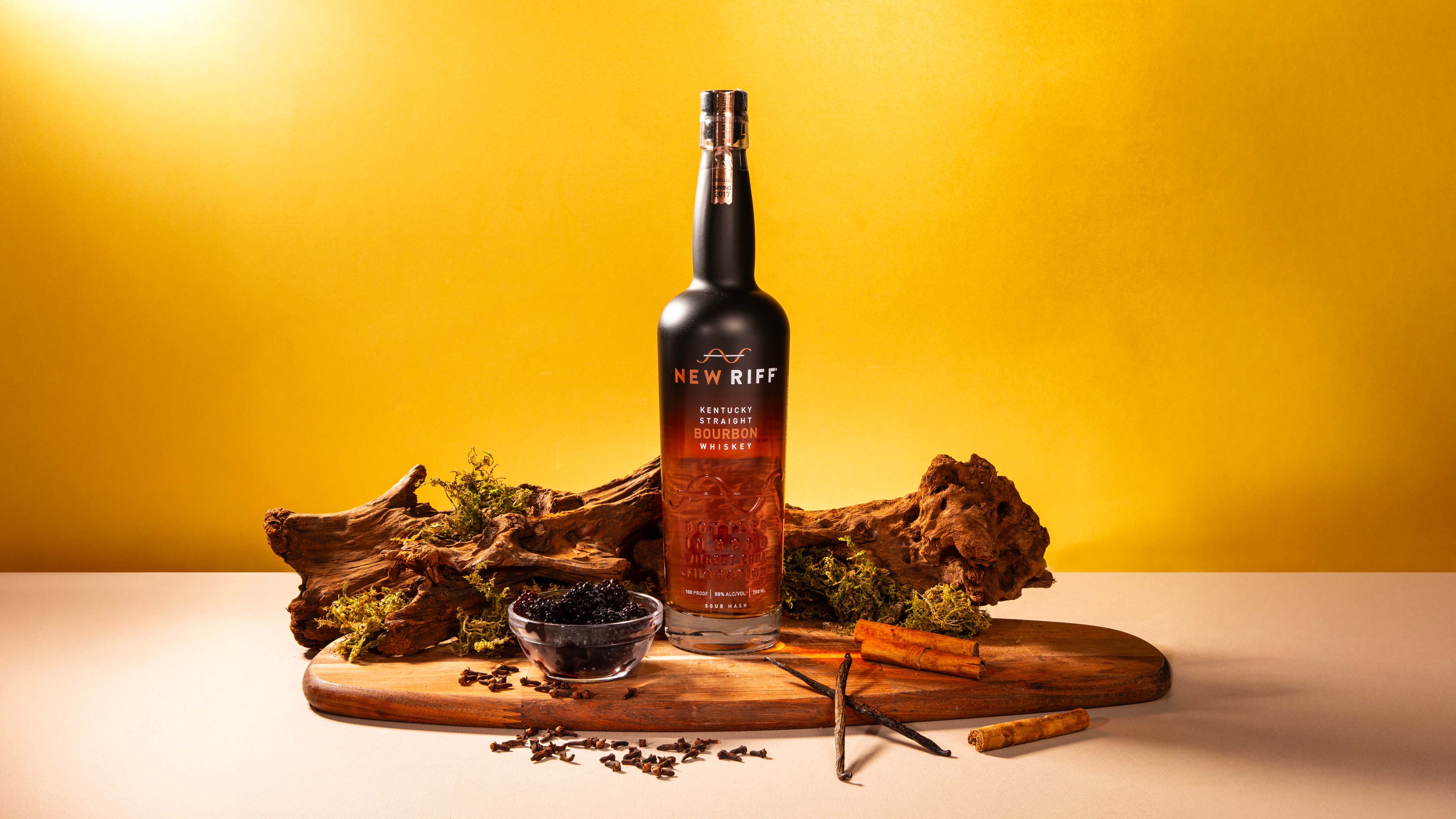
When I ask if Sprance has a particular favourite whiskey to work with, he’s quick to return to where it all began. "My sentimental favourite will always probably be our four-year-old bottled-in-bond bourbon, because it was the culmination of years of working extremely hard and being terrified, asking ‘Are we doing the right thing?’
"At the end of those four years was the first time that we'd ever sat down and tried to put blends together, so there was so much work that went into making a four-year-old product that was bottled in bond. We were kind of flying blind for a while. We knew the quality of the whiskey was there, but we weren't really sure how the environment was influencing it. Putting the puzzle together, and actually being able to put out those first four-year-old blends, was very rewarding
"There’s only so many things you can do to a four-year-old bottled-in-bond whiskey. One of the best compliments we get is ‘I can't believe your whiskey tastes so good for four years old.’ That just means we’ve done our job."
Thankfully, that hard work is paying off and the whisky community outside of Kentucky has taken notice. "Getting to travel and meet some of your heroes and to get the nod of ‘you guys done good.’ We put our hearts and souls into it and we’re just really proud. You know, it kind of gets us in our feels sometimes, but there's just such a heartfelt, sentimental attachment to really everything we do… because we did it.
"One of our favourite distilleries is Springbank, and last year we were able to start shipping them empty barrels. Our sensory warehouse manager was actually over there this year taking pictures, and to see the New Riff logo sitting in a Springbank warehouse on a barrel that’s ageing away is incredible. It’s super rewarding. That's the kind of cool stuff where you're like, ‘Pinch me’."
While distilleries like New Riff aren’t looking to compete directly with the titans of Kentucky or Scotland, there’s a sense that them entering the conversation is good for whisky drinkers everywhere. When you’re a small operation, you can move quickly, you can try things and you can offer a fresh perspective on centuries-old spirits. By finding links between bourbon, rye, single malt and other styles, you might even start to break down perceived barriers between different forms of whisky and make the whisky world larger for everyone. Not that Sprance, with his Kentucky modesty, would claim any credit. "At the end of the day, we’re making whiskey, and it should be fun.
"Business is tough at times and life comes at you fast. But to have a very positive vibe and an energy to a to a place like I think that we have here, that goes a long way. There’s no scientific or technical background or basis for saying that that makes whiskey taste better, but we believe it."


