


 United States — would you like to set this as your default country of delivery?


 Trade
Trade  Shops & Events
  Customer Service
 Exploring Green Chartreuse: A Guide to the French Liqueur
Of all the world's liqueurs, there are few as prestigious or sought-after as Chartreuse. Get to know the fascinating story of these unique digestifs, as made by the same silent order of monks since at least the 1730s

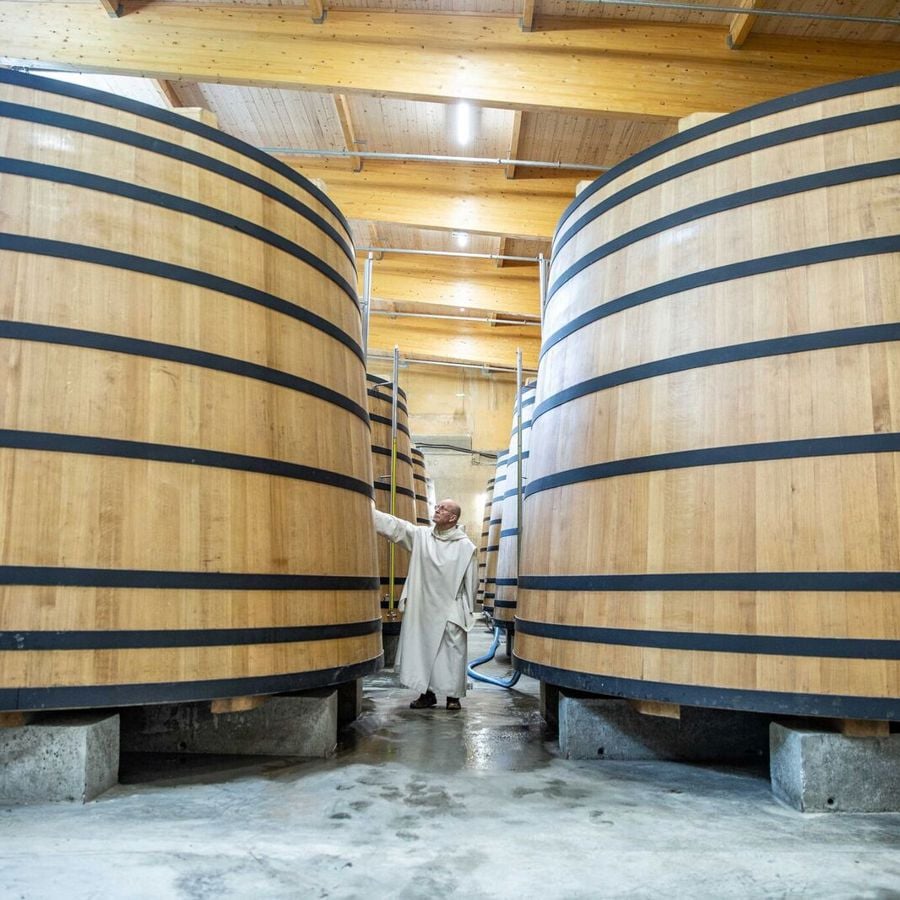
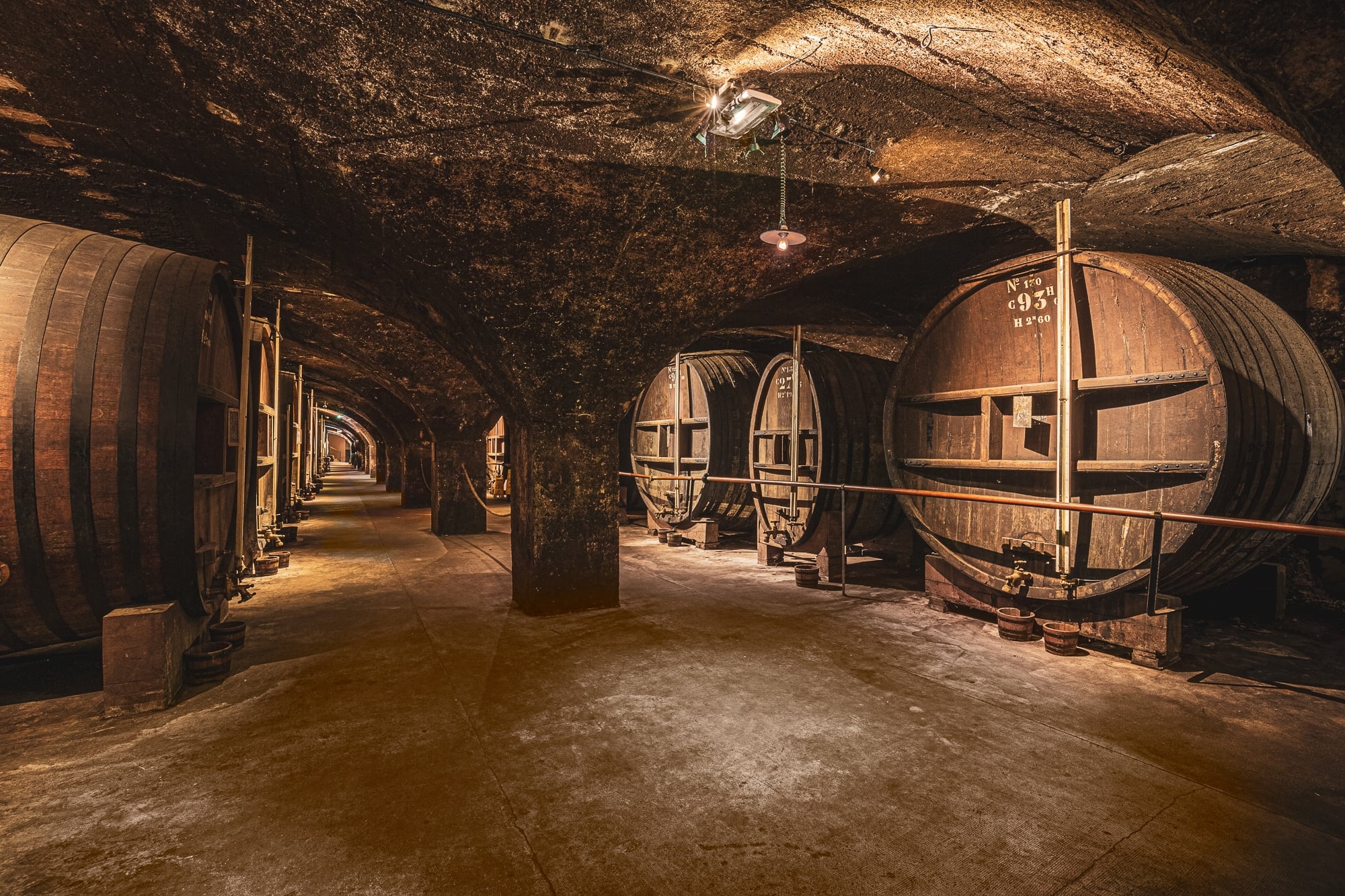
Oak vats at the Chartreuse distillery in Aiguenoire
Stéphane Couchet
What is Chartreuse?
It's no exaggeration to say that the Chartreuse family of French herbal liqueurs is unique in the world of drinks. These complex botanical digestifs have been made by the silent order of Carthusian monks to a series of secret recipes for almost 300 years – though their history arguably stretches back to the 11th century.
The iconic Green Chartreuse has been a mainstay in drinks cabinets and cocktail bars for centuries, while the milder Yellow Chartreuse and highly concentrated Chartreuse Élixir Végétal have a following all their own. The status of Chartreuse is such that since the 19th century it has been known affectionately as ‘the Queen of Liqueurs’.
Chartreuse features in some of the canonical cocktail books of the late 19th and early 20th centuries – notably in classic drinks like the Bijou, the Last Word and the Brandy Daisy. This connection to cocktail culture has even seen Chartreuse take on a cult following, especially since the turn of the millennium. Modern concoctions like the Nuclear Daiquiri – which pairs Green Chartreuse with falernum and overproof rum – and the Yellow Chartreuse and tequila-based Naked & Famous are today enjoyed around the world. In fact, Chartreuse has proved so popular in recent years that you’ll often hear bartenders lamenting the scarcity of its peerless liqueurs.
The difficulty in securing a case of Yellow or Green Chartreuse is perhaps unsurprising when you consider that they are still made by the same order of silent monks as they have always been, in a small distillery north of Grenoble in southeastern France.
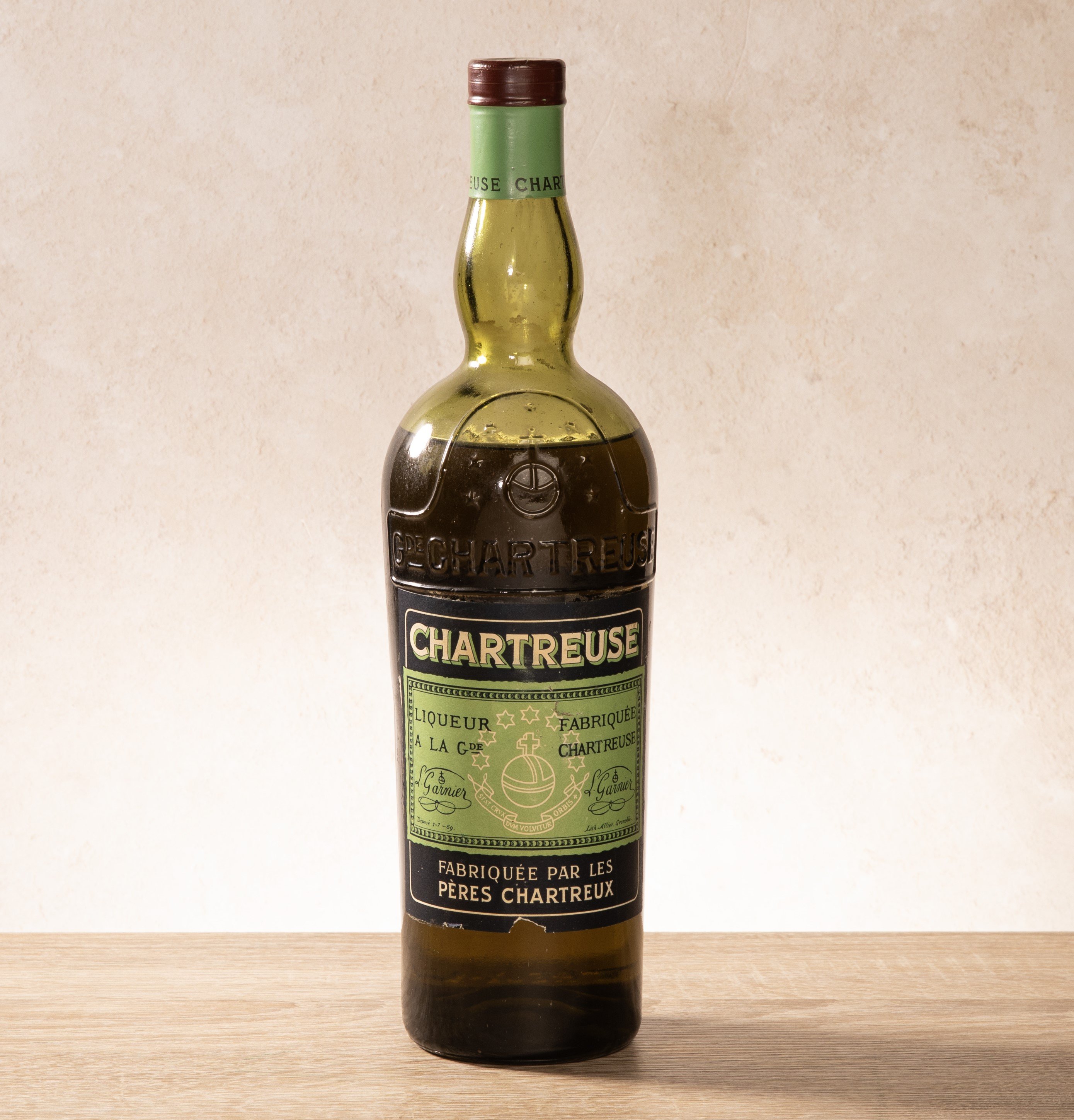
In addition to the popularity (and scarcity) of contemporary bottlings, vintage examples of Chartreuse are also highly collectable. This is due in part to the fact that the travails of the Carthusian order have seen production move several times over the years, resulting in subtle variations in style and character. But mainly, those who buy older bottlings do so because Chartreuse is perhaps the only liqueur that truly matures with age and continues to develop in the bottle.
The history of Yellow and Green Chartreuse Liqueurs
When distilled spirits were in their infancy, it was common for early users of the pot still to flavour their creations with herbs, spices and honey or sugar. While we might imagine this was initially done to smooth the sharper edges of the spirit, this practice gave rise to botanical-infused drinks like gin, aquavit and absinthe.
In those early days, distilling was tied up in notions of ritual, alchemy and medicine. It might be hard today to grasp why holy orders would make alcohol but brewing and distilling were just two of the many crafts that would have been taught at monasteries. For much of early modern history, they functioned in part like a network of learning institutions that spanned the Christian world.
It's not unusual in the history of spirits to find monasteries making botanical infusions we would recognise as liqueurs and prescribing them for their perceived health benefits. This includes forerunners to the herbal digestifs common in France today.
The legend of Chartreuse begins in the 1084 with the establishment of the Carthusian order of monks by St Bruno of Cologne, in the shadow of the Chartreuse Mountains. Over the ensuing centuries the order established monasteries known as charterhouses in France, Britain and Ireland.
Chartreuse itself is said to have been born in 1605, when French military officer and diplomat François-Annibal d'Estrées gifted the monks of the Carthusian charterhouse in Paris a document containing the recipe for an ‘elixir of life’. The origin of this recipe and its exact relationship to modern Chartreuse is hard to verify, as it took more than a century for the first iteration of the iconic liqueur to emerge from the Monastère de la Grande Chartreuse near Grenoble. In 1737, the order began producing the forerunner to the Chartreuse Élixir Végétal we still enjoy today, offering it as a tonic and restorative. Green Chartreuse followed in 1764 and Yellow in 1838.
In the 1840s, the reputation of the Chartreuse increased among the local population in France, causing the order behind it to seek a trademark for its liqueurs. They were further motivated by the fact that imitation Green and Yellow Chartreuse was becoming rampant as enterprising counterfeiters attempted to cash in on the success.
To mark out the genuine article, the Carthusians gave Chartreuse the distinctive livery and unique bottle shape that remains recognisable to this day. Subtle variations in the labels and glass allow collectors to date bottles of Chartreuse to particular eras of production. In 1869, despite suggestions from the Vatican that the order move away from distilling to focus on prayer and maintenance of the silent order, Chartreuse was trademarked in France.
In 1903, amid a febrile period of anti-clergy sentiment in the French government, the Carthusian order was forced to seek a new location to continue its work and the production of Chartreuse. The site chosen was a former textile mill in Tarragona, Spain and Chartreuse continued to be made there until 1989, surviving bombing during the Spanish Civil War in the process.
From 1921 to 1929, the order also operated a distillery in Marseilles where the Tarragona Chartreuse was bottled as well. It was only in the relative calm that followed the Second World War that the queen of liqueurs returned to its ancestral home in the Chartreuse Mountains.
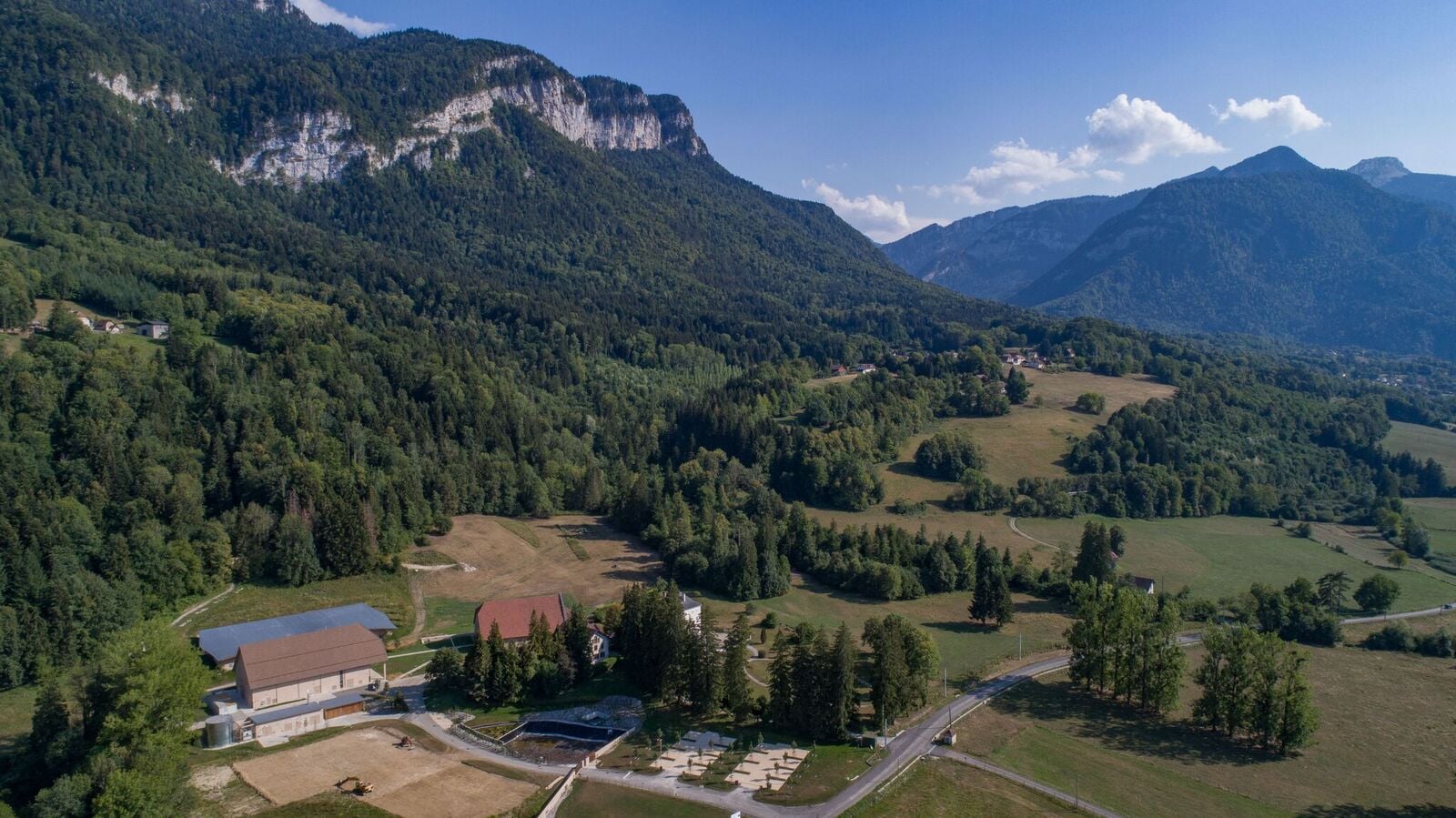
Today, Chartreuse is made at a purpose-built distillery in Aiguenoire, just outside Grenoble. In addition to the original Élixir Végétal, and the classic Green and Yellow varieties, it releases small batches of oak-aged Chartreuse Vieillissement Exceptionnellement Prolongé (or VEP) and limited-edition expressions.
How is Chartreuse made?
The truthful answer to this simple question is that we don’t know exactly. The complete recipe for Chartreuse is a closely guarded secret, purportedly known to only two members of the Carthusian order at any given time.
We know that Green Chartreuse is based on a sugar beet spirit, infused with 130 different botanicals – likely by a combination of compounding and redistillation – and sweetened with sugar. The secrecy surrounding the nature and proportions of these ingredients is such that the monks blend them together in unmarked bags, which are then delivered to technicians in the distillery.
Tasting would suggest that anise, mint, citrus and angelica feature in this assemblage, but we can’t say for sure. In the early days, the location of the Carthusian order’s base in the forested Chartreuse mountains and relative proximity to the trading hubs of Marseille and Genoa would have given them access to a dizzying range of native and imported ingredients. So, each bottle likely contains elements sourced from around the globe.
The softer Yellow Chartreuse is built on a grape eau-de-vie, sweetened with honey and granted its distinctive colour with saffron. Beyond that, we can but speculate. While the quality of Chartreuse speaks for itself, there is perhaps something extra delicious in this sense of mystery that appeals to die hard fans.
Types of Chartreuse
Green Chartreuse
The archetypical Chartreuse liqueur, this is the expression that made the name famous outside of France. It’s mentioned in F Scott Fitzgerald’s The Great Gatsby, features in Quentin Tarantino’s Death Proof and was even said to be a favourite of the late Queen Mother.
Bottled at a formidable 55% ABV, it has the remarkable ability to play well with other flavours, with different food pairings and cocktail combinations highlighting different elements of its botanical composition. If you’ve never tried Chartreuse before, this is the place to start.
Yellow Chartreuse
The softer side of Chartreuse, this honeyed variant pairs the anise, pine and mint notes central to its older sibling with a warming thread of saffron. Coming in at a more approachable 43% ABV, it’s beautiful when served neat but can still lend its botanical complexity to a variety of different Chartreuse cocktails. This includes the venerable Brandy Daisy – where it’s shaken with Cognac, lemon and sugar – and the Manhattan riff the Green Point, where it meets spicy rye whiskey, sweet vermouth and bitters.
Chartreuse Élixir Végétal
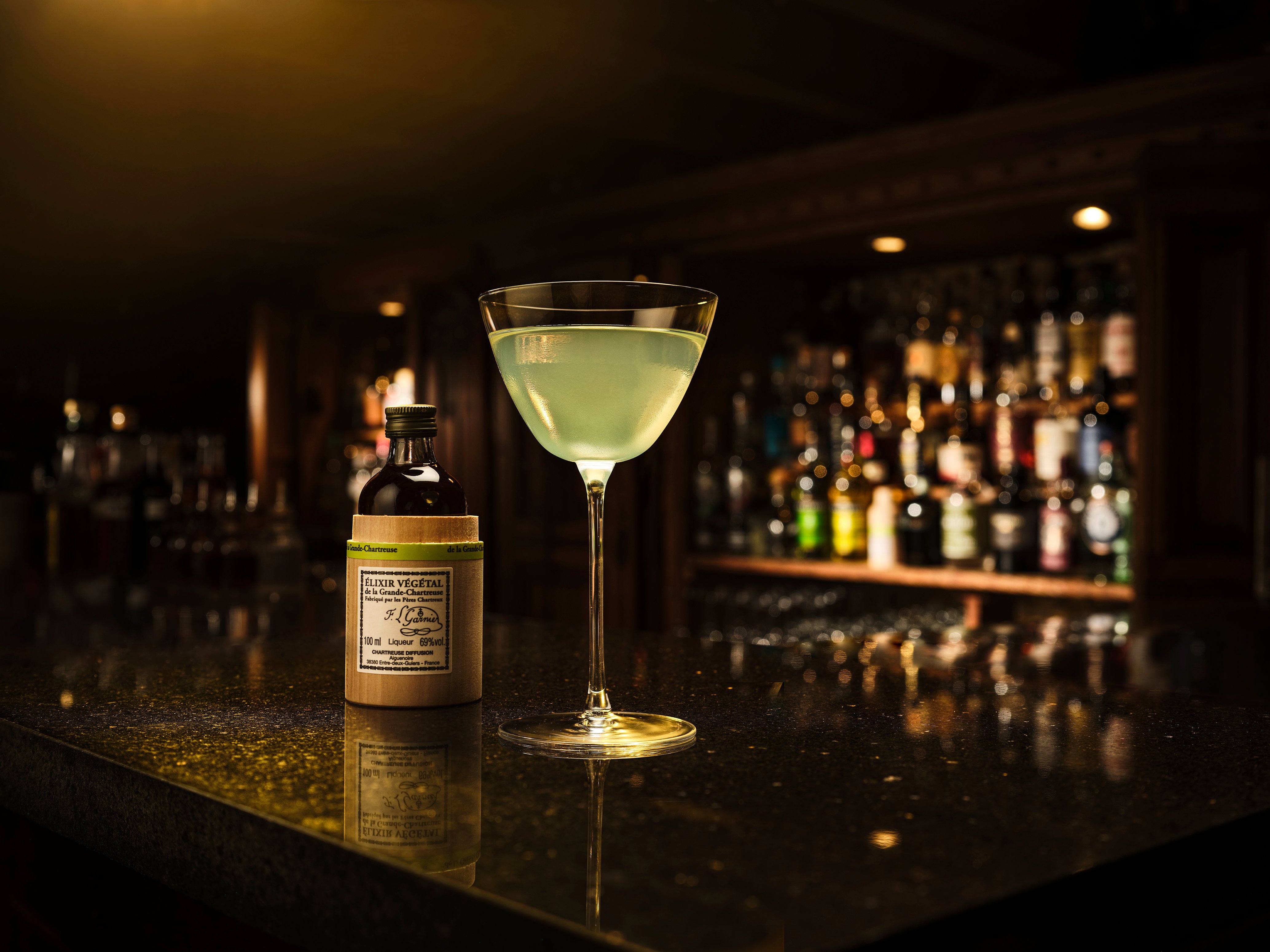
This concentrated form of Chartreuse is probably close to the first expressions created by the Carthusian monks in the 18th century. Historically, it has been doused onto sugar cubes and eaten as a treat and a form of folk medicine. While we would make no such claims of health-giving properties today, we can vouch for its versatility as a cocktail ingredient.
With it being incredibly potent at 69% ABV, it’s perhaps useful to think of this antique elixir like it’s cocktail bitters to be added to your drink by the dash or spoonful. A small dose in your Old Fashioned, Daiquiri or even Margarita can be transformative. One for the experimental home bartender.
Chartreuse VEP
The VEP versions of Chartreuse Green and Yellow are aged for at least eight years in French oak prior to blending and bottling. Each one is presented in a striking wax-sealed litre bottle, the same as those used since these expressions were introduced in 1840. The wooden box is branded with the crest of the Carthusian order, complete with seven stars representing St Bruno and his six companions, who founded the first Chartreuse monastery in the 11th century.
These bottlings offer another level of refinement and complexity and as such are often snapped up swiftly by collectors when they come to market. Older editions that have accumulated greater age in the bottle can command serious prices at auction. (More on that in a moment.)
Limited editions
Blends of various forms of Chartreuse, including those aged in oak, are sometimes released as limited-edition bottlings. These include the Chartreuse Cuvée des MOF Sommeliers – produced in collaboration with some of France’s leading wine experts – and Chartreuse Liqueur du 9th Centenaire, which pays homage to the early years of this storied brand.
Historic bottlings
The apparently unique ability for Chartreuse to age in the bottle makes historic bottlings particularly popular among enthusiasts. There is a whole subculture of collectors who will compare different expressions produced at the different distilleries the Carthusians have operated over the years. Tarragona bottlings and any featuring glass or iconography only used for a short time are of particular interest.
In 2023, an unusual twin box of Chartreuse Green and Yellow VEP, complete with labels announcing they were dedicated to the coronation of Queen Elizabeth II sold at auction in Geneva for 34,160 Swiss Francs – around £30,000.
How to drink Chartreuse
In many parts of France, you will find Chartreuse and its derivatives served neat after dinner for their supposed digestive benefits. Really, this is the perfect introduction, but one of the things that marks Chartreuse out is its sheer versatility. It’s delicious on ice or even in hot chocolate – a popular après-ski treat – and is of course excellent in the broad range of canonical Chartreuse cocktails.
When a recipe calls for Chartreuse, you may be able to sub in another alpine herbal liqueur in a pinch, but there’s nothing that will quite work the same way. Green Chartreuse for instance, has the sugar content and ABV to stand up in a variety of different mixed drinks – even when up against assertive spirits like Jamaican rum or mezcal. The sheer botanical complexity on offer means that it can map easily onto a remarkable array of different ingredients.
The compelling history, distinctive character and sheer versatility of Chartreuse – in all its guises – has helped make it a favourite of bartenders during the cocktail renaissance of the 21st century. Following a period of lagging sales in the 1980s and 90s, it has been embraced to such an extent that demand now exceeds supply. So, if you want to try making Last Words at your next cocktail party, it’s good to pick up a bottle when you can.


