


 United States — would you like to set this as your default country of delivery?


 Trade
Trade  Shops & Events
  Customer Service
 Australian Whisky Guide: Top Distilleries and Styles
A booming craft distilling scene is causing the world to take notice of Australian whiskies. Join us for a deep dive into one of the world’s most exciting whisky cultures

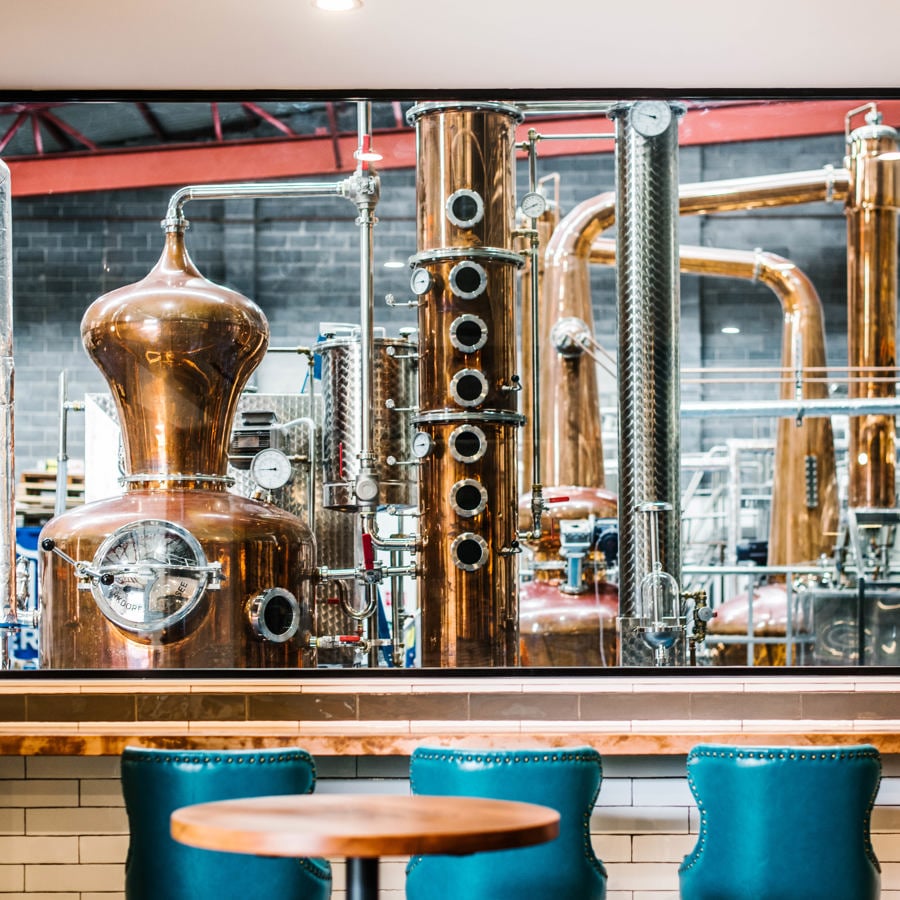
The stills at Manly Spirits
Half the world away from the traditional heartlands of single malt production, Australian whiskies were little known internationally until the 2010s. At this time, the whisky world was broadening its horizons, as die-hard consumers of American, Scottish or Irish whiskies were starting to take notice of bottlings from Japan, Taiwan and beyond.
In 2014, Sulivans Cove distillery in Tasmania caught headlines internationally when it took home the coveted World’s Best Single Malt title at the World Whiskies Awards. The medal-winning expression was Sulivans Cove French Oak, which is hard to find and understandably pricey these days. But even though that particular whisky would prove elusive to many enthusiasts, it still sparked curiosity about Australian single malts in general.
Various parts of Australia provide good conditions for growing grain, the first thing you need to make whisky. Add to that long-standing brewing and winemaking industries, and a strong craft culture and you have the building blocks of the distinctive Australian whisky scene that’s in full swing today. But the history of whisky in Australia is longer than we might think. In fact, the first malted grain spirits were made there in the late 18th century.
The history of Australian whisky
Imported rum was a crucial part of the economy in the early days of Australian settlement, acting as currency and a distraction for the colonists. It’s perhaps unsurprising that those travelling to Australia, voluntarily or otherwise, had among them people that knew their way around a pot still. As spirits were a key trade commodity, a largely unregulated moonshining culture sprung up and endured for decades, likely based on distilling whatever was to hand. This continued until the local government banned the manufacture and sale of spirits in 1800.
By the 1820s, Australia’s governors had learned a lesson that prohibitionists tend to eventually and decided it was better to tax and regulate spirits rather than encourage the moonshiners to operate in the dark. The country’s first legal whisky distillery opened in Hobart on the island of Tasmania (then known as Van Diemen’s Land) in 1822.
At that time, Tasmania was already seen as Australia’s breadbasket, with a cool maritime climate well-suited to growing wheat and barley. With the foundation of Sorell distillery, a series of events was set in motion that would transform the island into the cradle of Australian malt whisky. Its fortunes would ebb and flow over the years, but this region took on new significance in the late 20th century – more on that later.
Over the ensuing decades, distilleries making various spirits popped up in Tasmania, Victoria and New South Wales. In 1862, the Australian government passed a law enforcing minimum production thresholds for distilleries. We find similar legislation in Scotland and Ireland aimed at eliminating small distillers and consolidating production to make it easier to manage and tax. This resulted in the creation of large operations like the unromantically named Federal Distillery in Melbourne and Corio in Geelong – a venture of Distillers Company Ltd, the forerunner to modern spirits giant Diageo.
Local whisky from these two giants, as well as brandy and rum, competed with imported products into the 20th century. We can’t speak to the quality of what they were producing, but it’s clear that Scotch still held a certain glamour for Australians. In the 1960s, acts of government dropped taxes on imported spirits and the local industry suffered. One by one, distilleries fell silent, until Corio was finally shuttered in 1989. At this point Australian whisky looked set to become a mere memory.
Australia's modern distilleries
In 1992 Bill and Lyn Lark launched the first new whisky distillery in Tasmania since the aforementioned Sorell distillery closed its doors in 1838. Moved by a desire to return single malt production to Australia after a long absence, they released their first commercial bottling in 1998. The conditions in Tasmania proved perfect for whisky making once again, with pure water and abundant barley, as well as a temperate climate well-suited to cask ageing. It wasn’t long before a new generation of aspiring single malt producers followed suit.
The headline-grabbing Sulivans Cove came online in 1994, followed by Hellyers Road in 1997. Bakery Hill and Starward followed, beginning production in Victoria in 1999 and 2004, respectively. In the new millennium, with a growing number of new distillers trying their hands at malt whisky making, a reappraisal began of what Australian whisky might look like.
Not content to make malt whiskies in the established Scottish style, producers began to experiment with local ingredients and materials to offer points of difference for their wares. Casks from the longstanding Australian wine industry, including those used to make locally produced fortified wines, became a part of the discussion.
As the number of whisky producers grew significantly – it stands at more than 100 at the time of writing – smaller, more nimble operations began to experiment with different grains and cask types. The number of brands currently exported to the UK and other key markets around the world is modest at present. But the wide range of boutique producers and the thriving industry in key centres like Tasmania and Victoria may well make Australian whisky a force to be reckoned with in the coming years.
Australian whisky distilleries to try
New expressions from Australia are becoming available internationally all the time. In fact, it can be a little difficult to keep track of everything right now. These are just a few of the distilleries you might consider if you want a taste of one of the world’s most exciting whisky cultures.
Morris of Rutherglen
The Morris family has owned wineries in north-eastern Victoria since the 1850s, notably creating fortified wines that share commonalities with port and sherry. As well as operating a cooperage with a ready access to top-quality casks, they also owned a brewery and a copper pot still originally intended to provide spirit for fortification. They had everything they needed to create distinctively Australian single malts; all it took was to put them together.
The first distillations of Morris single malt took place in 2016 and production came into full force shortly afterwards, with some assistance from the late great consulting distiller Dr Jim Swan. Since then, Morris single malts have taken on a distinct identity, shaped by the family’s fortified wine casks. Morris Muscat Barrel makes a great introduction to the house style. Initially aged in French and American oak wine casks and finished in sweet muscat casks, this rich single malt offers notes of golden sultanas, vanilla, marmalade and cinnamon. A great after-dinner dram and a beautiful example of the way Australian whisky is informed by local culture and traditions.
Manly Spirits
When we talk about coastal whiskies, we tend to picture the west of Scotland with its rugged shoreline and bracing climate. This couldn’t be further from the conditions in Manly, a beachfront suburb of Sydney, where the eponymous Manly distillery is currently laying down casks of single malt in view of the Pacific Ocean. The pot stills at Manly are tall, with slender necks, to promote copper contact during distillation and achieve a lighter spirit character overall.
Manly releases to date include bourbon barrel and Australian red wine cask aged whiskies, both of which speak to an easy-going and lightly honeyed distillery character with white fruit and dry spices. One to watch.
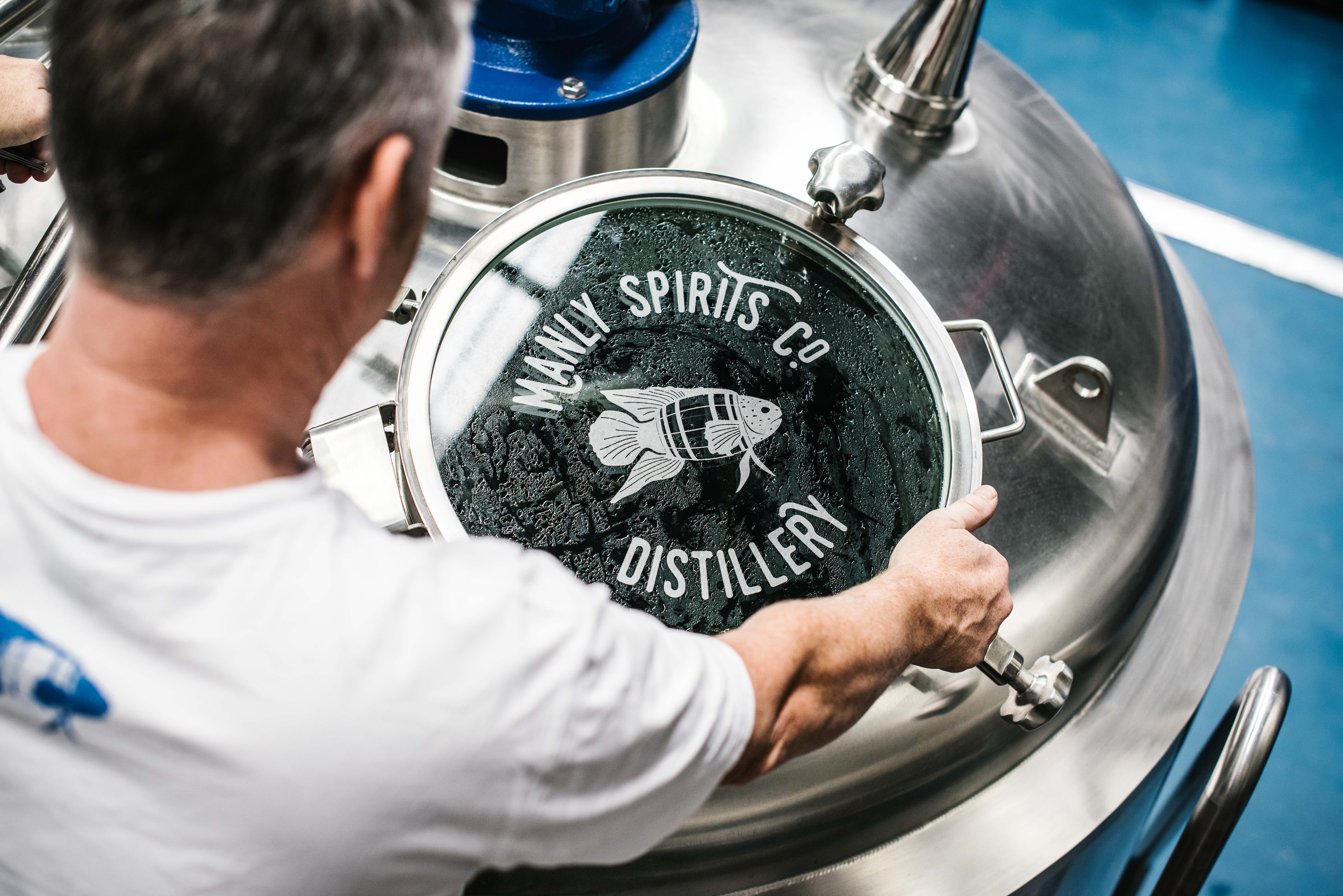
Starward
Former craft brewer and whisky lover David Vitale was inspired to build Starward distillery after visiting Tasmania and witnessing its burgeoning single malt scene for himself. Bringing a fermentation-based approach that prioritises flavour over yield, Vitale and his team created a fruity style of spirit with enough body to mature well in Melbourne’s dramatically shifting climate.
When faced with hot summers and cold winters, spirits in cask age rapidly. Rather than try to mitigate this by using old oak, Starward leans into cask influence in its whiskies by ageing primarily in red wine casks, fresh from local wineries. Barossa Shiraz barriques are a said to be a particular favourite. The coming together of whisky and wine is perfectly demonstrated in the flagship Starward Nova. It’s an intensely fruity dram with notes of cherry pie, blood oranges and caramelised nuts.
In 2024, Starward was the ‘most awarded international distillery’ at the 2024 San Francisco World Spirits Competition, making it the first Australian producer to take home the honour.
Gospel
As the modern Australian whisky industry has gathered momentum, some enterprising distillers have begun to look beyond single malt for inspiration. Ben Bowles and Andrew Fitzgerald brought Australia’s only dedicated rye whiskey distillery online in 2019. These newcomers to the now thriving Melbourne spell it ‘whiskey’ – with an e – as a nod to the American distilleries that made rye world famous.
Working with 100% un-malted Australian rye, from a single farm in north-western Victoria, the team at Gospel uses pot and column stills to create a distinctive take on traditional rye whiskey. Interestingly enough, the standards Gospel works to are directly inspired by the rules governing American straight rye whiskies. This includes a two year ageing period in charred new oak barrels, which are sourced from a cooperage in Kentucky.
Gospel Rye differs from the more familiar rye whiskies on our shelves, due in no small part to the particular Melbourne climate and the fact that no other grains are added to the mash. Buttery black bread, aged tea and soft chocolate meets vanilla biscuits and toffee in the glass. There’s lots of fun to be had trying this in a Sazerac or a Manhattan but it’s seriously good with just a dash of water.
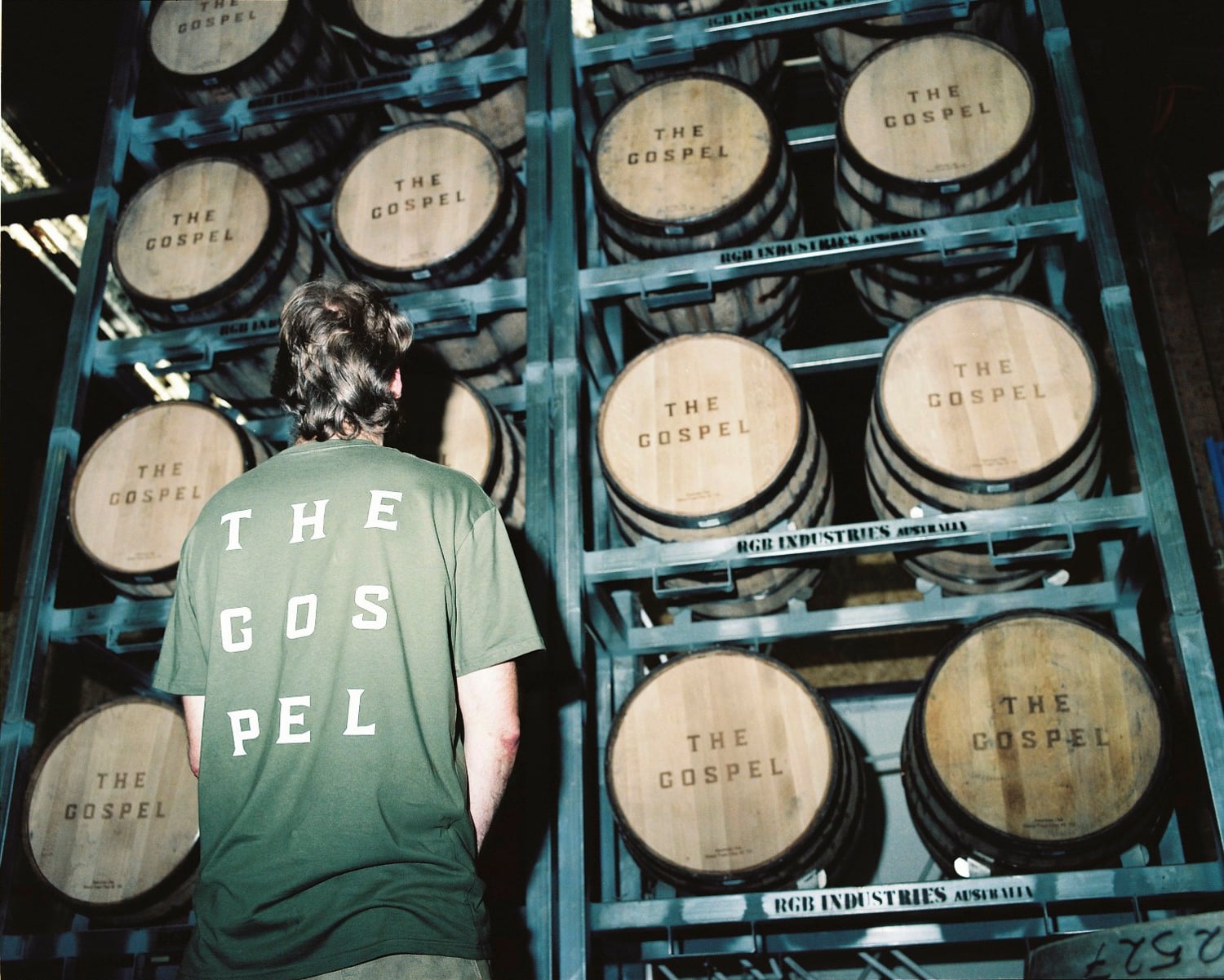
Drams from a land down under
As whisky lovers around the world hunt for new flavours and new perspectives, Australia is emerging as a place to look if you’re hunting for something new. You can make great whisky anywhere if you have the right conditions and the right people. In Australia right now, there’s no shortage of either.


