


 United States — would you like to set this as your default country of delivery?


 Trade
Trade  Shops & Events
  Customer Service
 A Guide to Cuban Rum: History and Production
The story of Cuban rum is in many ways the story of Cuba. Its evolution has followed changes in the island’s economy and culture, from the fiery cane spirits of the Spanish colonial period to the light aged rums we enjoy today.

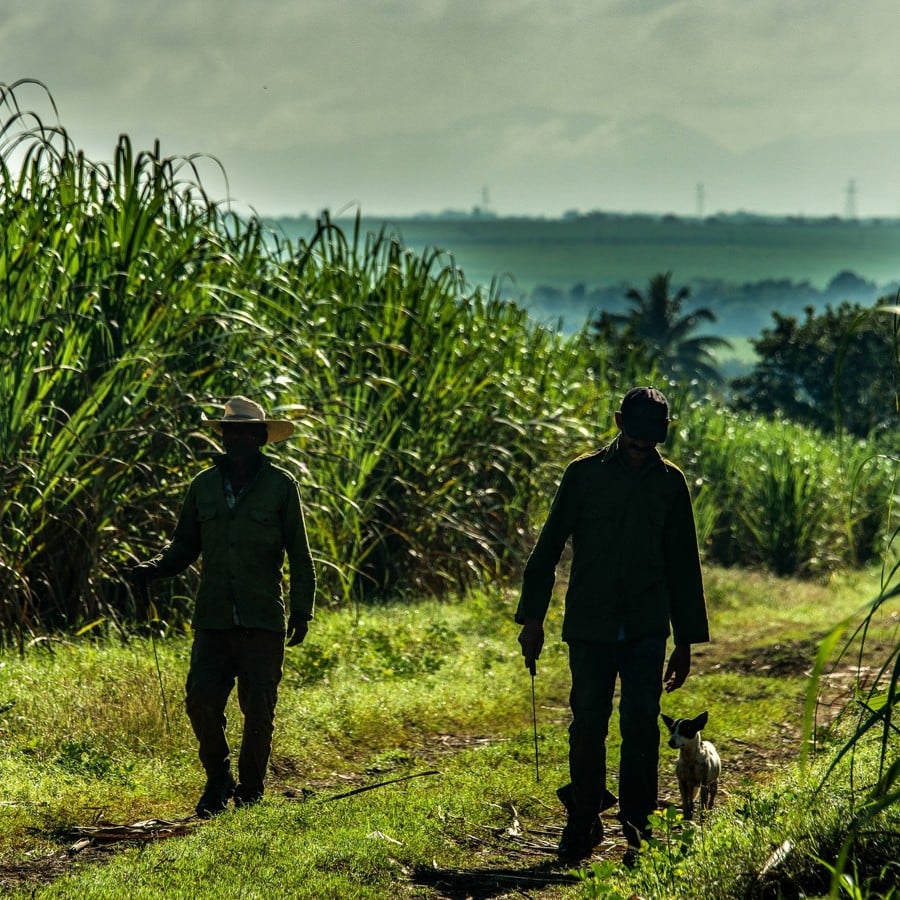
Sugarcane fields in Cuba
The history of Cuban Rum
Sugarcane reached Cuba in the early 16th century and rum soon followed in the form of pot-distilled aguardiente – literally ‘firewater’ in Spanish. But in the beginning, rum production in Cuba trailed behind neighbouring islands like Jamaica and Barbados.
This was largely due to the Spanish crown outlawing rum production on the island, for fear that new-fangled cane liquor would erode trade in homegrown wine and brandy. From this we can infer with some certainty that even the earliest Cuban rums were a force to be reckoned with.
By the 19th century, the Cuban sugar business was booming. Plantations across the island began switching from other cash crops like coffee and tobacco to sugarcane. Sensing an unexplored commercial opportunity, the islanders invested in the infrastructure and equipment they would need to make rum at scale.
The original home of Cuba’s famous Havana Club rums was built during this time – a large, modern distillery in Cárdenas in the island’s northern reaches. The pioneers of Cuban rum began to develop an elegant local style with a strong sense of identity. When the first cries for independence rang out across Cuba, the growing industry was an important symbol of the nation that might be.
With the outbreak of the Ten Years War (1868-1878) Cuban rum took on an even greater importance. To the islanders it was a symbol of their fledgling nationhood: they drank it to steel themselves before battle and to toast the dream of a Cuba free from Spanish rule.
The country’s first native cocktail was popularised in this period. The Canchánchara was a fortifying blend of rum, lime juice and honey favoured by the rebel forces. This forerunner to the Daiquiri predated technological advances like the ice machine and the Boston shaker, so the rebels drank it as it came. Although, if you shake 50ml light Cuban rum with 25ml lime juice and a few dashes of 1:1 honey syrup, and serve it over an ice block, it makes a great modern alternative.
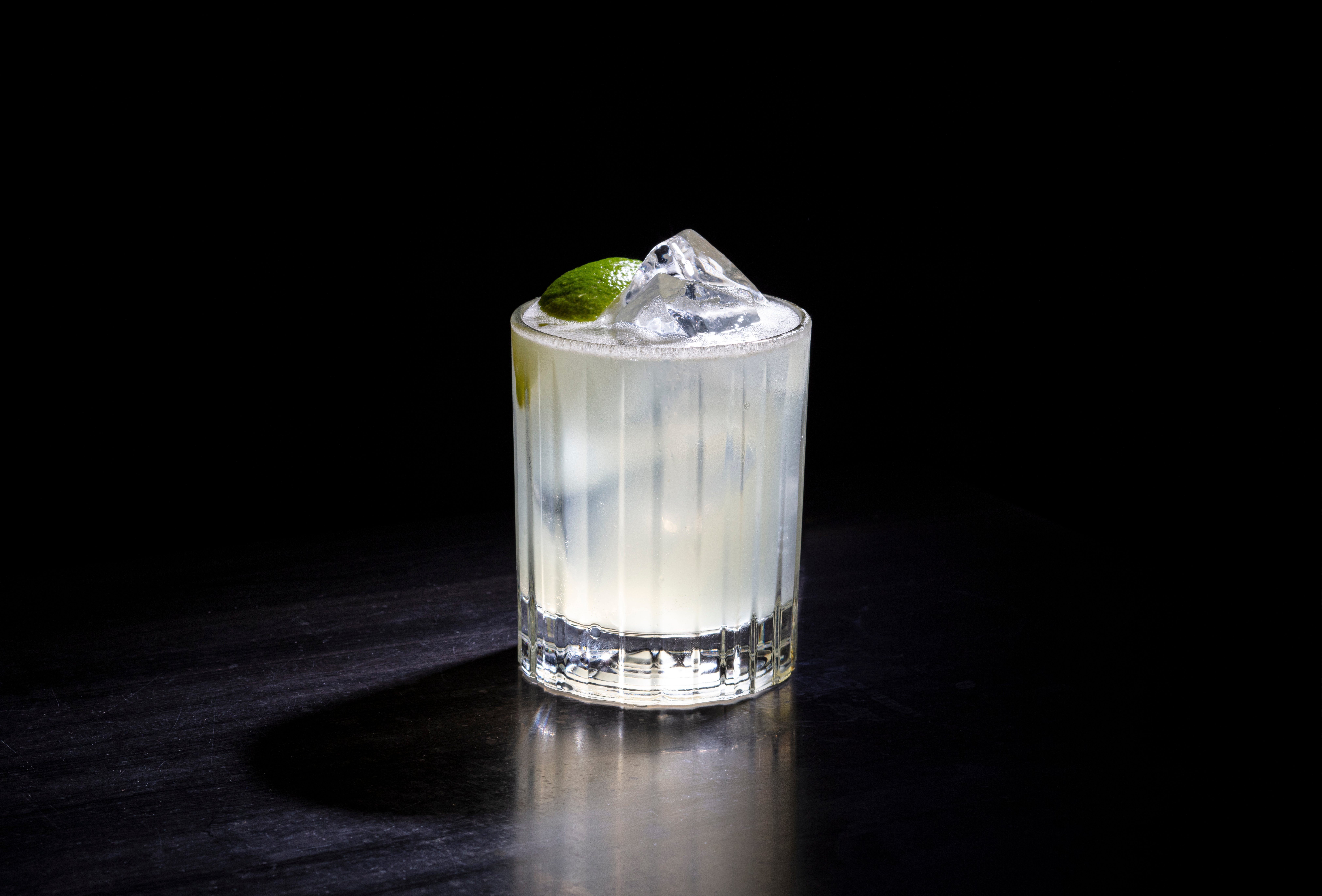
This was the beginning of an unbreakable bond between Cuban rum and cocktail culture that would propel this distinctive spirit to international fame in the 20th century.
Rum production flourished in the independent Cuban Republic following the Second War of Independence in the late 19th century. The introduction of column stills, charcoal filtration and refill casks made for elegant rum that proved immensely popular with tourists. By the 1900s, word of Cuban rum’s quality had spread across North America. This good reputation proved especially important after 17 January 1920, when the start of prohibition made it much harder to order a stiff drink in the USA.
While prohibition was a dark time in the United States, it was the beginning of a new era for Cuban rum. Local cantineros reworked contemporary cocktail culture to suit the climate and available ingredients. Havana became a destination for thirsty holidaymakers, whose presence brought international renown to Cuban innovations like the Mojito, the Daiquiri and a Manhattan style drink called El Presidente, among others.
Cuban cocktail culture retained its world-class status long after the repeal of prohibition. Many of the great drinks associated with the scene were direct descendants of the Canchánchara, built around the chemically harmonious pairing of light rum and lime juice. Towering above them all, we find the classic Daiquiri. Like all the great canonical cocktails, it works to a simple formula that’s ripe for reinvention: rum, citrus and a little sweetener to tie it all together.
Rum and the Cuban revolution
When the call for revolution rung out across Cuba once more in the mid-20th century, it spelled a new chapter for the island. After the fighting, what remained of the sugar and rum apparatus was nationalised, and the local industry became property of the Republic of Cuba.
An embargo on Cuban goods under President John F Kennedy prevented the country’s rum from being imported to the United States – a situation that continues to this day. This caused the Cuban government to focus on exports to communist states in Europe. Even today Havana Club rums enjoy popularity in Germany where they once offered a taste of the Caribbean to those living in the GDR.
When the Berlin Wall fell in 1989, Cuban rum needed to refocus. In 1994, the Cuban state entity Corporación Cuba Ron signed an agreement with French Drinks company Pernod Ricard to distribute its products internationally, most notably the Havana Club brand.
Cuban rum’s strong association with cocktail culture and fine balance of quality and approachability has since made it popular around the world. Which raises the question of how exactly Cuba makes a rum that is light and refined, yet distinctive enough to make it stand out on the world stage? The answer lies with the maestros roneros – masters rum makers – who have preserved this characteristic spirit for generations.
How is Cuban rum made?
Sugar is still an important export commodity for Cuba, which means that the island has a steady supply of molasses for making rum. Some Caribbean distillers focus heavily on fermentation to define the character of their rums, most notably the high-ester pot still marques of Jamaica and the lesser-seen grand arôme of Martinique. In Cuba, however, the roneros favour quick, clean fermentations to convert the sugar in the molasses into alcohol. This doesn’t mean that Cuban rums are lacking flavour, merely that they gain more of their character down the line during ageing and blending.
Once fermentation is complete, the molasses is transferred to column stills for distillation. These can be broadly separated into modern multi-column setups configured to produce a pure, high-strength spirit called destilado de caña – and shorter dual columns intended to produce a lower-ABV but more aromatic style known as aguardiente.
The rules of Cuban rum
By definition, all Cuban rum is aged for a minimum of two years in white oak. Aguardiente is generally filled into barrels for an initial ageing period before charcoal filtering and blending with destilado de caña for secondary maturation. While many distilling traditions around the world use oak partly to infuse spirits with desirable flavour compounds, Cuban roneros work with old casks that are relatively inert and neutral.
The idea is that a white oak barrel, used many times before it arrives in Cuba, will allow rum to marry, mellow and oxidise slightly rather than becoming especially woody in flavour. After the first round of maturation, we are left with a base rum that can be further shaped through additional ageing, blending and filtering.
Cuban rums labelled blanco or carta blanca are aged and filtered to remove colour and give a crisp, clean character. Añejo rums will have undergone further ageing, and are typically darker in appearance and fuller in texture. Extra añejo and gran reserva indicate extended ageing, and will often contain some of the more mature stocks available to the maestros roneros.
Since 2013, Cuban rum has been protected by a GI – or geographical indication – that lays out strict rules for manufacture and ageing. As well as an exhaustive list of technical specifications, the legal definition requires that all Cuban rum must be double aged – first to create the base rums mentioned earlier and then at least one more time to create the finished product. It also prohibits the use of flavourings to change the character of the rum, a minimum bottling strength of 37.5% and a maximum of 45%. However, some exclusive bottlings created for The Whisky Exchange are offered at a higher proof, indicating that this rule appears to be relaxed for export.
How to drink Cuban rum
Since the first Cuban revolutionaries sipped their Cancháncharas, the island’s rum has been inextricably tied to cocktail culture. The mellow and agreeable style of rums like Havana Club and Ron Santiago de Cuba allows them to integrate harmoniously with other ingredients.
Cuba is the birthplace of the Daiquiri, one of the greatest and indeed simplest cocktails in the canon, made by shaking rum with fresh lime juice and a little sugar syrup. Its invention is often attributed to an American engineer called Jennings Cox, who supposedly whipped up the first Daiquiris when the gin ran dry at a cocktail party he was hosting in Cuba in 1898. But the prior existence of the Canchánchara, not to mention the omnipresence of rum, cane and limes on the island, would suggest that the Daiquiri was around long before and just waiting for a name to make it famous.
The Cuba Libre – essentially rum and coke – became a popular way to enjoy rum on the island shortly after, with the arrival of Coca Cola from the USA. Taking a little care and time to assemble your Cuba Libre pays off massively, highlighting the natural harmony between spirit and mixer. To make one at home, just fill a highball glass with plenty of ice, squeeze in three-to-four wedges of lime and add a dash of Angostura bitters if you have them to hand. Then pour in a measure of Cuban rum and top with cola. Ironically enough, Coca Cola has been unavailable in Cuba since the embargo established in the 1960s, but this simple Highball remains a great way to get acquainted with Cuban rum.
From there, we also get the Hemingway Daiquiri – a grapefruit and Maraschino liqueur inflected version of the formula favoured by the great American novelist while carousing in Old Havana. The Mojito is also well worth a mention here. Though combining mint with rum and lime is a practice that’s likely as old as Cuban rum itself, the adoption of soda water and crushed ice by Havana’s cantineros in the early-20th century helped make this long, refreshing cocktail a favourite around the world.
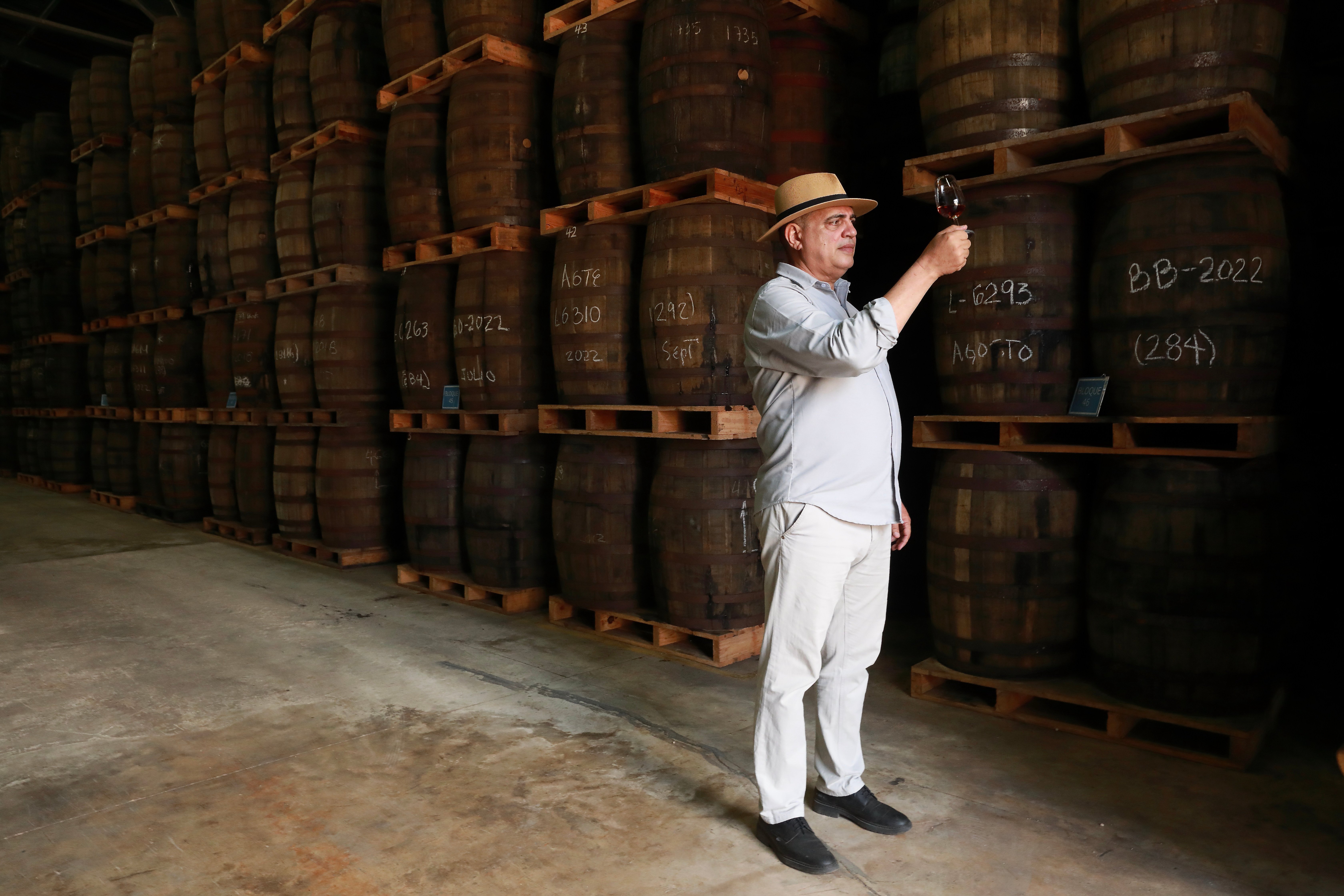
Older and more prestigious expressions like Havana Club Tributo, Eminente Gran Reserva 10 Year Old or Ron Santiago de Cuba Extra Añejo are better suited to enjoying neat. After a decade or more of perpetual blending, ageing and finessing, these rums are darker in appearance but still show the signature refinement and elegance of Cuban rum. All you need to enjoy these is a tasting glass, some good company, and perhaps a Havana cigar – if you’re so inclined.
Though not as dramatic as the grassy agricoles of Martinique and Guadeloupe, or as intense as the high-ester marques of Jamaica, Cuban rum has a charm and panache that’s hard to beat. There are currently 12 distilleries on the island delivering subtly different takes on the local style and many more brands reaching bars across the globe than ever before, which makes this a great time to get into Cuban rum. Salud!
Shop all Cuban rum here


