


 United States — would you like to set this as your default country of delivery?


 Trade
Trade  Shops & Events
  Customer Service
 How to Make a Classic Mint Julep Cocktail
Master one of the original whiskey cocktails with our Mint Julep recipe, as we dive into the history and ingredients of this remarkable drink

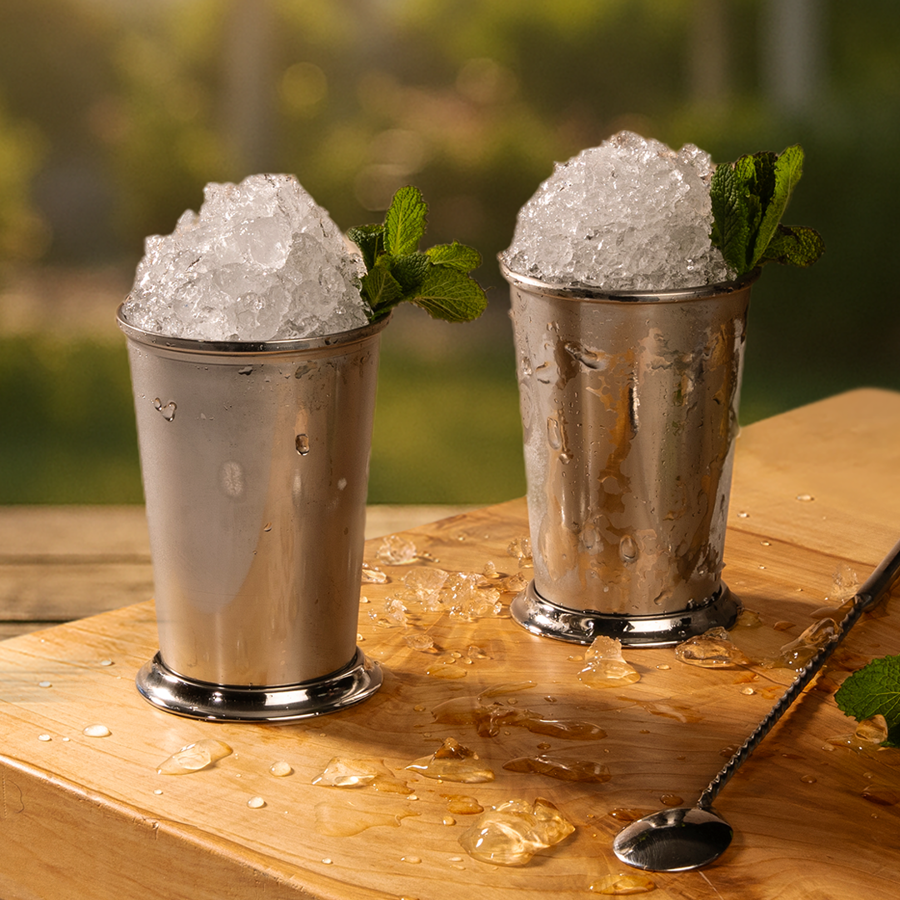
Mint Juleps made with New Riff bourbon
The Whisky Exchange
This bracing combination of bourbon, ice, sugar and mint is a great way to enjoy whiskey on a hot day. The Mint Julep isn’t hard to make at home – you don’t need a shaker or half a dozen different bottles – but it does reward you if you take a little care and time putting it together.
How to make a Mint Julep
Ingredients
- 10-20ml rich simple syrup
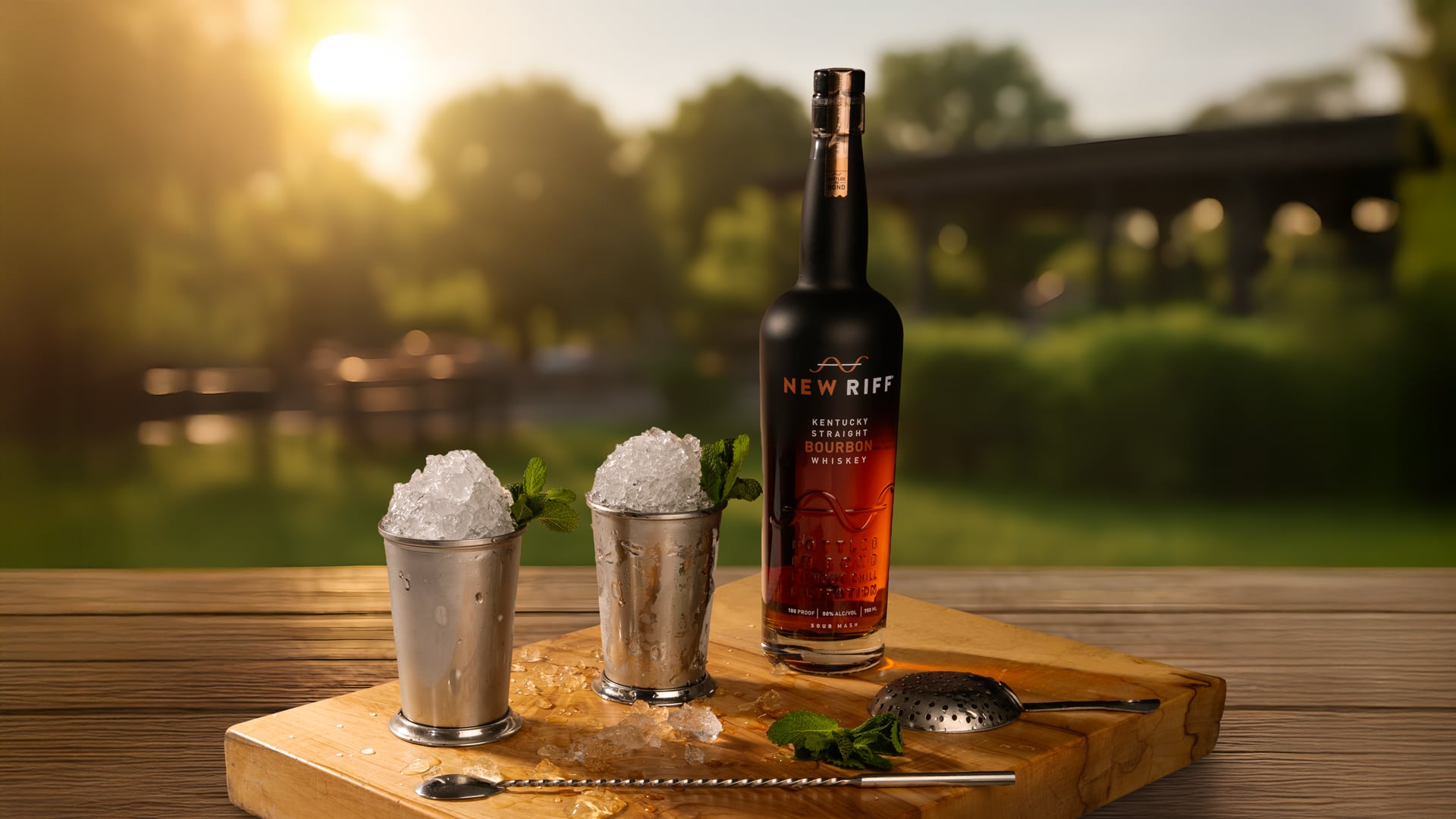
- 50ml New Riff Bottled in Bond Kentucky Straight Bourbon
- 8-10 mint leaves, plus more for garnish
Method
You can make rich simple syrup at home by combining two parts sugar with one part freshly boiled water and stirring to combine – it'll keep for a couple of weeks in your fridge in a sterilised bottled. However, there are some great pre-made syrups out there that make cocktail hour even easier, so there's one of those recommended at the end of this article.
Juleps are traditionally served in purpose-made metal cups. The volume of crushed ice in this drink relative to the whisky will make the surface of your julep cup frost over beautifully. You can absolutely make one of these in a regular rocks glass, but you lose some of the ritual and drama of the Julep without the proper vessel.
Add the simple syrup to your julep cup, increasing or decreasing the amount to taste. Then drop in your mint leaves and gently press them with a muddler or flat end of your bar spoon. This will release the essential oils in the mint. Spearmint is traditional here, but any fresh and lively mint will do the job.
Next, add your bourbon of choice, top with a little crushed ice and give the whole thing a stir. We've used a rye-forward Kentucky straight bourbon from New Riff, our Whisky of the Year for 2025, for its spicy and herbal character that works perfectly here. Then pack in some more crushed ice until you have a nice dome above the top of the cup. Garnish with the best-looking sprig of mint you have – being sure to give a little ‘clap’ between your hands to release its aromas – add a straw, and enjoy.
It’s best to avoid over-muddling the mint, which can leave your Julep bitter and mulchy. Pressing firmly a few times on the mint with your muddler should release the flavour you’re looking for without shredding the leaves.
Crushing ice at home might seem a little daunting, but you can wrap ice cubes in a clean tea towel and smash them thoroughly, or pulse them in a blender or food processor until well-smashed. The effect just isn’t the same if you use whole cubes, so don’t be tempted to skip this step.
Mint Julep variations
Early Julep recipes cover a variety of spirits, including brandy, rum and Dutch genever – as well as additions like lemon, pineapple, and orange. One great twist on the formula is the so-called Prescription Julep, which uses 35ml cognac and 15ml straight rye whiskey and a dash of bitters. The roundness of the brandy and the spicy and herbal notes in the rye work brilliantly with the mint. Give this a try with Buffalo Trace's famous Sazerac rye and the extra fruity H by Hine VSOP Cognac.
You can also introduce a few small cubes of pineapple or a tablespoon of freshly pureed peaches to the cup with your mint and sugar for an extra dimension – just make sure your fruit is ripe and in season for best results.
The history of the Mint Julep
The word ‘julep’ appears to have its origins in ancient Persia and the term for rosewater, gulāb. As the practice of distilling and extracting botanical essences were tied up in concepts of medicine in the ancient world, so this term became associated with medicinal preparations sweetened with sugar. In a time when medicine as we would understand it today was in its infancy, herbs, sugar and perhaps a little alcohol served as pick-me-up across Europe. There are records in English of Juleps – or julaps, or julips – taken for their calming effects as far back as the 15th century, but it's in the 18th century that references to a prototypical cocktail begin to appear in print.
"[An ordinary Virginian] rises about six o'clock. He then drinks a julap[sic] made of rum, water and sugar, but very strong." – American Museum, Vol 1
This concept was imported to North America with the early settlers, but it was in the late 18th century that the four ingredients needed to make the canonical Mint Julep came together: that’s sugar, mint, ice, and whiskey.
Sugar from the Caribbean colonies was traded up and down what is now the USA before independence. As the fledgling country sought to define its own future, the British Empire closed off the sugar supply, forcing many Americans to go without. But the planting of cane in the southern colonies, as well as imports from Cuba and South America, put crystal sugar back on the table. The first ingredient for the Julep was secure.
Spearmint, first brought to North America by European colonists, has been used as a remedy for indigestion and other complaints since antiquity. So, it makes sense that goodold mentha spicata would wind up in a cocktail named after a medicinal preparation. Spearmint was also a common substitute for tea leaves during the American Revolutionary War, meaning it was prevalent and culturally significant to the burgeoning republic.
Then there’s the ice. The first ice houses began to appear in North America during the 1700s. These were insulated buildings in which blocks of ice cut during the colder months were packed with straw and sawdust to keep them intact throughout the year. By the 19th century, a roaring trade in ice cut from the colder climes up north and rapidly shipped to destinations across the continent was in place.
Long before mechanical refrigeration put ice production in every saloon and restaurant in the country, this was a vital ingredient in the development of modern cocktail culture. By adding crushed ice – or little ‘hailstones’ as called for in some early recipes – to mint and sugar, the pioneers of the American cocktail began to solidify the concept of the Mint Julep. All it needed was a little spirit to bring the whole thing together.
As previously mentioned, early Julep recipes were made with a wide variety of spirits and garnishes. Rum was the most widely consumed spirit in North America in the British colonial period, and many well-heeled colonies in the south favoured imported French brandy.
But it was the proliferation of domestic corn whiskey – the prototypical form of the bourbons we enjoy today – that really made the Mint Julep. This all-American spirit proved the perfect base for what is arguably the first American cocktail. As whisky from Kentucky began to be bottled and shipped out across the continent in the 1800s, the Mint Julep found its identity.
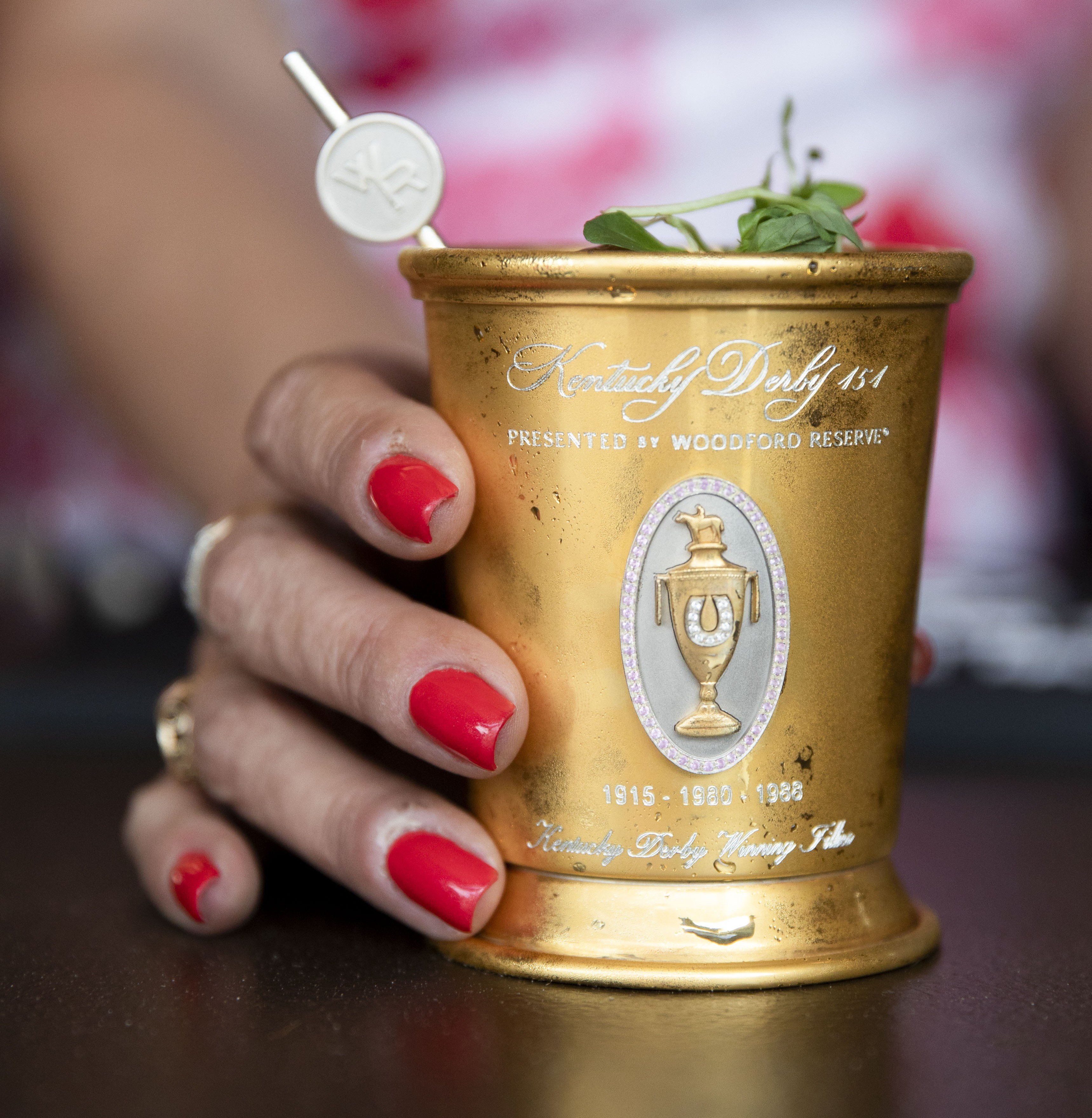
Gradually, most of the other variants of the drink began to fall away into obscurity and the Julep in its most recognisable form became a staple in venues as diverse as Southern clubs and New York bar rooms. But it was this drink’s association with the famed Kentucky Derby that arguably cemented it in popular culture and helped engrain it in the cocktail canon.
Thirsty horse racing fans will consume thousands of Mint Juleps over the course of the event at Churchill Downs in Louisville, Kentucky. Race sponsor Woodford Reserve even offers a $5,000 Julep – comprising straight bourbon, imported mint and sugar – with proceeds going to charitable causes.
You don’t need to travel all the way to Kentucky or spend that kind of money to get a great Mint Julep, however. Just make sure you have well-crushed ice, good mint and your favourite bourbon to hand and you’ll be able to make Mint Juleps all summer long.





