


 United States — would you like to set this as your default country of delivery?


 Trade
Trade  Shops & Events
  Customer Service
 Collecting Whisky From Lost and Silent Distilleries
Joe Rogers speaks with The Whisky Exchange’s head buyer for Old & Rare spirits about how to start collecting whiskies from Scotland’s lost distilleries. The surprising thing about these irreplaceable single malts? The barrier to owning them might not be as high as you think

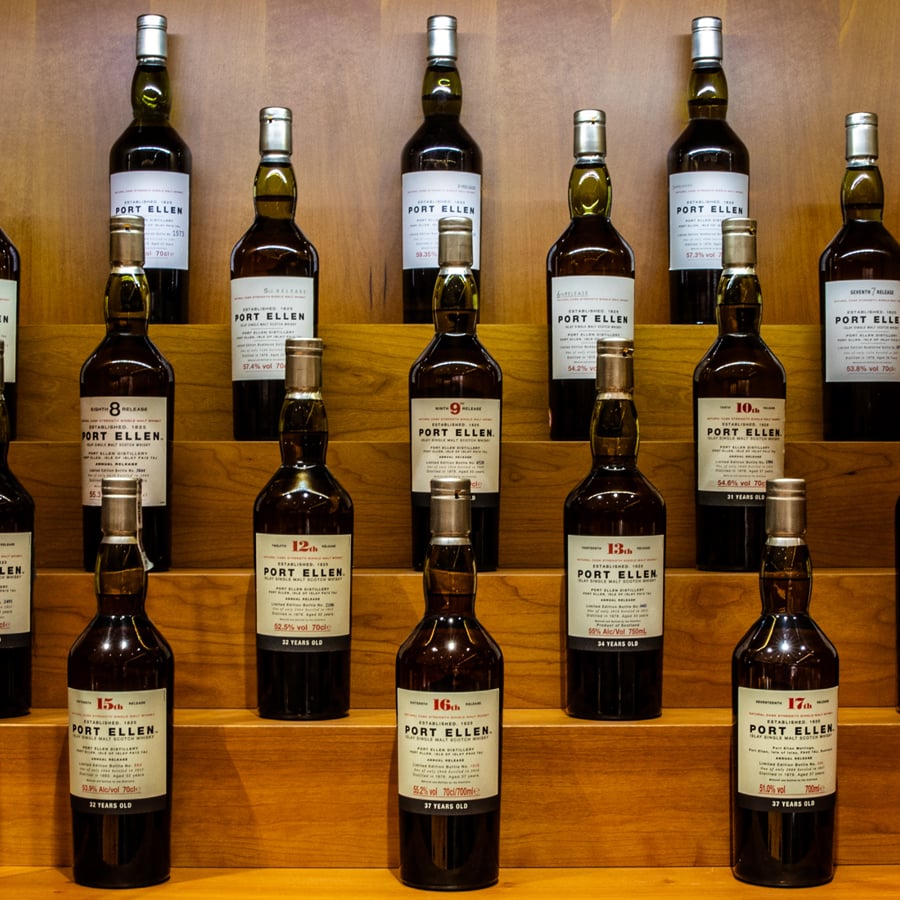
When a distillery fires its stills for the final time, its remaining whisky starts to vanish from the world. Sometimes twists of fate or pockets of opportunity cause these distilleries to reopen, but if they’re demolished or left to ruin, then all that will ever exist of their work is what remains in cask or bottle. This makes single malts from lost distilleries particularly desirable to collectors, especially if they embody a style or set of flavours you can’t find anywhere else.
Take St Magdalene, for instance, a distillery that had produced highly regarded malt whiskies in the Scottish Lowlands since the 18th century. This old producer had survived the slump that followed the Victorian whisky boom, two world wars and prohibition in the United States. But in the early 1980s, times were harder than ever for the whisky industry and St Magdalene was mothballed as its owners consolidated production. In 1983, property developers purchased the site and converted it into apartments.
Its surviving bottlings are beloved today for their fascinating and distinctly old-fashioned expression of the classic Lowland character. The precious few examples of its single malt that remain – sometimes also bottled under the name ‘Linlithgow’ – are rare, atypical and impossible to replicate. This is just one example of the great appeal of bottlings from distilleries.
How to start collecting lost distilleries
When I first sat down with Jason Vaswani to discuss whisky collecting, one of the things he most impressed on me was the importance of having a focus. Whether it’s a single producer, a series of bottlings or a particular style, closing in on a theme for your collection gives you direction in what you buy.
“I’m actually working on a collection of lost distilleries right now,” Jason tells me. “I’m really excited about tracking down the best spirits I can from all these great old producers and then maybe cracking them all open one day. I love the idea of sitting there with a few friends and just experiencing that kind of history. Maybe I’ll even take the bottles to the places where the distilleries used to be.”
Lost distilleries, with their inherent romance and tantalising connection to history, make a fantastic focus for any collection. But I’m keen to find out more about what makes these ghost whiskies so special and ask whether they can ever be accessible to the average collector.
“The bar for collecting these whiskies isn’t as high as some people might think,” says Jason. “You don’t have to go out and buy the latest fancy decanter; you can pick up little things that are still really special. The trick is finding the things that other people overlook.
“Obviously, if you can it’s great to buy old Brora single malts and things like that, but you can also easily find distilleries where people don’t put so much focus. Companies like Gordon & MacPhail have been bottling great casks forever. If you look at the Connoisseur’s Choice collection you can find things from Coleburn or Convalmore for very reasonable prices.”
The bar for collecting these whiskies isn’t as high as you might think. The trick is finding the things other people overlook
There are lots of reasons distilleries close, but the quality of their whisky is rarely the issue. Often, it comes down to a simple mismatch of supply and demand. The history of whisky has multiple break points – moments of rupture where falling sales led to mass distillery closures. When something like that happens, there’s an overall change to the character of whisky. Techniques, expertise, materials and ultimately flavours evolve as the broader distilling industry shifts and reforms.
All whiskies from lost distilleries are special, but this is why examples from before the crash of the 1980s or World War II are held in particular esteem. This isn’t to say that there isn’t plenty of exceptional single malt being made today, but as the old cliché has it, they don’t make them like they used to.
Even distilleries that were shuttered more recently can come to represent extinct styles that hugely collectable. As Jason says, it’s just about knowing where to look.
“The Whisky Exchange released a Caperdonich in 2021, a single cask from Signatory. Caperdonich is a lost distillery, they knocked it down in 2010,” Jason explains. “There are still bottlings of Imperial around at the moment, another lost distillery, and the whisky from the final vintages of production is amazing. The spirit has a great texture to it, it’s got this nice apricot and peach character, it’s just very special for me and because the distillery has been demolished, we won’t see anything exactly like that again.”
Why collect lost distilleries?
The vogue for lost distilleries gained momentum in the early 2000s, propelled by the arrival of exceptional bottlings from names like Brora, Port Ellen and Rosebank. Each of these sites had closed in the 1980s and 90s before the new millennium brought fresh interest in single malt whisky.
Excitement over these once-forgotten whiskies helped to boost interest in collecting as a whole and ultimately led to all three of these distilleries being reopened. But the glamour for pre-closure vintages of these now legendary-single malts and other whiskies from distilleries which will never be revived just hasn’t gone away.
“Right now, there are distilleries in Scotland where production is being limited or wound down. They could become lost distilleries as well. We don’t want that to happen, obviously, but if you can find out about these different things going on and keep up to date, you can pick up interesting things that other people don’t see.”
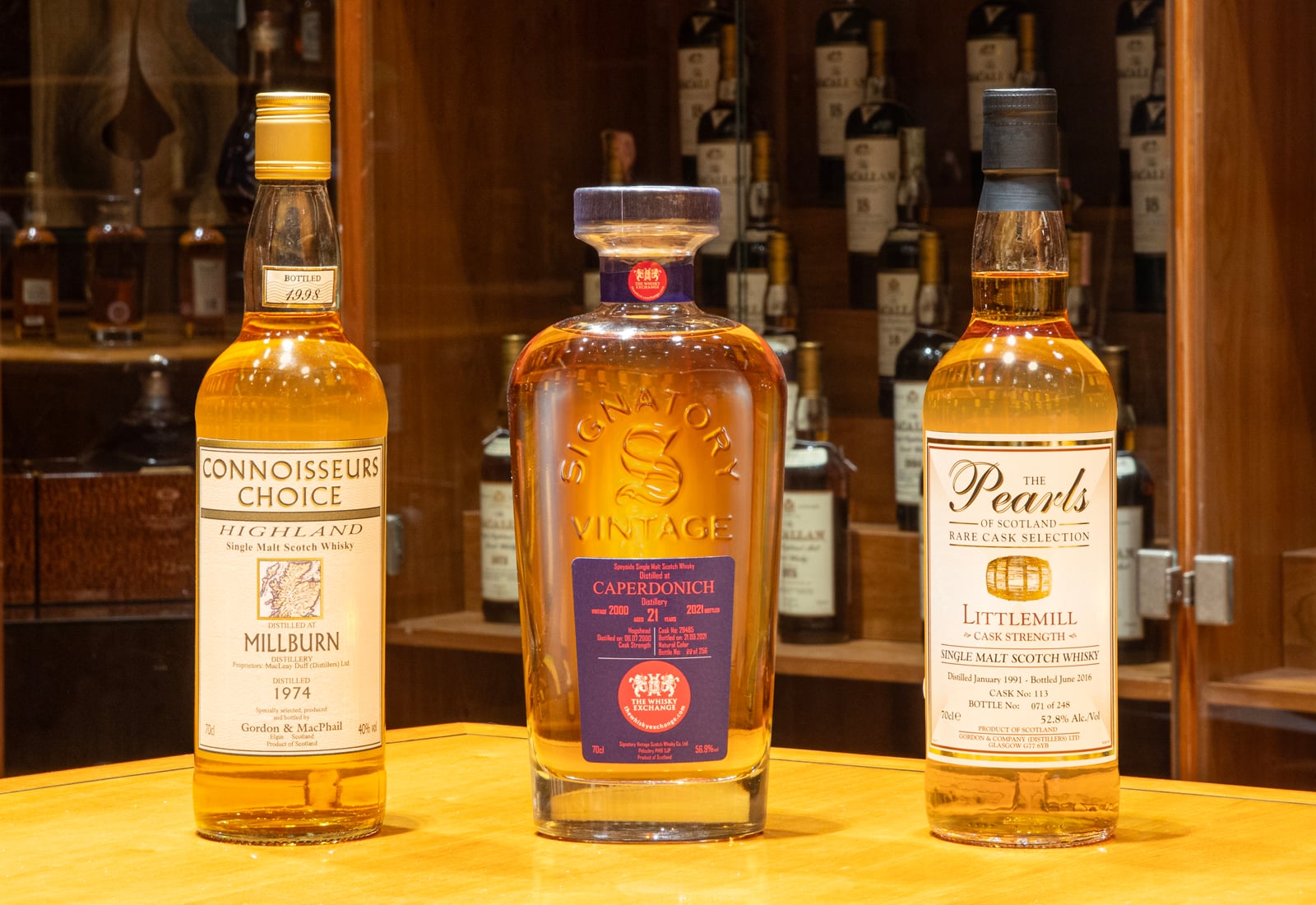
As prices for the most legendary bottlings from ghost distilleries around the world have risen significantly over the last 20 years, I’m heartened to hear that there are still gems out there waiting to be found. With that in mind, I ask Jason if there’s anything else to consider when scouring the shelves for old-style single malt.
“I think a lot of people pass by great older whiskies because they look quite unassuming by today’s standards. Nowadays when people get into drinking whisky they go straight from bottlings at 40% to 46%, and then to cask strength and single cask whiskies, and they don’t want to go back. They’ll say ‘I can never get my palate back down to where those regular whiskies are.’”
It's worth remembering that many of the hallmarks of collectability today, cask numbers, single cask bottlings at cask strength, elaborated decanters and presentation cases are relatively new ideas. There’s liquid gold out there in modest-looking bottles.
I’m planning a tasting of older bottlings at 40% to show how great they can be. Not everything needs to be a punch in the face
“If you look back at the single malts of the 1960s, 70s and 80s, nothing was bottled at super high strength,” says Jason. “They were bottling stuff so that everyone could drink it. I think a lot of people forget this when they’re collecting, they walk right past amazing things because they’re not 46%. But you’ll be surprised. I’m actually planning a tasting of older bottlings at 40% to show how great they can be. Not everything needs to be a punch in the face.”
Collecting rare whiskies: unicorns and holy grails
Curious to know more about what whisky buying expert Jason is eyeing for his own collection, I ask if there’s a lost distillery ‘unicorn’ he’d love to hunt down.
“One of the whiskies I’ve given the highest score to out of everything I’ve tasted is the Convalmore 1975 Gordon & Macphail,” he tells me. “That’s one of my favourite ever whiskies – it’s waxy, lots of orchard fruit and tropical fruit. If you gave that to someone to taste blind they’d probably think it was an old Clynelish, it’s just brilliant. I wish I’d bought a couple of bottles right after I tried it.”
In its day, Convalmore was one of the seven stills of Dufftown, part of the nerve centre of production in Speyside. It was never a household name and bottlings of its single malt are few, but for those lucky enough to try it, Convalmore provides a window to another time.
“Over the last six years, I’ve been very fortunate to try some insane whiskies, partly because of my job and partly because of my old mentor [and The Whisky Exchange co-founder] Sukhinder Singh. But if I think about a real holy grail, it would probably be pre-World War Two distillates, especially from lost distilleries, because you just don’t see them being opened. I’m just so curious to understand what production was like during that time – so few distilleries operated during the war and things were very different afterwards.
“To find something from St Magdalene or Dallas Dhu distilled back then, or even one of the lost Campbeltown distilleries or Malt Mill on Islay and have the opportunity to taste it – that’s the dream.”
If we’re lucky enough to find such a bottling intact, it’s not likely to be cheap. But as Jason reminded me when we first spoke on the subject of whisky collecting, it’s best to start small and see how your collection grows. From a first purchase, or maybe even a first sip of a vanishing single malt, it’s easy to fall in love with Scotland’s lost distilleries.

Convalmore 197539 Year Old Rare Old Gordon & MacPhail
Out Of Stock

Coleburn 1972Bot.1980s Connoisseurs Choice
Out Of Stock


Caperdonich 200021 Year Old Signatory for The Whisky Exchange
£299

Imperial 199424 Years Old Single Malts of Scotland
Out Of Stock

Port Ellen 197824 Year Old 2nd Release (2002)
Out Of Stock

Brora 30 Year Old2nd Release (2003)
£4,000

St Magdalene 196418 Year Old Connoisseurs Choice
£1,800

Dallas Dhu 196931 Year Old Sherry Cask Old Malt Cask
£1,250

