


 United States — would you like to set this as your default country of delivery?



 Trade
Trade
 Shops & Events
 Customer Service
The Rise of Indian Whisky: A Comprehensive Guide
With a sizeable population of whisky enthusiasts and a rapidly developing economy, India is now home to some superb distilleries, whose premium single malts are pushing the country's whisky industry to new heights

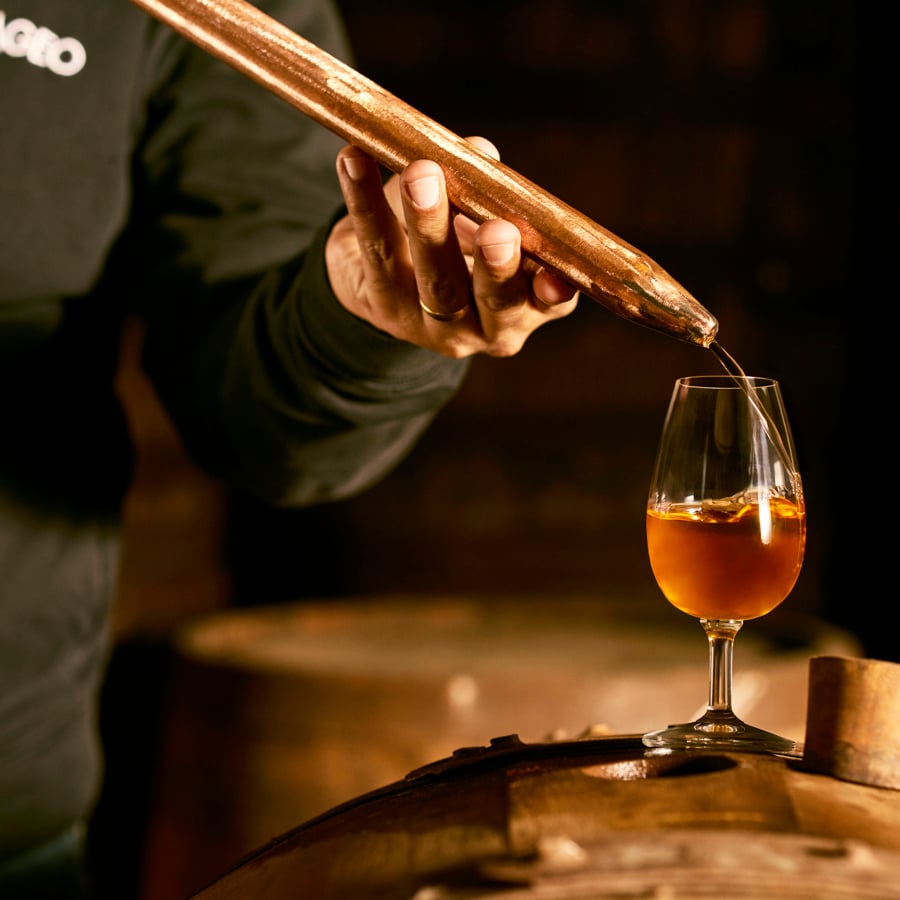
A sample drawn from the cask at Godawan distillery
India’s vibrant food culture has reached every corner of the world to become one of the great global cuisines. And while blends including Johnnie Walker have meant it’s a nation full of whisky drinkers, its culture of distilling premium spirits sold outside of the country is still relatively nascent.
A new generation of producers, however, is changing the narrative around Indian whisky, using traditional pot stills, local barley and time-honoured techniques, while carving out a distinct identity for Indian single malts. In doing so, they’re earning serious respect on the world stage.
Indian whiskies vary in character, shaped by the complex tapestry of cultures and landscapes found across the country. But India’s single malts and blends, much like its cuisine, tend towards bold flavours. Open a bottle and you’ll likely find big, concentrated aromas with sweet tropical fruit and complex spice notes, thanks in part to the accelerated maturation gleaned from the hot and often humid climate.
How is Indian whisky made?
The regulations around domestically sold and locally consumed Indian whisky is fragmented, state-controlled and unusually permissive compared to international standards. But all Indian releases you’ll find at The Whisky Exchange meet the rigorous standards for whisky as defined by EU and UK law.
Indian whisky in the UK and EU
Much like Scottish or Irish whisky, Indian single malts are made by fermenting a mash of malted barley, distilling it – typically in copper pot stills – and maturing the spirit in oak casks for a minimum of three years. Caramel colouring is permitted to maintain batch consistency, as is the case in Scotland and Ireland. An ever increasing number of quality Indian producers are releasing traditional single malts, joining established distilleries like Amrut, Paul John and Rampur – more on them later.
Many of these distilleries use Himalayan six-row barley instead of the two-row European variety favoured elsewhere. Though it produces a lower alcohol yield, it creates a more complex wash, offering great potential for flavour development in the spirit.
In India, Whisky can be made from molasses
Many spirits sold domestically as whisky in India are made using neutral spirit derived from molasses, with no minimum age requirement necessary. A certain amount of grain or malt whisky is often added for flavour and with some colouring and blending, it can legally be called whisky in India. These spirits are known internationally as IMFL – that’s ‘Indian-made foreign liquor' – and are distinct from the new wave of single malts coming out of India.
India’s history of sugar production dates back at least 2,500 years. Historical texts mention sugarcane and a method of refining sugar called khanda (from which the word 'candy' reportedly derives). European colonial interests introduced refining of white crystal sugar for export, the legacy of which means molasses is still plentiful today.
As a result, molasses-based spirits are extremely cost-effective and have traditionally catered to consumers with limited disposable income. This, combined with the country's historical grain shortages, helps explain the development and persistence of this particular style.
The history of whisky in India
India’s first careful steps toward a modern whisky industry began in 1855 with an ox-drawn cart carrying British brewing and distilling equipment into the Himalayas, Edward Abraham Dyer – father of the infamous Colonel Reginald Dyer – selected a mountainous location for India’s first whisky distillery for its cool climate and pure spring water, proudly announcing his ambition to "produce a malt whisky as fine as Scotch whisky." He built Kasauli distillery to satiate the British troops stationed in Shimla and Punjab, offering them a taste of home.
Since those humble beginnings, demand for whisky in India has exploded, transforming the country into the largest whisky market by volume in the world. According to IWSR's 2023 report, India consumes roughly 385 million cases of spirits each year and is now the biggest export market for Scotch whisky, having recently overtaken France. With this in mind, it’s not hard to understand how a domestic whisky industry is thriving in India.
But the nation’s relationship with whisky wasn’t always positive. It’s difficult to detach the history of alcohol in India from its association with colonial rule. In fact, many Indian and British brands today still conjure images of empire in their gin, rum and whisky. The British Raj integrated alcohol into administrative and social structures – through social hierarchies, high taxation, and even to pacify and control certain communities. This led to a broad perception of spirits as a symbol of foreign influence and moral decline.
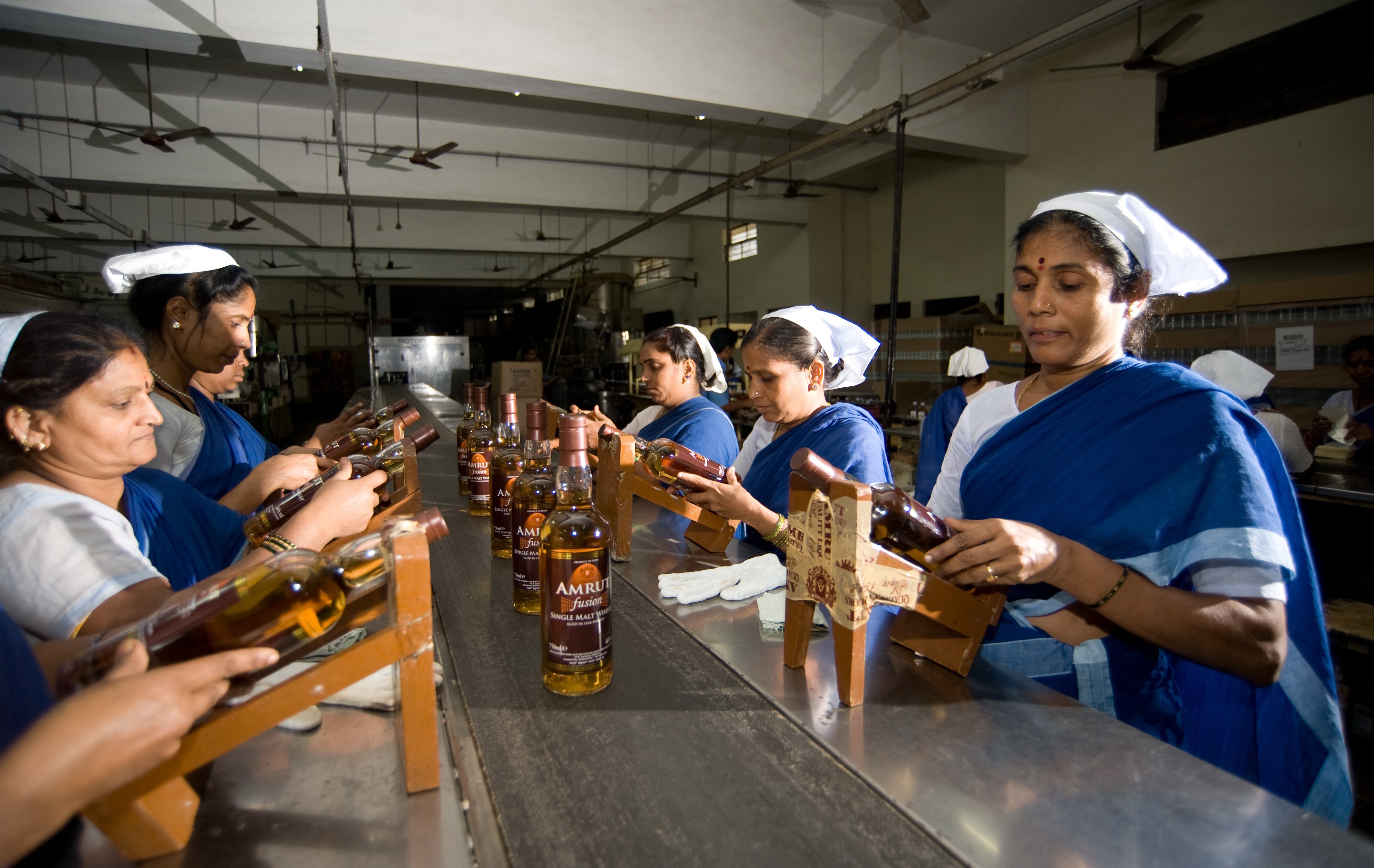
Like a traditional khadi, India’s temperance movement was spun and woven together with the independence struggle. Alcohol consumption was seen as a colonial imposition, with figures like Mahatma Gandhi promoting abstinence and condemning alcohol as a social ill brought in by foreign rule.
That said, India hasn’t simply inherited all of its spirits culture from Britain. Like many nations around the world, it has fascinating indigenous liquors. These include mahua – made from the flowers of the Mahua tree – and feni, a Goan spirit traditionally made from cashew apples or coconut. These ancient beverages are being rediscovered today, even as modern India turns its gaze to its favourite spirit. Increasingly, these drams are offering a synthesis of modern know-how while tapping into the deep cultural memory and traditions of India, independent of colonial influence.
Happily, this outlook has sparked an explosion of well-made Indian whiskies, both from newly established distilleries and from the country’s already well-respected producers. The new wave of Indian whisky distillers is driving economic opportunity, supporting rural farmers, and expressing a confident, forward-looking India.
Indian whisky distilleries to try
Rampur
Rampur is a city in the northern Indian state of Uttar Pradesh, located near the foothills of the Himalayas. This region is known for its dramatic seasonal variations, which play a key role in whisky maturation. The area has long been celebrated for its contributions to Hindustani classical music, poetry, fine arts and skilled craftsmanship, so it’s perhaps fitting that India’s oldest and largest spirits producer shows real experimental flair.
The distillery dates back to 1943, but it wasn’t until 1972 – when the Khaitan family took over – that it began to flourish. The Radico Khaitan company entered the whisky world in 1998 with the launch of 8PM Whisky, a blend aimed at the mass market. It quickly became the company’s flagship brand, selling over one million cases in its first year and earning a place in the Limca Book of Records – India’s answer to the Guinness World Records.
In 2016, the producer stepped into premium territory with the launch of Rampur Single Malt, marking its entry into India’s growing single malt category.Rampur Select is the distillery’s core single malt, matured in traditional American oak under India’s intense climate, to create a creamy, fruit-forward profile with warm spices and honeyed vanilla. The Double Cask layers complexity through maturation in bourbon barrels followed by a sherry cask finish, bringing notes of dried fruits, caramel, gentle spice, and a touch of tobacco. The heavyweight Rampur Asava is finished in Indian Cabernet Sauvignon casks, delivering concentrated flavours of apricot, plum, manuka honey, and soft tannic depth.
Amrut
Amrut was founded in Bangalore in 1948, in the wake of India’s hard-won independence from the British Raj. The foundations of the business were built on blending and bottling brandy and rum, initially catering to the Indian army. In the 1980s, this ambitious producer embarked on a new journey and began experimenting with malt whisky, but it wasn’t until 2004 that Amrut unveiled India’s first single malt to worldwide critical acclaim.
At first the company struggled to persuade European distributors and consumers to try their product, as many held the belief that quality single malt whisky couldn’t be made in India. The distillery orchestrated blind tastings with industry experts in the UK presenting Amrut's releases alongside top single malt Scotch whiskies. This simple gambit played a significant role in solidifying the prominence of not just Amrut but Indian single malt as a whole, as many mistakenly identified Amrut as Irish or Speyside whiskies.
The head of distilling at Amrut, Ashok Chokalingham, believes that these whiskies stand as the bridge connecting Scotland and Kentucky. While the distillation techniques are similar to Scotch whisky, the maturation process aligns more with Kentucky bourbon, thanks to Bangalore's tropical climate. The combination of slow, high-altitude distillation and maturation imparts a distinctive fruity and chocolatey character which has become a cornerstone of Amrut’s house style.
Amrut Single Malt is an unpeated, approachable whisky aged in Bangalore’s intense heat, with notes of honeyed barley, soft caramel and tropical fruit. Its Cask Strength sibling dials everything up for added intensity. For those after some smoke, the Peated Single Malt offers a subtle coastal dimension with a hint of Scottish peat. Then there’s the iconic Fusion – a blend of Indian and Scottish malts that delivers spice, fruit and a thread of peat smoke. This is the dram that proved Indian whisky belongs on the world stage.
Paul John
With its golden beaches, Portuguese-influenced cuisine and warm hospitality, Goa proved a picturesque and culturally rich home for Paul John’s malt whisky ambitions. Founded in 1992 as John Distilleries, the company built its empire on molasses-based spirits, becoming India’s third-largest whisky producer and the sixth-largest globally. But in 2006, it turned its focus to single malt. The team quickly moved beyond Scotch imitation and embraced a distinctly Indian identity influenced by its coastal climate and its use of Himalayan six-row barley.
The barley – harder, huskier, and lower-yielding than its Scottish two-row counterparts – has the potential to produce a richer wash with strong texture and flavour, while maturation in Goa’s tropical heat accelerates ageing in unexpected ways. With balmy 33°C summers, gentle winters and an angel’s share as high as 12–13% each year, Paul John harnesses intense maturation conditions – creating richly expressive whiskies.
Brilliance is Paul John’s flagship unpeated whisky – matured exclusively in bourbon barrels and bottled without chill filtration. On the nose, it shows breakfast cereals and buttered toast with a citrus brightness. The palate opens with crisp apple and ripe mango, followed by honey, sweet cream, and a flicker of cinnamon. Add a touch of water and it softens beautifully, bringing out more orchard fruit and lengthening the finish.
Paul John Nirvana is an easy-going introduction to Indian single malt, it’s soft, fruity, and full of charm, and filled with aromas of fruitcake, honeycomb and caramel, followed by notes of fresh apricots, raisins and apples – a great everyday Indian malt.
Indri
Indri is a single malt whisky produced by Piccadily Distilleries, based in the village of Indri in Haryana, northern India. The company began with sugar production and, in 2008, became the first producer in India to receive permission to produce alcohol from sugarcane juice. Its single malt project launched in 2021. Unlike Paul John and Amrut, Indri operates in a drier, more temperate climate than Goa or Bangalore – a factor that influences the way its whiskies mature.
Indri uses a broad palette of cask finishes across its core range, beginning with Indri-Trini – a triple-cask expression matured in ex-bourbon, ex-French wine, and Pedro Ximénez sherry casks. The result is a fruit-forward, mildly spiced whisky with notes of oak, vanilla, blackberries, hazelnuts, orange zest, and caramel.
Godawan
Named after the endangered great Indian bustard, Godawan is a single malt whisky produced by Diageo India in Rajasthan. Godawan matures in Rajasthan’s hot and dry climate, where a high angel’s share and sharp temperature swings shape a faster, more extractive ageing process. The distillery works with locally grown six-row barley and experiments with a wide range of casks, including those seasoned with Indian botanicals, to develop a distinctive regional profile.
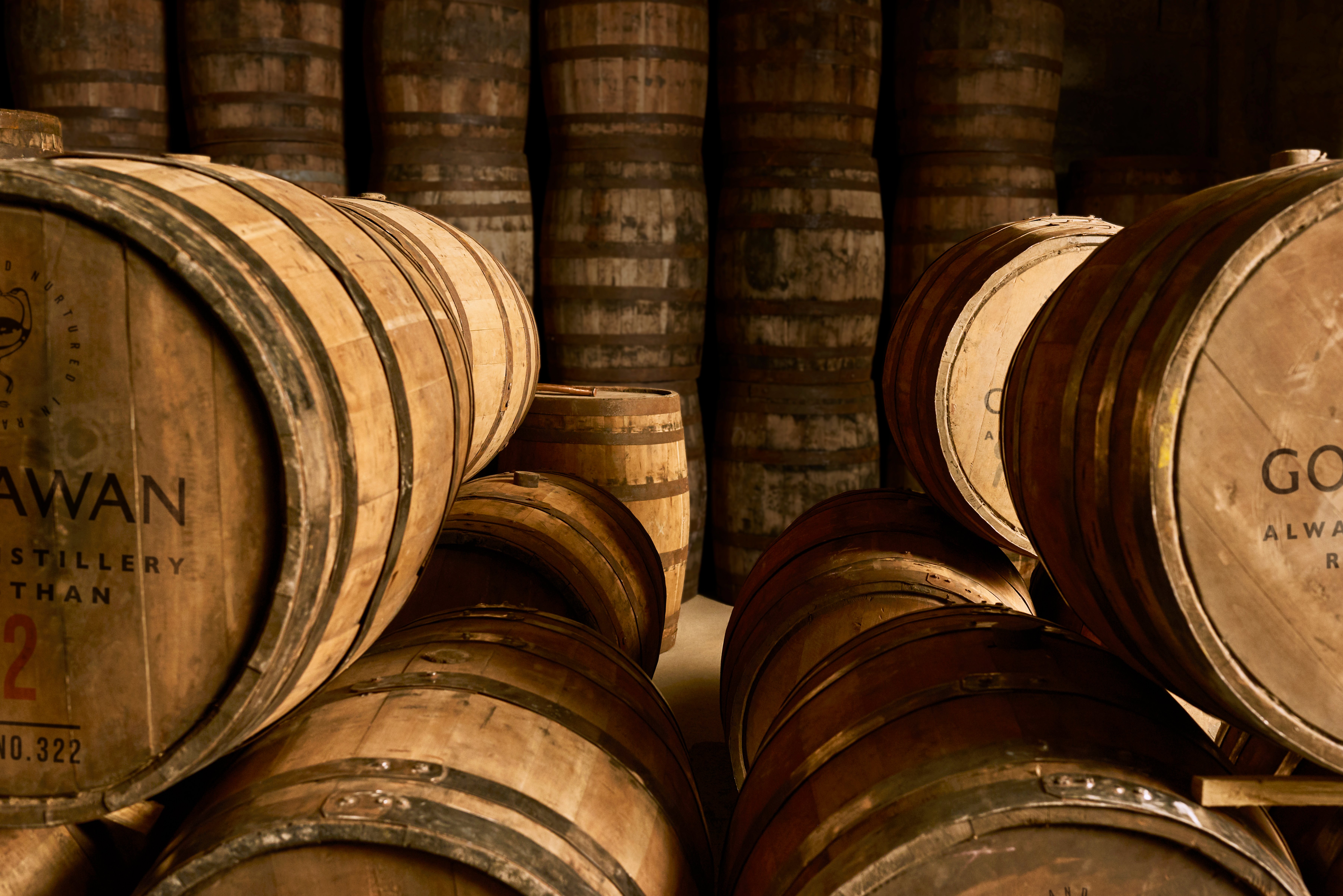
The core range features two expressions. Rich & Rounded leans into dried fruits, toffee, and mature oak, with a sweet, dessert-like finish from a combination of bourbon barrels and Pedro Ximenez sherry casks. Fruit & Spice, however, shows a lighter, more aromatic style, with its ageing in ex-bourbon barrels and finishing period in cherry wood casks. It balances a floral bouquet with hints of ginger, citrus and roasted spice.
Sustainability is also part of the brand’s focus – Godawan operates as a water-positive distillery and supports conservation efforts tied to the bird it’s named after. Though relatively new, it’s a considered and assured addition to India’s expanding whisky landscape.
The future of Indian Whisky
Each of these Indian producers captures a genuine sense of place and, in their own way, reflects the hugely complex weave of cultures and traditions that have defined this multifaceted country. Indian whisky is now a powerful presence internationally, and while most of the domestic 'whisky' consumed in the country remains a mix of inexpensive grain and molasses-based spirit, an increasing number of consumers are asking more questions about what they're drinking. They’re demanding higher-quality domestic products and are willing to pay for them.
At this rate, it is not unreasonable to imagine that India will one day be among the most important producers of whisky in the world.


