


 United States — would you like to set this as your default country of delivery?


 Trade
Trade  Shops & Events
  Customer Service
 How to Make the Ultimate Mai Tai Cocktail
The so-called Tiki bar scene that thrived in California in the 1950s and 60s innovated many cocktails that helped popularise rum across the world. Of these, there are few that have stood the test of time like the Mai Tai

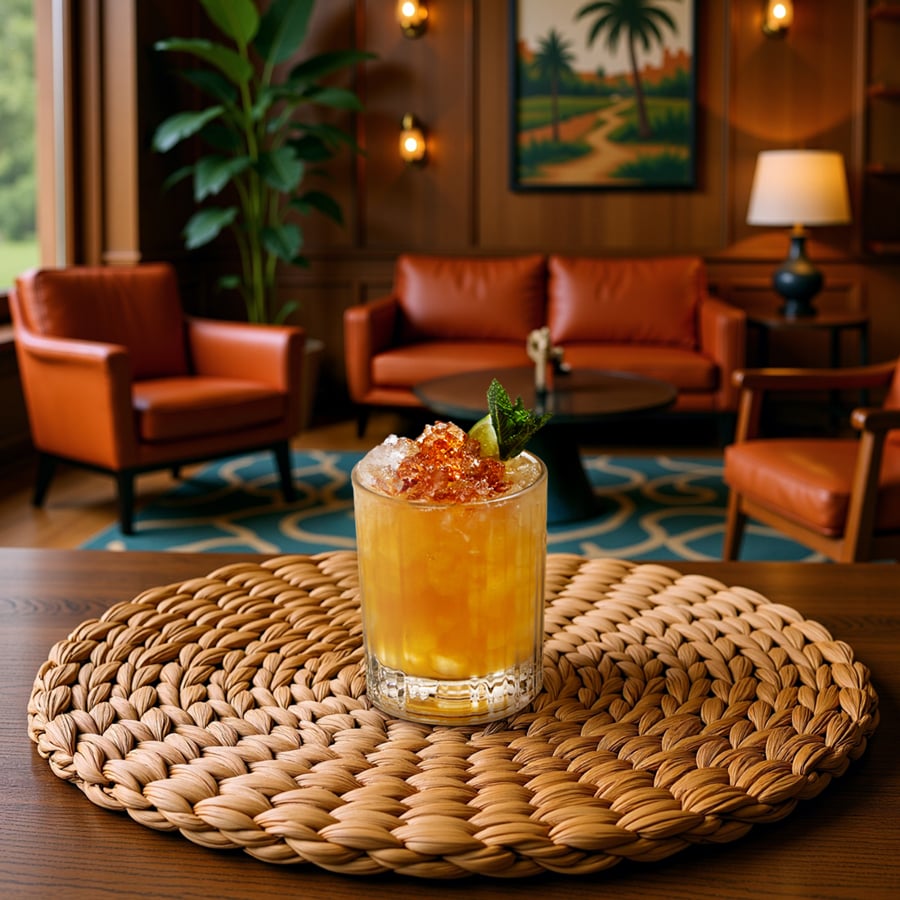
The classic Mai Tai is rich yet balanced, with tropical Jamaican rum and aromatic almond syrup. Unfortunately, it’s one of those drinks that has been sinned against a lot over the years, with many bars around the world serving cheap imitations with pre-made mixes and flavourings.
The recipe below is a good place to start if you want to get a real sense of the drink, but you should feel free to get creative by blending different rums together if you want to. Using a 50/50 split of aged and un-aged rums yields good results, as long as you make sure that funky Jamaican pot still features prominently.
The recipe
- 50ml Jamaican rum
- 25ml lime juice
- 15ml dry Curaçao
- 15ml orgeat
- 2 dashes Angostura bitters
- A couple of dashes of sugar syrup (if you have a sweet tooth)
Combine all ingredients and shake hard with ice. Serve over crushed ice and garnish with a sprig of mint. You occasionally see amaretto liqueur substituted for orgeat – an almond syrup traditionally made with rosewater – but the result just isn’t the same. Likewise, any versions that add extraneous cargo like pineapple juice or orange should be avoided. It’s rare to see this maxim applied to Tiki drinks, but less really is more.
The legend goes that Trader Vic had such success with the Mai Tai that he went through the entire world’s supply of Wray & Nephew 17 Year Old – which is probably why intact bottles command six figures at auction these days. Good choices to use in its place are Planteray Xaymaca and Black Tot – or if you’re feeling brave, a measure of Hampden Estate 8 Year Old, which will bring greater depth to your cocktail along with notes of pineapple and overripe banana.
The history of the Mai Tai
The Tiki phenomenon that spawned the Mai Tai was born in 1933, when a Texan businessman called Earnest Raymond Beaumont Gantt opened Don’s Beach Café in the centre of Hollywood. The bar and restaurant, located in a hotel off Hollywood Boulevard, promised patrons a taste of ‘the Polynesian experience’ – which to Gantt meant faux Pasifika imagery, Americanised Cantonese food and Caribbean rum. They served elaborate punches, which the ever-theatrical Gantt called ‘rhum rhapsodies’, comprising numerous juices, syrups and liqueurs that came to the table in hollowed out pineapples and coconuts. These creations were a revelation to Californians, who’d just made it through 13 years of prohibition on bathtub gin and other clandestine hooch.
By the mid-1940s and Gantt has moved to grander digs, changed his name to Donn Beach, and was often going by Don the Beachcomber. Cheap air travel to Hawaii and the Caribbean had created a fresh vogue for the exotic across the United States. GIs returning from the Pacific Theatre of War brought with them stories of tropical adventure. The Tiki bar perfectly – if improbably – captured the zeitgeist and soon was being emulated, homaged, and ripped off all over the country. Tiki drinks, as they had become known, were a huge part of the phenomenon and their spread brought rum to a wider audience than ever before. Bartenders trained in Donn Beach’s style of service could make better money than your average tapster and many travelled around sharing his secrets. But one notable adopter of the Tiki scene was not content to merely copy what had gone before.
Other Tiki cocktails
Victor J. Bergeron, who wisely called himself Trader Vic, took the Tiki theme and ran with it. A talented chef, bartender, and businessman, he franchised out his eponymous restaurants all over the world. At the height of Tiki-mania there were even Trader Vic cocktail mixes and own-brand rums in supermarkets.
Many of Vic’s own cocktail recipes, like the Scorpion and the Fog Cutter, became classics of the scene, but none of his signatures stuck the way the Mai Tai did. His original recipes matched Wray and Nephew with dry curacao, lime juice, and orgeat. A colleague of Vic’s enjoyed the drink so much that it caused her to exclaim "Maita'i roa ae!" – which roughly translates from Tahitian to ‘Bloody hell, Vic. That’s absolutely delicious,’ and earned the drink its name.
Donn Beach and Trader Vic regarded each other as friendly rivals, by most accounts. However, Beach claimed that he was the true creator of the Mai Tai until his death in 1989. His story is hard to verify, but it is absolutely certain that he laid the groundwork for this enduring classic. Long after the Tiki wave receded – taking with it drinks like the Pearl Diver and the Cobra’s Fang – the Mai Tai has remained in the cocktail canon.
A note on 'the Tiki bar’
Tiki is the name of the first man in Maori creation stories, and is broadly used to refer to carved stone or wooden figures traditional to many Polynesian cultures. It was co-opted as part of the theatrical and highly stage-managed bar experience offered by Don Beach, Trader Vic and others and has since become a byword for ‘tropical’ drinks, foods and design aesthetics across the world. However, recent years have seen a reappraisal of this term and the phenomenon of ‘Tiki drinks’ as indigenous rights groups and bartenders shine a revealing light on this chapter of cocktail history.