


 United States — would you like to set this as your default country of delivery?


 Trade
Trade  Shops & Events
  Customer Service
 A Guide to Soju: Korea’s Most Popular Spirit
Despite being the world’s most popular spirit, soju is almost unknown outside of Korea. So, what is soju, how is it made, what does it taste like and, most importantly, how do you drink it?

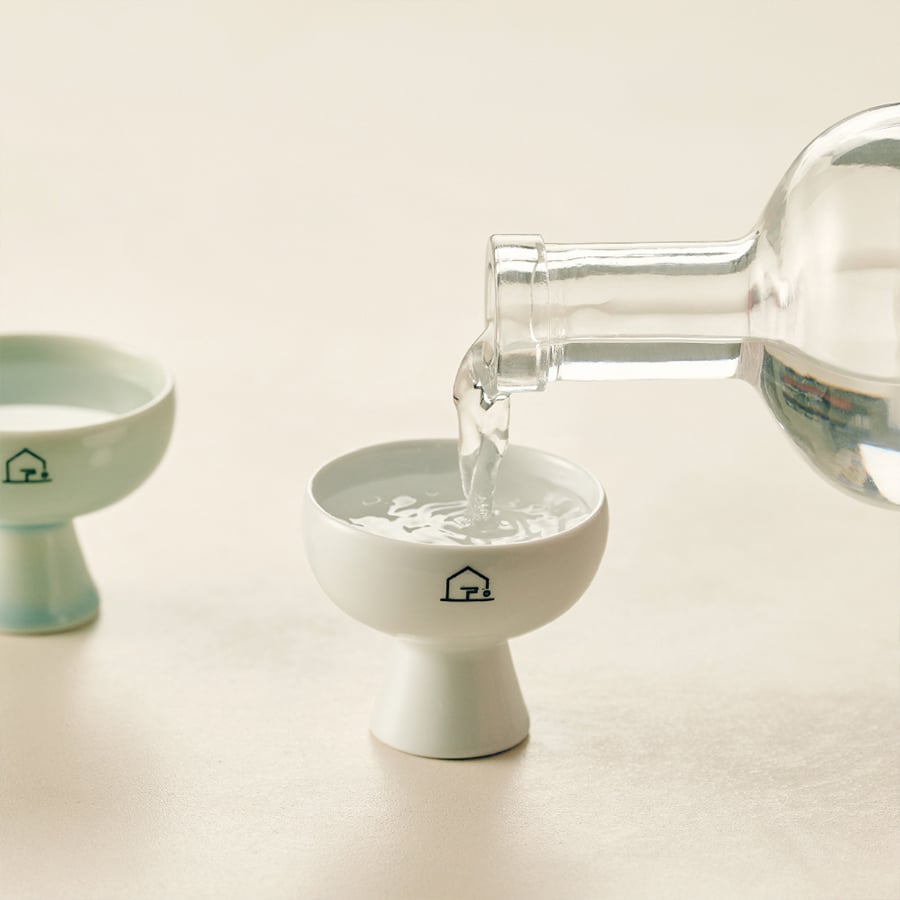
Korea’s native spirit shares common history with Japanese shochu and Chinese baijiu. These three traditional drinks even have a common linguistic root, with each name roughly translating to ‘burnt spirit’ in their respective languages. However, shifting rules and traditions over the years have led modern soju to diverge significantly from its historical ancestors.
The Korean government placed restrictions on the use of grain for alcohol production after World War Two which, combined with robust anti-competition regulations, significantly hampered soju production. It wasn’t until some of these strictures were lifted in the 1980s that the modern soju industry emerged, offering two distinct styles of spirit:
- Diluted soju – made from a base of neutral spirit (high-strength, flavourless alcohol).
- Distilled soju – batch-distilled soju, usually distilled to preserve the flavour of the raw materials. Old-fashioned styles of soju fall into this category.
While there has been an increase in the amount of distilled-soju produced since the 1980s, it is still only a fraction of the market, with diluted-soju making up about 99% of sales. That market is almost entirely based in Korea, with tiny amounts being exported around the world and mostly being consumed by Korean expatriates. Despite this, soju has been the most popular spirit in the world for 24 years in a row, with leading brand Jinro selling almost 100 million 12-bottle cases in 2024 alone.
How is soju made?
Diluted soju is comparatively easy to make: take neutral spirit and filter, dilute, sweeten and flavour it. This method is used to create a wide range of products from light and neutral styles to sweet, fruit-flavoured soju. Over the years, the average level of dilution has increased, with most diluted soju now bottled at 20% ABV or lower.
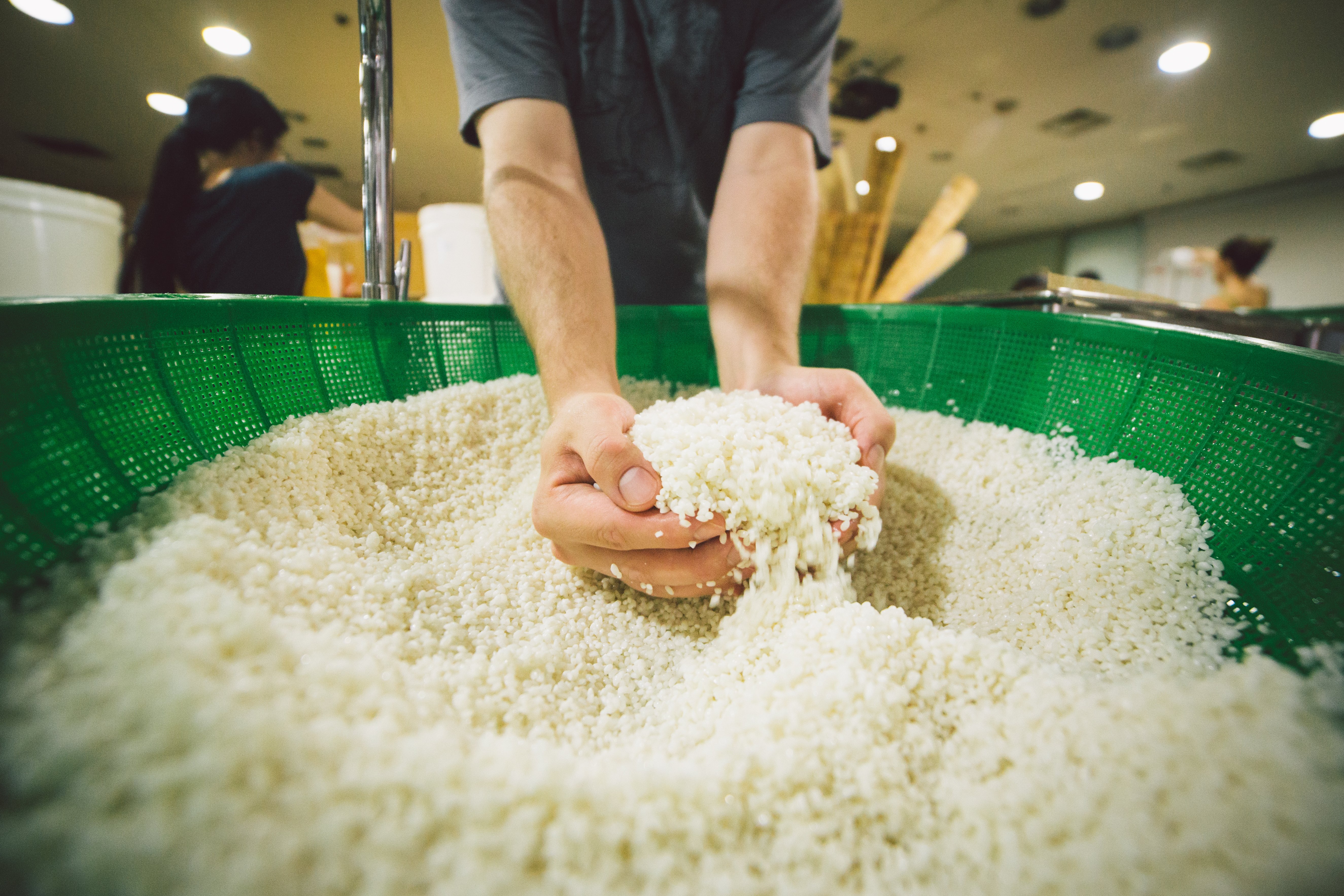
Distilled soju is a very different matter, starting with raw ingredients rather than purchased spirit. While it was once mostly made from rice, soju can now be made from a wide range of raw materials, including grains like barley and starchy vegetables like sweet potato and tapioca.
To convert the starch in the raw materials into fermentable sugar, distillers usually use nuruk, a block of steamed grains on which local microorganisms have been encouraged to grow. These blocks contain moulds that create enzymes responsible for converting starch into sugar, and also the yeasts that will consume those sugars to create alcohol.
Similar practices can be found in both baijiu and shochu production, which use materials comparable to nuruk called qu and koji, respectively. This process is one of the many reasons why Asian spirits have a very different character to their western counterparts.
To use nuruk for fermentation, the raw material is cooked, mixed with crumbled nuruk and water, and left for one to two weeks to allow the starches to be converted into sugar, which is then converted into alcohol by yeast.
We then distil the resulting mixture, creating a spirit that usually comes in at about 45% ABV. This spirit is then rested or aged, traditionally in ceramic jars and steel tanks, although more modern producers will sometimes use wooden casks as well.
While distilled and diluted soju are quite different, labelling regulations don’t require that the style is declared, and blending of the two styles is allowed. Fortunately, most producers of premium distilled soju will be sure to let you know on the label.
What does soju taste like?
The two styles of soju taste very different. At its core, diluted soju is very lightly flavoured, being made by diluting spirit with very little flavour itself – it’s a bit like a watered-down vodka. However, additives and flavourings can change that. A little bit of added sugar or acidity will keep things light, but fruity or savoury flavourings can alter the character of soju entirely.
Distilled soju also varies, as production can go from the very traditional – using nuruk, long fermentations and small clay stills – to the more modern, with specific yeast strains and copper stills. However, they are still often quite soft, drawing much of their character from the raw material and fermentation, typically expressed as notes of fruit, soft spices, grass and herbs.
One exception to the lighter character is Andong soju, a style from the city of Andong in the west of South Korea. These sojus were traditionally made from rice, with wheat nuruk, and distillation in small clay stills, although some producers use more modern equipment these days. The result is dialled up in intensity compared to other distilled soju and packed with flavour.
How to drink soju
Soju is often drunk alongside food, especially those bottled at a lower strength. It is served lightly chilled in small cups or glasses, consumed quickly and topped up often.
Soju remains a key part of any night out in Korea, and we find it at the centre of many modern drinking traditions, including the now classic combination of somaek. The word and the drink bring together the two cornerstones of Korean drinking culture: soju and maekju, the Korean word for beer.
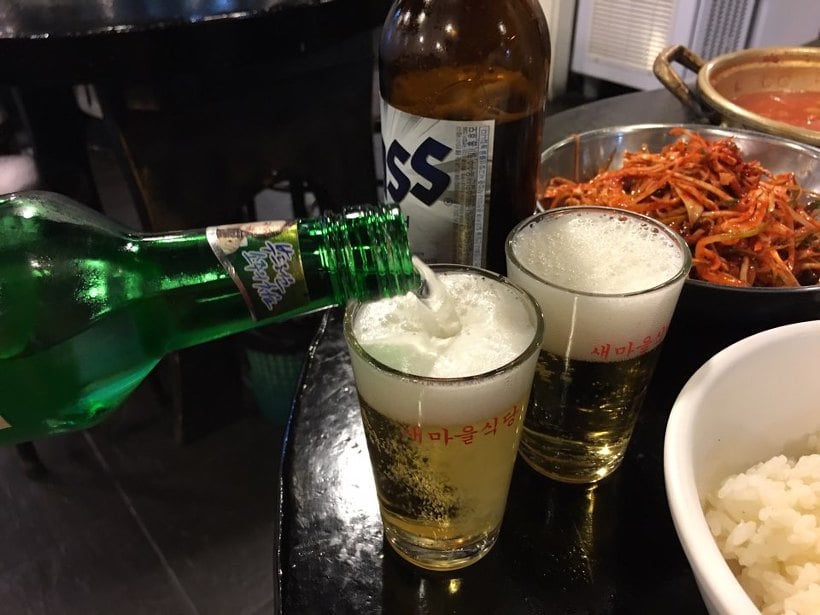
Making a somaek is easy: pour a shot of soju and then add your beer, swirling to combine. Some like to be more theatrical with their presentation, with shot glasses dropped into the beer, and glasses tapped to cause the beer and soju to combine and fizz up. Ratios vary, depending on the beer and soju, but normally sit around two parts beer to one part soju. The result is a fortified beer, maybe with a bit of extra sweetness depending on the soju, perfect for a hot Korean evening.