


 United States — would you like to set this as your default country of delivery?


 Trade
Trade  Shops & Events
  Customer Service
 Should You Put Ice in Whisky? Exploring Neat vs On the Rocks
The idea that adding ice is an insult to the noble dram is surprisingly popular, but is putting ice in your whisky really such a crime? We look at the science, history and culture of the classic Scotch on the rocks

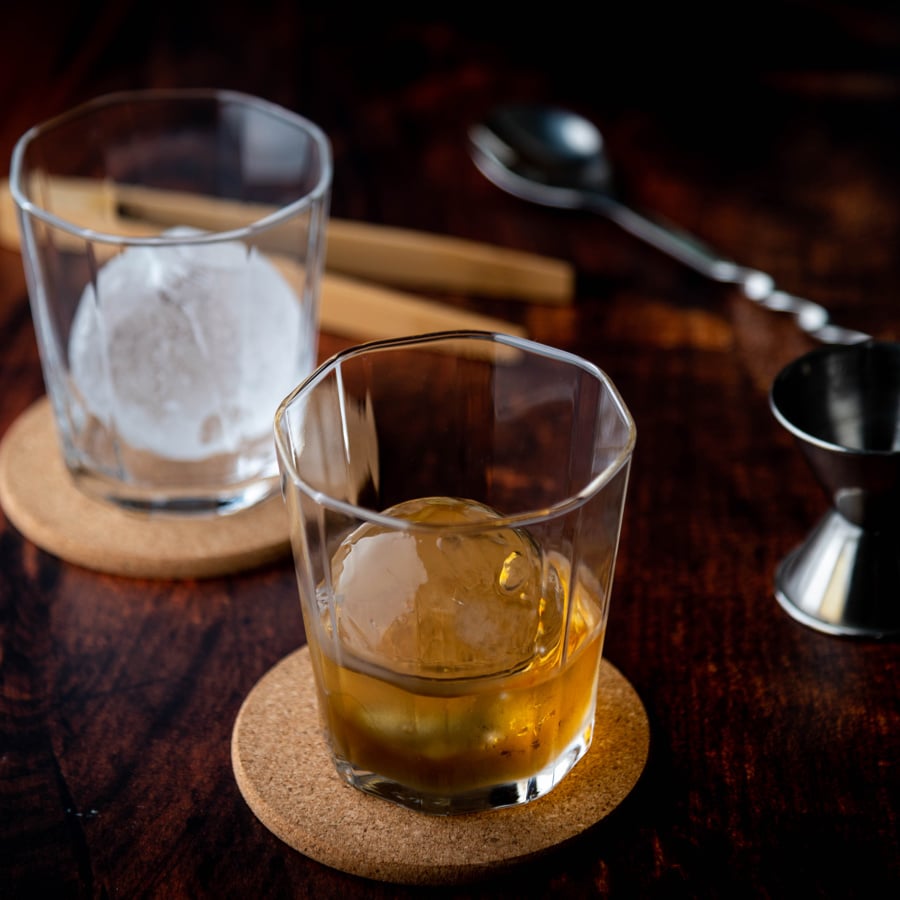
We’ve all heard the repeatable orthodoxy that says neat is the only real way to drink whisky, and that even a gleaming, perfectly clear block of ice will sully the pristine spirit and ruin the experience. But is a good old Scotch on the rocks really such an abomination? Does ice really have such a negative impact on flavour, and should that stop us reaching for a few cubes on a hot day?
In my time working in bars I’ve served whisky in most of the ways you can think of, so I was keen to reach out to some peers in the industry to hear their takes on adding ice to a dram. My first port of call was Frank Murphy, owner of The Pot Still in Glasgow and someone who knows a thing or two about serving whisky.
“Yes, ice is contentious, but only to the level-two adherents,” he says. When I ask what he means, he breaks it down like this: “Level one is when you know nothing about whisky. Level two is when you've learned something.” Level three, he explains, is when you’ve learned enough that you realise you know essentially nothing again, given how much there is still yet to discover.
“Some people learn a little and think they know it all,” Murphy continues. “They’ve clung to one nugget of wisdom and they flaunt it like jewellery. Often, it’s that nothing should be added to good whisky – save perhaps an angel’s tear of pure Scottish water. Mixers are an excommunicable offence, ice but a single rung below.”
It might be fair to say that the dogma around ice in whisky is more common among newcomers. But we can’t deny the fact that this idea of whisky as something pure that we shouldn’t corrupt – even with a little frozen water – does resonate with people.
The irony here is that whisky, particularly single malt, has become so revered that we’re limiting the ways we can drink it. But if you love whisky, you’d want to be able to enjoy it in as many situations as possible, right?
Once again, Murphy puts it best. “Never forget, this is a drink distilled by farmers in sheds and caves to while away cold dreich nights. It's a friend to keep you company in whatever circumstances you are ensconced, not a goddess to place up on a pedestal and admire from afar.”
The history of ice in drinks
We might be tempted to say that if the earliest Irish and Scottish whiskies were enjoyed neat, at room temperature, then we should do the same. But we have to remember that room temperature was much cooler than the warmth inside our homes today, and also that ice in drinks is a much older invention than many realise.
The use of ice not just as a preservative, but as a means of chilling and refreshing, dates to ancient times. The tablet of Zimri-Lim from around 1780 BCE details ice houses on the banks of the Euphrates helping to cool the elites of ancient Mesopotamia. As early as 400 BC, ancient Persia boasted ice houses called yakhchāl, which actually trapped ice that formed overnight and preserved it underground.
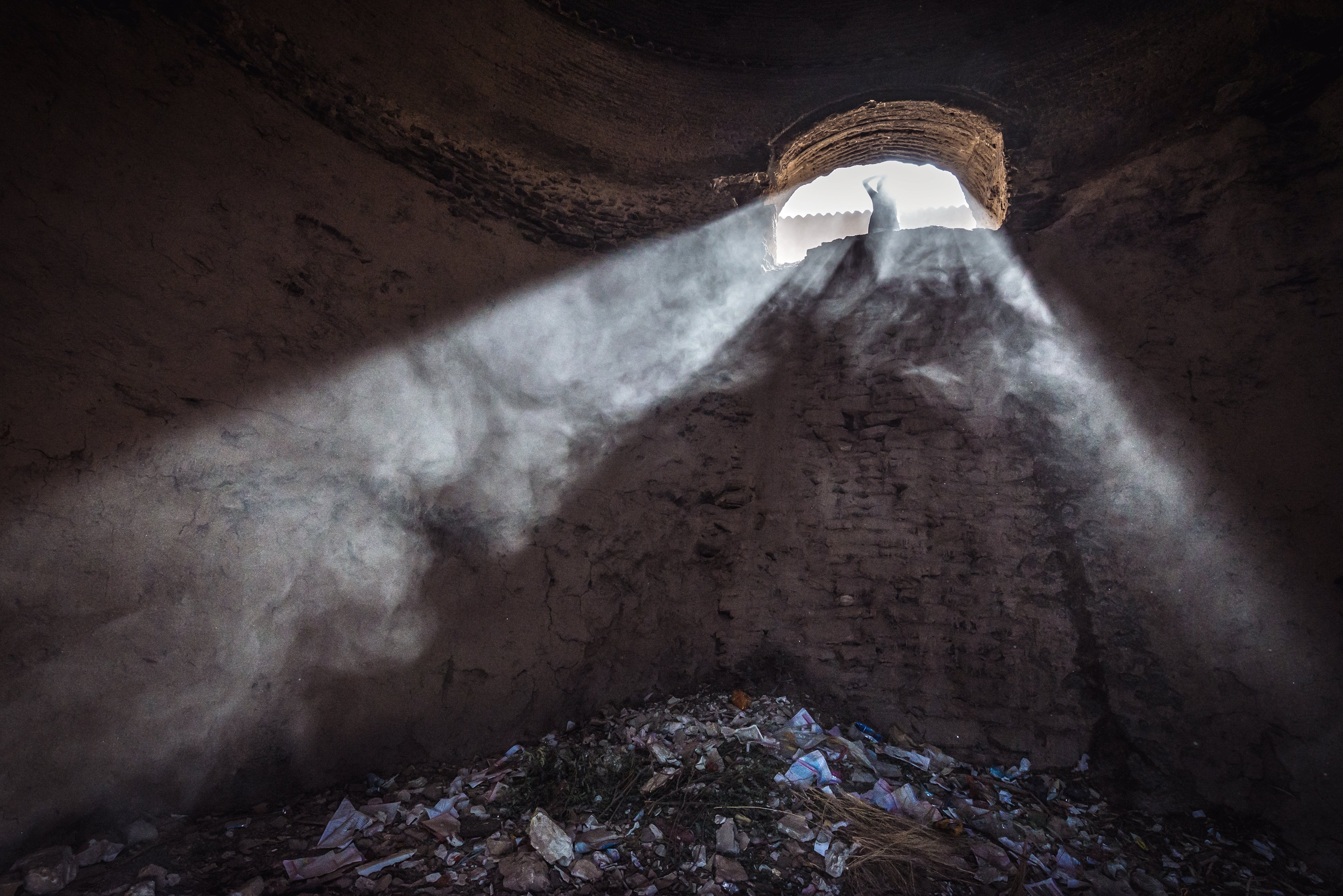
The modern ice trade began in the 19th century with a man called Frederic Tudor, who in 1806 began harvesting ice in New England during the winter and shipping it to the Caribbean and later India in insulated cargo ships. His success laid the groundwork for the global ice trade, making cold drinks possible long before electric cooling existed. It’s also why in the US, ice is seen not as a luxury, but a given, for enjoying something like a bourbon on the rocks.
These examples reveal something relatable and human – the urge to stay cool and endure long, hot days in relative comfort. So, if you’re a fan of whisky on a hot day, then it may well make sense to do what humanity has done since ancient times and drop some ice in your drink.
But, even if we accept that an icy whisky can be refreshing – not to mention the fact that mixing over ice is intrinsic to how whisky is generally enjoyed in cocktails – how do we address the idea that by adding ice, we may be spoiling or at least dumbing down the flavour of a dram?
What happens when you add ice to whisky?
When ice is added to whisky, an endothermic process takes place. The ice absorbs heat from the whisky, which draws thermal energy out of the liquid and lowers its temperature. As the ice melts, the whisky dilutes, reducing alcoholic strength, softening its impact on the palate and shifting the flavour profile. Larger cubes have a lower surface-area-to-volume ratio, which will chill whisky faster and dilute it much more slowly, but some degree of dilution may be desirable.
While excessive added water can wash out complexity, a small amount can release volatile compounds like esters, aldehydes and phenols that might otherwise be dominated by alcohol. You’ll have first-hand experience of this if you’ve ever added a dash of water to your whisky. For example, a cask-strength Islay single malt might initially present alcohol heat and dominant peat smoke, but with water it may begin to show softer more delicate notes of fruit and florals.
Chilling, on the other hand, suppresses volatile aromatic compounds, muting lighter notes, while allowing heavier flavours, like oak and peat to seem more prominent. So, it is perhaps true that while icing your whisky makes it more refreshing and releases some flavours, the range of flavour it then shows might be limited.
When I run this past another seasoned whisky server, Martyn ‘Simo’ Simpson of Dram in London’s Soho, he suggests that this transformation of flavour might be more about achieving a desired effect than moving along a sliding scale of quality.
“At the end of the day, you enjoy your whisky however you like. It’s your whisky, you bought it. Beyond that, it comes down to a matter of what flavour you’re looking for. In high-strength whiskies the ethanol content tends to restrict certain flavours, and diluting releases them, so water is an obvious choice.
“When adding ice, in essence you're adding water but the change in temperature then causes the flavour to shift again. Bitterness, sweetness and umami can be less apparent at lower temperatures, but you can use that to your advantage. Corn-based whiskies like bourbon tend to come out a lot sweeter for me, so a block of ice can cut that sweetness nicely.”
Many ways to drink a dram
Even if we accept that ice does change the flavour of a whisky, we might not always want to approach our after-work dram with a notebook in hand looking to unpick every little nuance. Scotch on the rocks can hit the spot in the heat of summer; it works with snacks or as a pre-dinner treat. Expanding how we drink whisky doesn’t necessarily dilute our experience – rather it can broaden the spirit’s possibilities. And anyway, altering the flavour might not be a bad thing.

In Japan, whisky served over ice and lengthened with water – a serve known as the Mizuwari – is a popular way to enjoy whisky with food and beat the humid heat of Japanese summertime. Large blocks or round spheres are preferred; their reduced surface area helps to maintain the ideal chill while allowing the spirit to open gradually. Skilled bartenders like the renowned Hidetsugu Ueno of Bar High Five hand-carves each piece in front of his guest. This mindful approach to ice reflects the broader Japanese ethos of patience and precision and shows these drinks should have their place even in the whisky purist’s room temp heart.
If you want to understand how ice and dilution can positively impact a whisky, revealing a different side of a well-known single malt, then try a block of ice with Hakushu Distiller’s Reserve. Its clean, green profile, filled with fresh herbs, crisp orchard fruit and gentle smoke, is built for this serve and seems to open up all of that complex flavour. The peat is subtle, the sweetness restrained, and the whole thing stays remarkably precise. What you get is a drink that’s cooling, complex and effortlessly drinkable – practically a one-ingredient cocktail.
In the UK, the appreciation of quality ice is still gaining traction, but the best whisky bars understand its ability to show a different dimension of a dram. It might not be appropriate for the 40-year-old Speysider you’ve been saving for that special anniversary, but allowing for the possibility of ice in whisky doesn’t make it mandatory. Back to Frank at the Pot Still, “everything has its limits. Ask for a Strathisla 50-year-old and Tizer and I’ll sell it to you, but I won’t respect you.”
Ultimately though, it helps to approach all of this with a bit of lightness; staying open to different ways of drinking whisky can make for a more rewarding experience than sticking too rigidly to rules. It’s just a drink, after all.




