


 United States — would you like to set this as your default country of delivery?


 Trade
Trade  Shops & Events
  Customer Service
 Whisky Collecting Guide: How to Store Your Bottles Correctly
Earlier in our whisky collecting series, we covered the best ways to get started and decide what to buy. This time, we’ll be looking at how to store and care for your whiskies once you have them

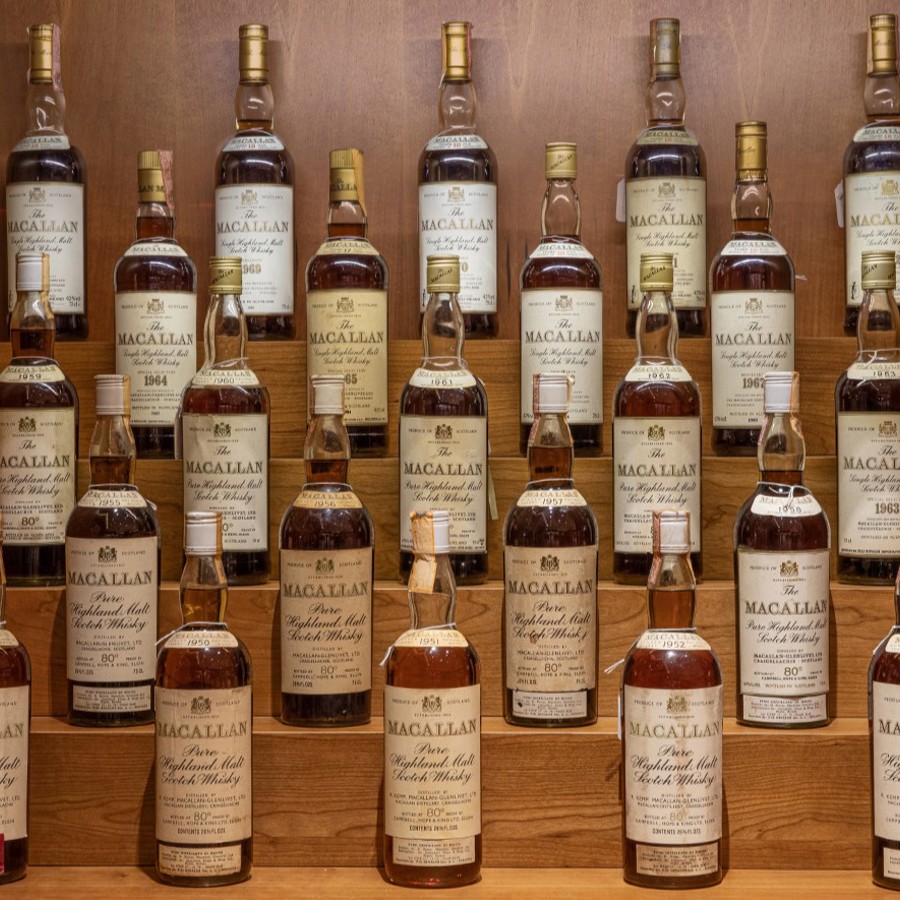
Vintage Macallan single malts in a custom built cabinet
When I asked Jason Vaswani – The Whisky Exchange’s head buyer for Old & Rare spirits – about what to avoid when storing your whisky, he was clear that keeping bottles in an environment with a cool and constant temperature was key.
“We see a lot of great old Macallans bottled for the Italian market in the 1980s or earlier. There was a really thriving collecting culture in Italy much earlier than in other countries. But lots of people were displaying their bottles pride of place in their homes above the fireplace.
“You see these whiskies with wear to the label and glass because of how they’ve been stored, and in some cases you can tell that the liquid itself won’t be in great condition. So, whatever you do, don’t keep your whiskies somewhere they’re exposed to a lot of heat or swings in temperature. If your house is very hot, you’ll probably start to notice your whisky evaporating from the bottle.”
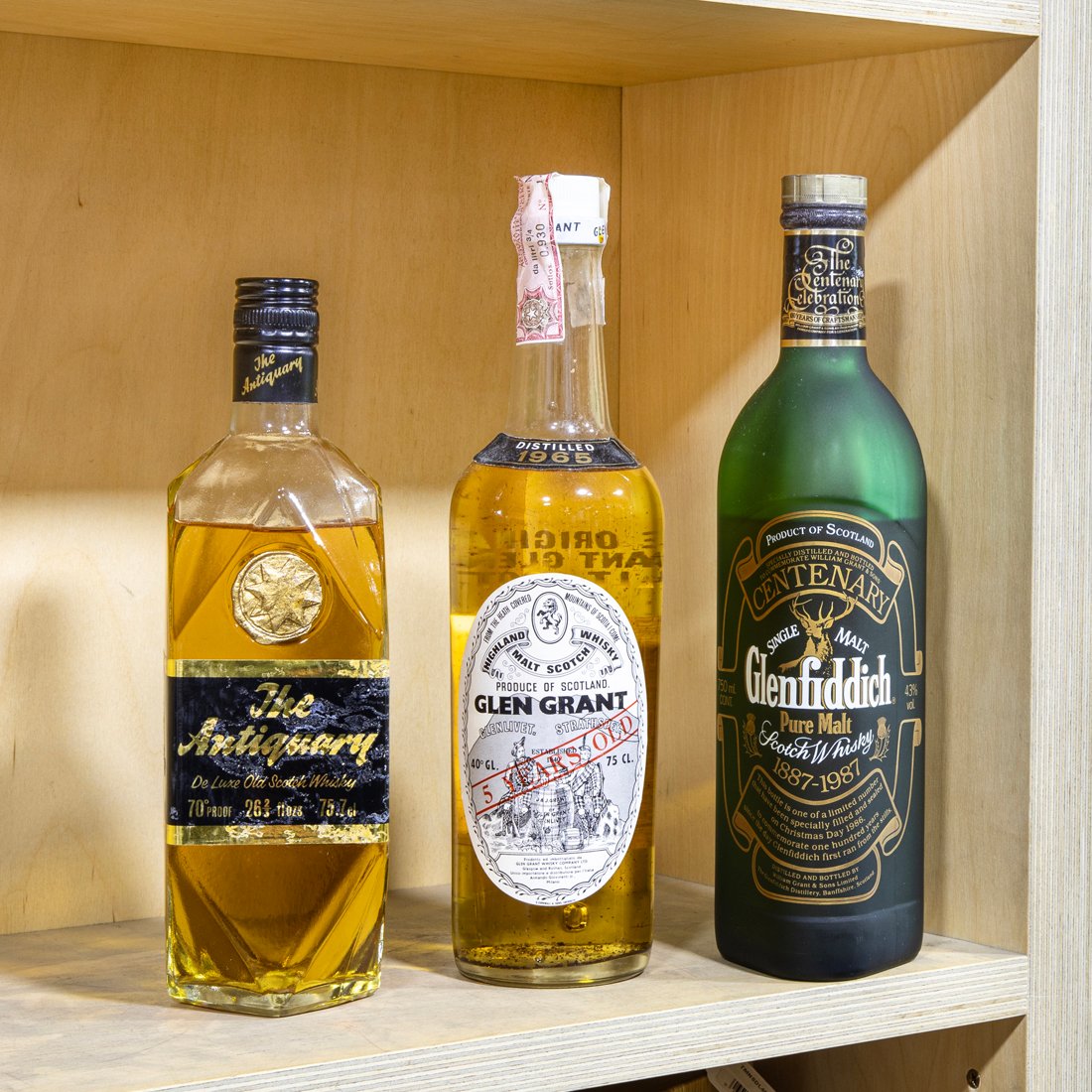
Keeping whisky in good condition
One of the things that collectors of old and rare whisky, as well as buyers and auction houses, will look for when assessing a bottle is the ‘fill level’ – the amount of liquid that has been lost to evaporation. As the original volume in a bottle begins to fall, this can indicate that the whisky in question has had a hard life. This doesn’t mean the quality has necessarily fallen, but higher fill levels are more desirable.
Some collectors will go to the lengths of commissioning special cabinets or climate-controlled rooms to store their collections. But simply picking a location in your house that’s relatively constant in temperature and not in direct sunlight should be enough to keep your whiskies in good condition for long periods of time. There’s also a much cheaper way to further prevent evaporation than air conditioning, as Jason is keen to point out.
“I would suggest anyone looking to store whisky for a long period time invest in Parafilm to cover the top of your capsules,” Jason tells me. This stretchy, non-toxic tape is used to seal samples in laboratory settings. As it is specially designed not to have any smell or flavour, a layer of this inexpensive material wrapped around the top of your precious bottles is the perfect thing to keep them fresh. “It just prevents any air going in or whisky coming out. Even under a cap and capsule, a cork is like a living, breathing thing, it’s not a perfect seal. So, that’s a really good way to keep your bottles well-maintained. It’s also good to use if you’ve opened a whisky and had a few drams but them want to put it into storage again.” This is probably only necessary if you’re planning to keep bottles for years to come, but worth considering all the same.
“Oh, and always handle bottles with care,” Jason adds. “Glass is obviously fragile, especially when you’re dealing with older whiskies that weren’t really designed for long-term storage. If your bottles are kept too close together the danger that they’ll knock into each other when you move them, and the risk of breakages is naturally higher. But even if they don’t shatter, they can develop cracks that will lead to leaking and evaporation and compromise the quality.
“Also, it’s just nice to arrange them for display like we do in our shops. Looking at your whisky isn’t as fun as tasting it, but it’s still a benefit of building up your collection.”
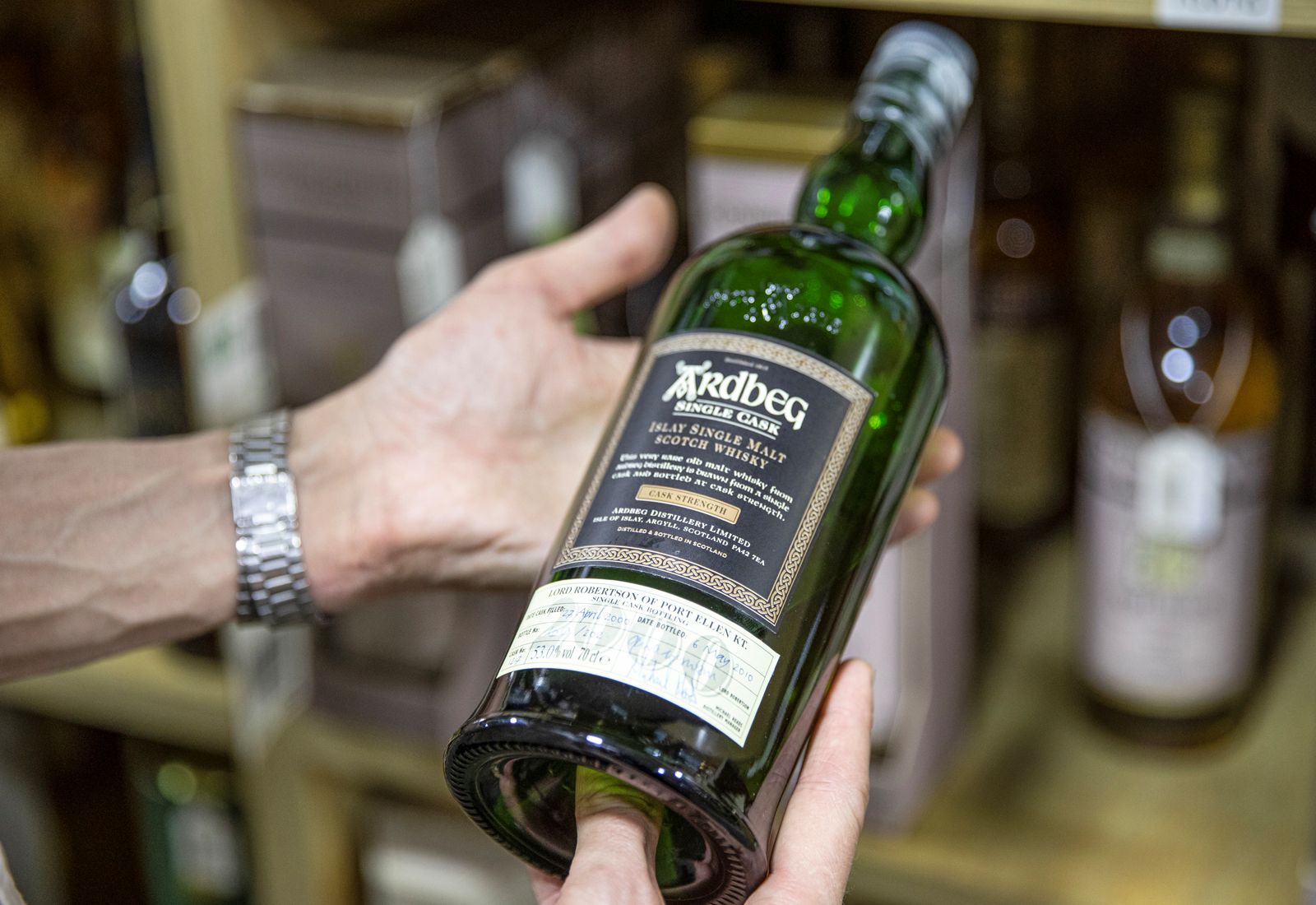
Should you store whisky on its side?
The matter of how we should arrange our bottles might seem a small thing, but there are ways to get it wrong and pitfalls to avoid. One of the questions budding collectors ask the most is whether they should store their whiskies on their sides, as they would with wine. The Whisky Exchange retail area manager Alex Huskinson has been fielding questions like these for decades and has a few horror stories about people that got this wrong.
“It was about 2012, we had a regular customer, bought lots of interesting stuff and obviously knew his way around whisky,” Alex recounts, “and he asked me one day ‘What’s the best way to store whisky long-term?' So, I told him that you must keep it upright. Unlike wine where you want to keep it on its side to keep the cork moist, if you store whisky on its side the higher alcohol content of the liquid will make it eat into the cork and it will either taint the whisky, or it’ll start to leak.
“He then told me that he’d also asked this question of another well-known whisky retailer, and they had told him to store his whisky on its side. So, he took his four prized bottles of Black Bowmore – which even at the time was worth about £16,000 a bottle – and put them in his cellar. He then came back about a year later and found that all four of them were completely ruined. He’d lost between a quarter and three quarters from each bottle, just leaked away.”

Does whisky age in the bottle?
This point of separation between wine and spirits is an important one. It’s widely understood that certain wines will benefit from ageing in the bottle. Winemakers will transfer their wares from tanks or barrels to glass bottles, knowing that it will take years for them to develop fully and reach the peak of their potential. Whisky, on the other hand, is fully aged in casks and then bottled when its ready. Under cork and cap, it should remain stable – barring the seal being compromised by extremes of heat or light, of course.
But if we know that the quality of a bottle of whisky can go down over time if it’s not properly stored, I am curious to ask whether long-term storage can have a positive impact on quality. Does whisky also ‘mature’ or at least change a little in the bottle? Once again, Jason has some wisdom to impart here.
“We generally tell people that whisky doesn’t age in the bottle, but that is debated. This would be more relevant to newer releases, but something called ‘bottle shock’ is definitely real,” Jason explains. “If a whisky has been taken out of the cask and put into a bottling system, that will have an effect on the liquid. If you open it a week later, it might not show at its best, but if you open it six months, or maybe six years later it will have had time to settle.
“I always say to people, if you open something and you’re not sure about how it tastes, close it, put it aside for a while and come back to it once it’s had a chance to rest. I don’t believe whisky matures as such in the bottle, but it can improve slightly. If you do all the right things, it at least shouldn’t get worse.”
This is one of the great appeals of whisky collecting – the idea that a spirit can remain stable from year to year and decade to decade. We discussed in our previous article about lost distilleries how whisky in a bottle can take on special significance as the people that made it and even the distillery it came from fade from memory. Over time, a bottle whisky can afford a snapshot of a style of single malt, a moment in history, or a place now lost.
That is, as long as you don’t keep it above your fireplace.

