


 United States — would you like to set this as your default country of delivery?


 Trade
Trade  Shops & Events
  Customer Service
 Best Negroni Recipes: Classic and Modern Variations
This classic of Italian cocktail culture has exploded in popularity in recent years. The bracing and bittersweet combination of dry gin, bitter liqueur and botanical sweet vermouth is a great way to whet the appetite, wash down some snacks and mark the slide of afternoon into evening

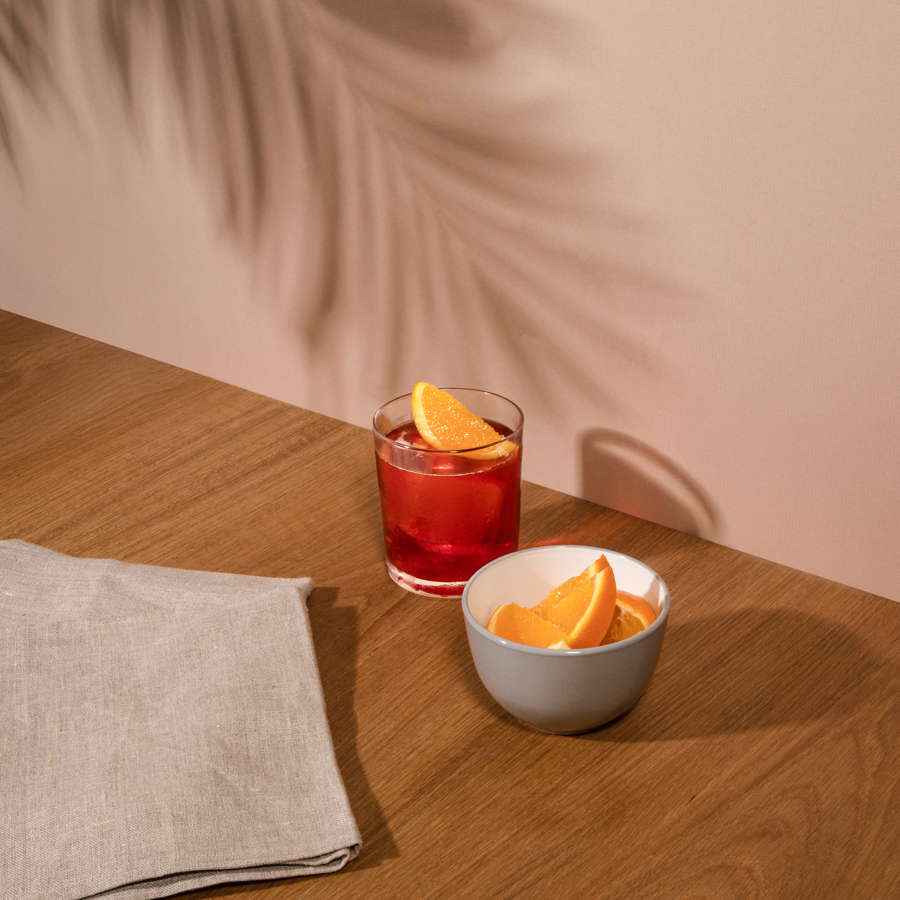
The classic Negroni
It’s probably no surprise that the Negroni has become one of the world’s best-loved cocktails: in addition to its distinctive flavour and colourful history, the ‘equal parts’ recipe calls for one shot of each ingredient, stirred simply with a little ice, making it incredibly among the easiest to make at home. Add to that the fact that if affords endless possibilities for reinvention, and it’s easy to see why this aperitif has become a mainstay of bars, restaurants and homes around the world.
Given the Negroni’s 21st century ubiquity, it could be easy to assume that this bright red aperitif is a relative newcomer to the cocktail hall of fame. But the truth is that the Negroni's origins reach back centuries, to the widespread adoption of bitter aperitifs in Venice, Turin and Florence.
The history of the Negroni
The stage was set for the arrival of this classic cocktail in Northern Italy, where a culture of wines and liqueurs infused with herbs, spices and other botanicals has thrived for centuries. Forerunners to modern brands like Campari, Aperol and Fernet Branca, these concoctions were originally consumed for perceived benefits to digestion and overall health. This may explain why they’re still taken as aperitifs – or aperitivi – to this day.
In the 1900s, the proliferation of ice and soda water gave rise to a thriving cocktail culture in Italy built around different permutations of bitters (like Campari) and aromatised wines (like vermouth di Torino). The fashionable drinks of Italian café culture at this time were the Milano Tornio – comprising both bitters and vermouth – and the Americano, which might be the same thing by a different name or a variation on the theme with a spritz of soda.
The oft-repeated origin story of the Negroni takes place in 1919 with Count Emilio Negroni ordering an Americano cocktail at his favourite café in Florence and asking the bartender to make it a little stronger. The obliging bartender opted to sub a measure of London dry gin for the soda in the Americano, or so the legend goes.
It’s a good story, and as we know good stories are often more compelling that the truth. Negroni, the man, was a colourful character to say the least whose CV listed jobs including cowboy and fencing master, so it’s easy to see how this would capture people’s imaginations. And while this is a compelling account of how Italy’s favourite cocktail got its name, it doesn’t leave us much the wiser as to who, if anyone, invented it.
Sandwiches are so-called because a certain Mr John Montague – the 4th Earl of Sandwich – purportedly requested one while having so much fun at the card tables that he refused to sit down to eat. This 18th century gambling enthusiast may have lent his title to the sandwich, but it’s a stretch to believe he invented putting a piece of meat between two slices of bread.
Returning to the Negroni, it’s far more likely that combining gin, bitters and sweet vermouth was a natural evolution of Italian café drinks than the whim of an aristocrat-turned-adventurer. If it was invented, as such, it makes more sense to credit the bartender who made Count Negroni’s new favourite drink: a gentleman called Fosco Scarselli.
But really, adding a dash of gin to your afternoon aperitif to punch it up a little bit isn’t an idea that really needs inventing. It just needed a good name to help propel it to international acclaim. Would this classic drink be as popular if it was called a Scarselli? We’ll never know for sure.
The Negroni today
By the end of the 20th century, the Negroni was still relatively obscure outside its native Italy, where it had taken on a raffish reputation. As the years wore on, a vogue for classic cocktails saw bartenders around the world dusting off old recipes and seeking bold and intense flavours. Campari, Italy’s most recognisable bitter, began to champion the Negroni as a bracing and sophisticated drink with which to draw a line between day and evening.
The 1:1:1 Negroni recipe that coalesced in the 20th century spread around the world in the 2000s. But it didn’t take long for creative bartenders to rightly identified that the Negroni offers more of a template than a rigid recipe. By swapping elements in and out, this simple cocktail can take on a near-infinite number of different permutations.
If you want to start making Negronis at home – or even get into riffing on the formula to create your own signature variation – these three versions of the classic are great places to start.

Three ways to make a Negroni
For all three of these recipes, you’ll need a bottle of potable bitters in the Italian style and a bottle of sweet vermouth. The natural choice for the bitters is Campari, but thanks to the proliferation of the Negroni around the world, there are now myriad producers offering their own interpretations of this classic aperitif. This is likewise true of sweet vermouth, which is now made everywhere from California to Britain and even Australia. Martini Rosso is a solid benchmark, as is the richly flavoured Cocchi Vermouth di Torino.
Once those are taken care of you, just need plenty of ice, some citrus fruit for garnishes and some good company to share your Negronis with.
The classic Negroni
- 25ml London dry gin
- 25ml Campari or other bitter
- 25ml sweet vermouth
Stir all ingredients in a mixing glass with ice until well chilled. Strain into a rocks glass filled with fresh ice and garnish with a wedge of orange. If you’re in a hurry, you can just build it in the rocks glass, stir and top up with fresh ice, but using a mixing glass allows for more precise dilution and a longer-lasting drink.
It’s not essential, but your Negroni will taste all the better if you serve it with some salty snacks. This can be as simple as a few crisps or olives or as elaborate as cured meats and canapés.
Negroni Sbagliato
- 50ml Prosecco
- 25ml Campari or other bitter
- 25ml sweet vermouth
Roughly translating to ‘wrong Negroni’, the Sbagliato is a great drink to pick up if you’re a fan of the classic Spritz and you’re on the hunt for something new.
Fill a highball glass to the brim with ice and add your bitter and vermouth, then stir briefly to chill. Top with prosecco and stir gently to combine without losing the sparkle in your wine. Garnish with a wedge of orange or grapefruit an enjoy.
The Boulevardier
- 35ml Kentucky straight bourbon
- 25ml Campari or other bitter
- 25ml sweet vermouth
By dropping the gin and introducing a large measure of bourbon, we transform the Negroni from an aperitif into a digestif. The botanical interplay of the vermouth and bitters means that this is recognisably Negroni-like, but the whiskey will make this appeal to fans of the Old Fashioned and Manhattan.
To make a Boulevardier at home, start by chilling a cocktail glass in the freezer ahead of cocktail hour. Then, stir all your ingredients in a mixing glass filled with ice, strain into your frozen cocktail coupe and garnish with a twist of orange or lemon peel.
How to twist the Negroni
What these twists on the classic formula show us is that the Negroni is ripe for reinvention. As long as you stay true to the spirit of this as a punchy, appetite-stimulating drink with a bitter and botanical backbone, the possibilities are endless.
Use mezcal instead of the traditional gin and you have an entirely new drink. Try Japanese umeshu in place of the vermouth and you have something different again. There are innovative takes on the Negroni out there featuring sherry, Chartreuse, aquavit, a diverse array of different bitters, and many other ingredients besides.
The original Negroni doesn’t really need improving, of course. Its simplicity belies a perfect sense of balance and intensity that makes it infinitely greater than the sum of its parts. But there’s still lots of fun to be had in opening up your cocktail cabinet and getting creative with your next Negroni.


