


 United States — would you like to set this as your default country of delivery?


 Trade
Trade  Shops & Events
  Customer Service
 A Comprehensive Guide to Whisky Casks and Oak Aging
Cask ageing is a definitional part of the whisky making process. But how does the size, composition and previous contents of a cask effect whisky as it ages?

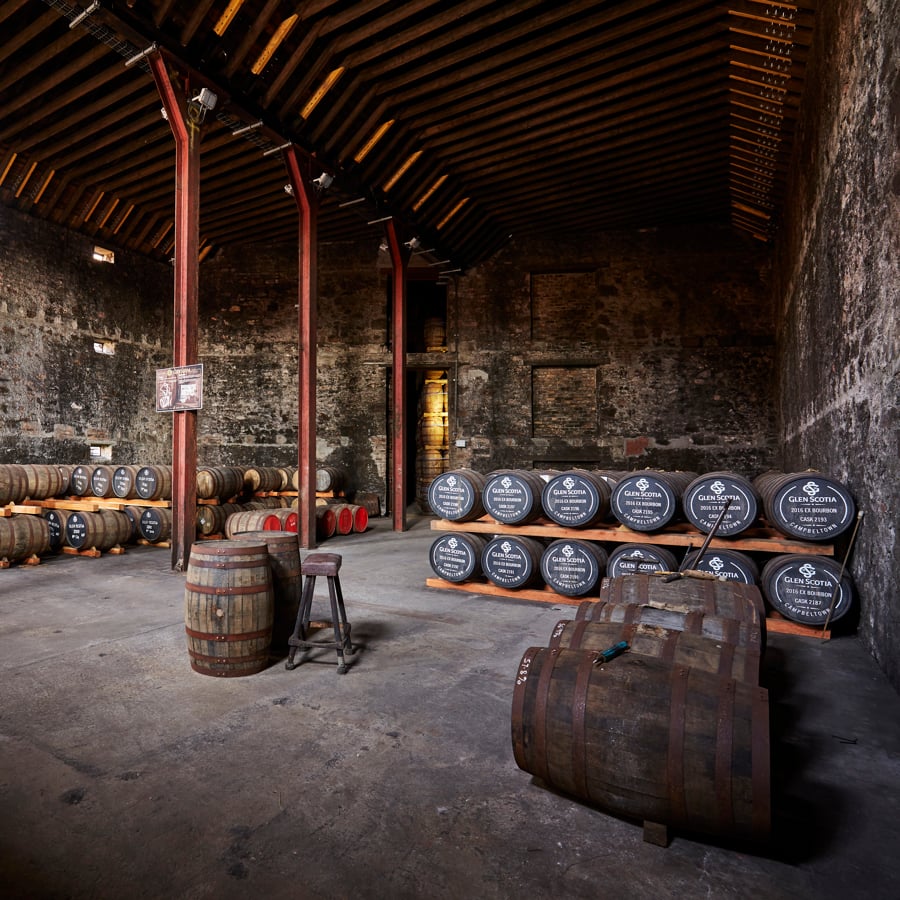
Casks in the cellar at Glen Scotia in Campbeltown
Wooden casks are durable, near-watertight containers, used for centuries to store and move goods around the world. The seemingly simple design of these casks (often colloquially referred to as barrels, which are actually a specific size of cask) belies their incredible ingenuity, as they have scarcely changed shape for thousands of years.
Their use for transporting alcoholic drinks, be that wine, fortified wine or distilled spirits, goes back centuries. Over time, and likely in multiple regions, it became clear they could do more than hold liquid, they could alter its colour, chemical makeup and – perhaps most importantly of all – its flavour.
This idea carried to Scotland and Ireland, where early distillers used casks to shape the character of their spirits. As the decades passed, maturation became central to the identity of whisky. It was a way to create balance and depth, marrying spirit and wood to create something greater. Almost every set of whisky regulations around the world now requires a minimum period of ageing.
Scottish whisky must be aged in oak casks that are deemed to be traditional by the Scotch Whisky Association – most commonly ex-wine or spirit casks – to ensure that the spirit develops the familiar colour, aroma, and flavours of whisky. Within these boundaries, however, distilleries are increasingly experimental. Ex-bourbon casks make up as much as 90% of ageing stocks in Scotland, with seasoned or ex-sherry casks accounting for a large proportion of the remainder, but whiskies matured or finished in casks that once held spirits like calvados, tequila or mezcal are becoming more common.
Elsewhere in the whisky world, where the use of 'traditional oak' is not mandatory, producers are drawing on local influences in their approach to cask maturation. Distillers in Japan have experimented with aromatic sakura wood, while Indian producer Godawan finishes some of its single malts in special casks conditioned with Ayurvedic botanicals.
How cask maturation works
The influence of a cask on a spirit can be understood through three complementary effects: additive, subtractive and interactive. Additive effects occur as the wood imparts compounds such as vanillin, tannins, and lactones, enriching the spirit’s profile. Subtractive effects see the cask acting as a natural filter, softening undesirable compounds. Interactive effects arise from chemical reactions in the liquid in the cask, including oxidation and esterification, which integrate new flavours and build complexity over time.
In modern whisky, we often talk about casks in terms of their previous contents – sherry, bourbon, rum – but the cask’s story starts with the raw wood itself.
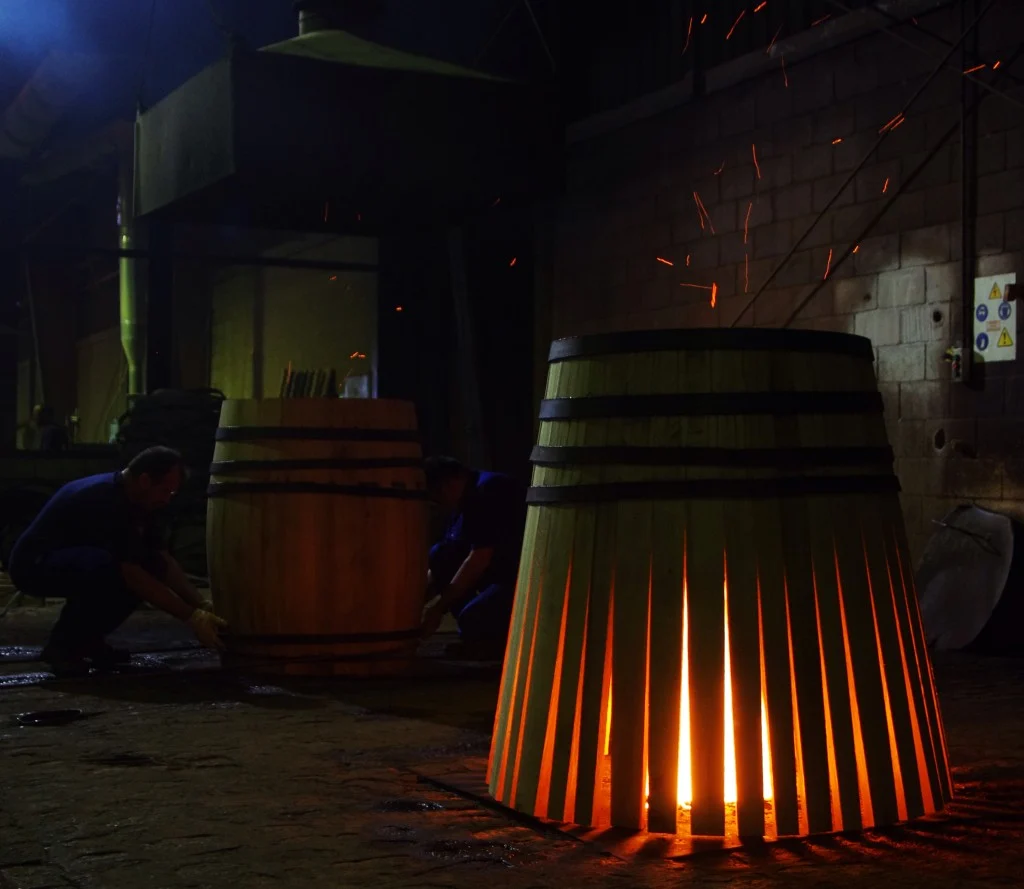
Types of oak
Oak casks are required by law to age whisky in Scotland and the USA. We do sometimes see whiskies aged in casks made from other types of wood, but oak remains the material of choice for distillers around the world due to its abundance and suitability for making strong, watertight casks. Oak comes from many different places and takes many different forms, and each species has a particular influence when used to age whisky. Here are a few of the most commonly used types.
American white oak
Also known as Quercus alba, this is by far the most used oak in whisky-making. It is tight-grained and relatively easy to work, whilst being packed with lactones and vanillin, which give whisky flavours of vanilla, coconut and caramel. Its dominance is partly a matter of supply – the laws governing bourbon mean that only new oak can be used, leaving Scotland, Ireland and just about every other whisky-making nation with a steady stream of once-used (refill) barrels. New American oak, however, has its own profile, with sweet vanilla flavours joined by spicy, woody notes and sometimes a touch of bitterness.
European oak
European oak in the context of whisky making typically refers to Quercus robur and Quercus petraea. More porous and tannic than their American cousins, European species are associated with sherry butts from Spain and also used for French spirits like Cognac and Calvados. European oak casks typically impart dried fruit, chocolate, nutty and spicy notes, often lending whisky a darker and richer character. Grain density and flavour can vary widely across Europe – Spanish oak, for instance, tends to have a more open grain, allowing whisky to extract flavours like vanilla and dried fruit more readily. Oak from colder regions, such as Eastern Europe, grows more slowly, resulting in a tighter grain with smaller pores and a subtler effect on the whisky’s flavour.
Scottish oak
Closer to home, some producers are beginning to explore native Scottish oak. Both Quercus robur and Quercus petraea grow here, though centuries of deforestation mean supplies are scarce. The timber is often knotty and difficult to work with, but early experiments suggest nutty, resinous flavours with a spicy backbone. Fettercairn in the Highlands is notable for releasing whisky aged in Scottish oak, including the distillery's current 18-year-old expression.
Irish oak
Like Scotland, Ireland has limited native oak, but recent projects have begun to explore its potential. A notable example is Glendalough’s Irish oak finished pot still whiskey, with its sweet vanilla, caramel and chocolate notes balanced by firm oaky spices. It shows a slightly different profile from Scottish oak despite their shared heritage.
Hungarian oak
Hungarian oak (Quercus frainetto) is tight-grained and grows slowly in the Carpathian Basin. Long used in wine, it is being trialled in whisky, often giving earthy, herbal notes. Some examples also show a mix of European-style depth with brighter berry fruit notes and vibrant spices.
Mizunara
Japan’s contribution is mizunara, Quercus crispula. This oak is notoriously difficult to work with, being knotty, prone to leaking, and slow to season. The whiskies aged in it, though, can pick up heady flavours of sandalwood, coconut and incense, often emerging only after long years of maturation, with a drying, tannic edge that can be rewarding but easy to over extract. One of the finest examples of this style can be found in Yamazaki Mizunara 18 Year Old. This distillery has been working with Mizunara longer than any other on earth.
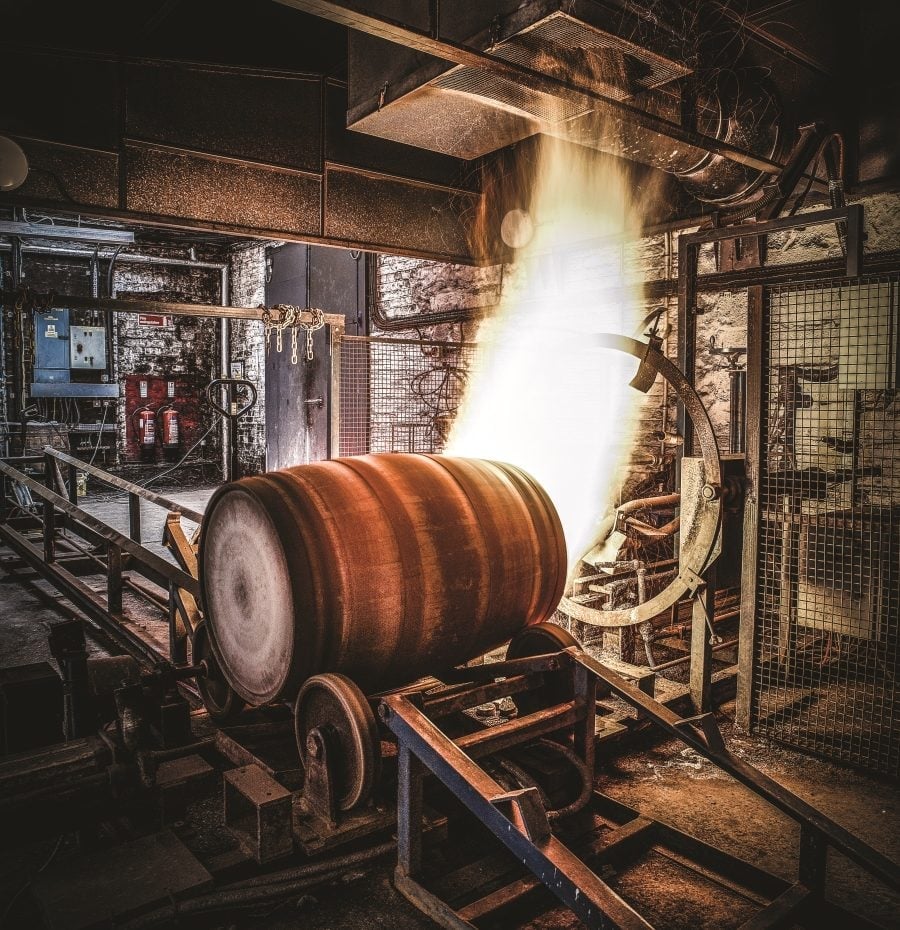
Non-oak casks
In countries that don't require the use of oak casks in whisky making, producers are free to explore the potential of casks made from other types of wood. Notable examples of this include Swedish producer Agitator's chestnut cask-aged Rök Single Malt, Bushmills single malts matured in acacia wood, and Method & Madness Maple Wood Finish from Midleton distillery. Effects vary enormously once you begin ageing whisky in these atypical casks. Maple, for instance, appears to grant its familiar sweetness to an ageing spirit, while chestnut shows a spiciness quite different from most oak species. Whiskies like these will likely never be as common as those matured in some form of oak, but they are fascinating to try if you get the chance.
Types of casks used in maturation
Sherry casks
A key consideration in whisky maturation is how the former contents of a cask will influence a whisky’s character. Sherry casks are often used to mature single malt whiskies, but this set of fortified Spanish wines alone offer a spectrum of flavours, depending on the style.
Fino and manzanilla casks are bone dry because the wine is biologically aged under a layer of flor yeast, which consumes sugars in the wine. The yeast interacts with the wine, limiting oxidative development and producing delicate almond, citrus and savoury notes. Though not the most common form of sherry cask in distillery warehouses, there are expressions which show how dry sherry can influence single whisky, for instance, Glenglassaugh’s fruity and mineral Sandend single malt.
Oloroso casks, used by distilleries such as Aberlour and Glenfarclas, add richness with flavours of dark fruit, nuts and spices. The wine is oxidatively aged, allowing it to develop deep, concentrated flavours and a sense of umami. Pedro Ximénez casks contribute intense, sticky sweetness, as the grapes are sun-dried before fermentation, concentrating sugars and giving the wine its rich, syrupy profile. When spirit is filled into these casks, you’ll get a whisky with a powerful dried fruit character reminiscent of dates, caramel and raisins.
Almost all sherry casks used in whisky today are seasoned, meaning they have been filled with sherry to prepare them for whisky maturation, typically for a few months to a few years. This differs from solera casks, which are part of the traditional ageing system used by bodegas in Spain. Solera casks are less available to the whisky industry, but some producers seek them out in pursuit of particular flavours developed over decades of use.
Bourbon barrels
Bourbon barrels, such as those used for the bright and fruity Scapa 10, often impart vanilla, caramel and coconut flavours. Compared to sherry casks, they tend to play a more low-key role in maturation and allow the spirit’s character to show itself without the heavier influence of sherry. Bourbon itself must be made in the US, using at least 51% corn, and aged in new charred oak barrels, which is why these casks are widely available for Scotch whisky maturation.
Learn more about bourbon barrels in whisky here
First-fill vs refill casks
Whether a cask is first-fill or refill also matters. First-fill casks – where the cask in question is being used immediately after its first usage in another spirit – are often described as more active, producing stronger flavours that can have a bigger immediate impact on a spirit. Refill casks – those originally for other spirits but which have already been used to mature Scotch whisky one or more times – are more restrained, allowing for a longer maturation time and potentially showing more distillery character in the final whisky.
Cask finishing is the practice of transferring a maturing spirit from one cask to another to introduce new flavours. Producers often start with ex-bourbon or refill casks before finishing in sherry, wine, or other specialised casks.
Learn more about cask finishing here
Cask sizes in whisky making
The shape and size of a cask also play a decisive role in impacting a spirit’s character. Smaller casks expose a greater surface area of wood to the liquid, accelerating the extraction of flavours, which results in a more pronounced influence from the cask in a relatively short period. Larger casks ensure less impact from the wood, whilst allowing more oxidation to take place over time – in these big formats, time is the biggest factor, which leads to a steady development and balancing of flavours.
The shape of the cask also has a significant effect. The characteristic bulge at the centre, known as the bilge, ensures even stress distribution and facilitates easier movement. Here are a few commonly used sizes of cask:
Blood-tub
Starting with the smallest casks, the colourfully named blood-tubs are between 30 and 40 litres in size and are almost never used commercially. Mostly, these are used for private casks, allowing for a small, more manageable number of bottles for an individual, but the spirit’s intense interaction with the wood limits how long the maturation can be.
Octaves
Octaves are small oak casks, typically holding around 50 litres, that can have a significant impact on whisky in a relatively short span of time. This rapid maturation imparts deep wood characteristics such as vanilla, caramel, and spice. However, the heightened extraction gained from small casks like these carries the risk of over-oaking, which can overpower the spirit’s inherent qualities. So, octave casks are often used for shorter finishing periods of three to nine months to enhance the whisky without masking its original character.
Quarter casks
A quarter of the size of a butt (of which more below), these typically hold around 125 litres and were historically used for transporting whisky due to their manageable size. In modern production, they are usually employed for finishing or secondary maturation, allowing whiskies to develop a pronounced wood influence profile over a shorter period.
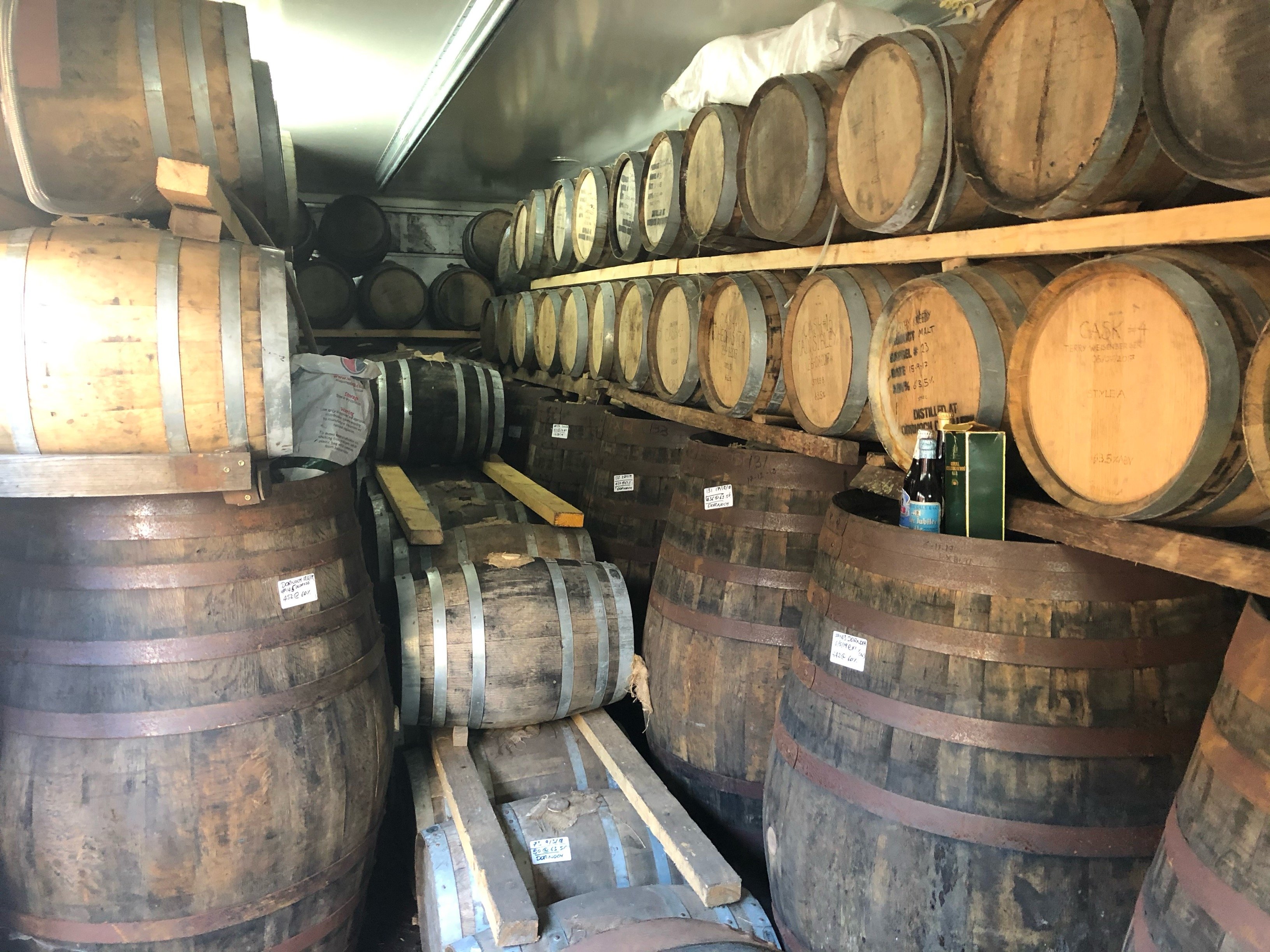
American Standard Barrel
The American Standard Barrel, commonly known as a bourbon barrel, is the most widely used cask for whisky maturation. Holding around 180 to 200 litres, these barrels are made from American white oak and charred on the inside to enhance flavour extraction. Once used the first time to age bourbon, they are often repurposed for maturing Scotch or Irish whiskies, imparting notes of vanilla, caramel, and coconut. Their size and construction make them well-suited for medium to long-term maturation, allowing the spirit to develop depth and complexity over time. This is why they remain a staple in distilleries around the world and are used to age different spirits, from Scotch whisky to tequila and rum. While it's common for people to use the terms cask and barrel interchangeably, only casks of this size should technically be called barrels.
Hogshead
Among the most commonly used type of cask in whisky maturation, hogsheads typically hold between 225 and 250 litres. They’re typically made by taking staves from former bourbon barrels and uniting them with larger cask ends and hoops to make a cask with an overall greater capacity than a barrel. This allows whiskies to develop well-integrated character over extended maturation periods.
Port Pipe
Port pipes are large European oak casks, named for the Portuguese word pipa, meaning cask. They typically hold around 500 to 550 litres and are traditionally used for maturing port wine. Their tall, slender shape provides a moderate surface area to volume ratio, allowing for a balanced interaction between the wine and the wood. When used in whisky ageing, they are usually reserved for finishing rather than full maturation, imparting rich, fruity notes of red berries, dark chocolate, and dried fruits without overpowering the base character. A valued tool for creating more layered and nuanced expressions.
Butt
Famously used to mature sherry, butts are 500-litre casks that have found immense popularity with whisky makers and are often the largest in a dunnage warehouse. Butts impart flavour, but more importantly, support greater oxidation over time, adding depth and complexity without overwhelming the whisky’s base profile and letting time do its thing.
Puncheon
At 500-700 litres in size, puncheons are possibly the most varied type of cask. Their size usually depends of what they are being used to mature – sherry puncheons tend to be larger than rum puncheons, for example.
There are a multitude of elements that influence a whisky’s character, giving producers a wide palette of flavours to add balance, depth and complexity. Maturation shapes much of a whisky’s final flavour, so ongoing experimentation with new wood varieties and finishing techniques promises ever more diversity in the spirit we love most.





