


 United States — would you like to set this as your default country of delivery?


 Trade
Trade  Shops & Events
  Customer Service
 Tequila vs mezcal: What’s the difference?
The battle for Mexico’s most popular spirit is oft-waged between two of its best known: tequila and mezcal. But what makes these two agave spirits differ from each other - and shine in their own rights? We take a deep dive.

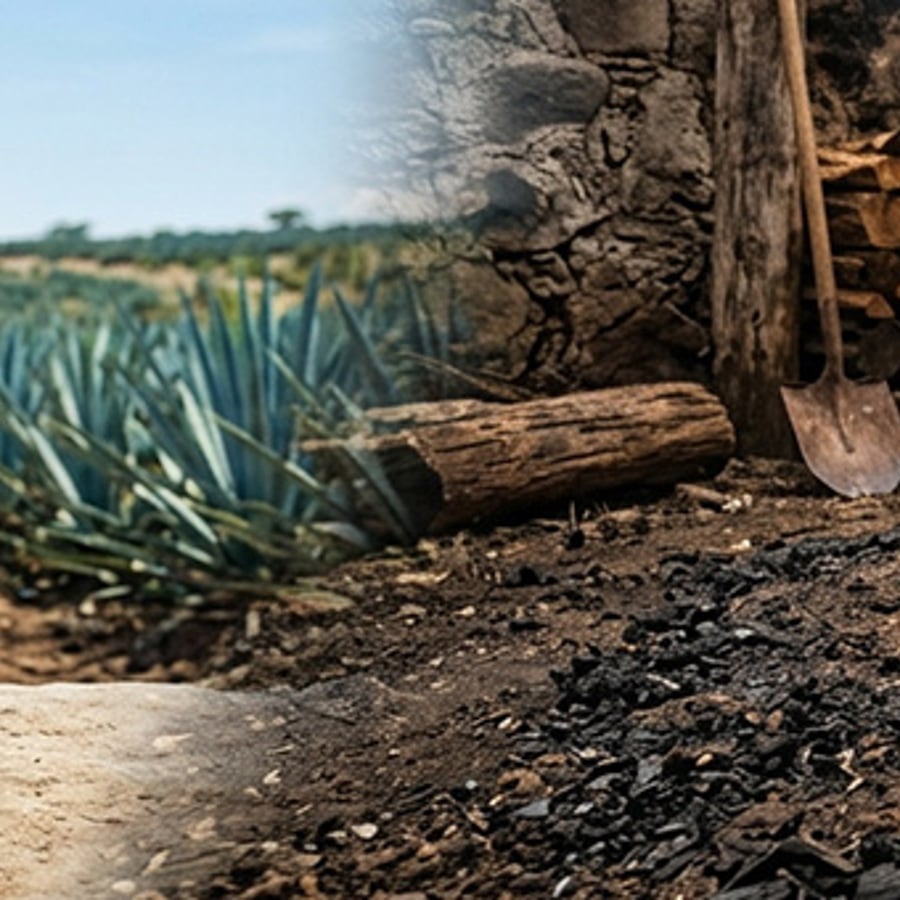
When it comes to agave spirits, there are two which stand head and shoulders above the rest in terms of knowability and popularity - tequila and mezcal. Their similarities are stark: they are both made in Mexico, both made from agave, both are fermented and distilled, and both are appearing more and more on drinks menus and shop shelves around the world.
The history of distilling in Mexico dates back all the way to the 1500s when the Spanish invaded and brought with them the desire to distill. It’s important to note that before official categorisation, both tequila and mezcal were classed as vino de mezcal - which makes it even more important to note that tequila, in essence, is a mezcal - it has just evolved into its own category.
In essence, they are both made using the same series of steps. Agave is grown, matured and their hearts harvested before being cooked, crushed, fermented and distilled (and sometimes aged) to become either mezcal or tequila.
But while these two spirits share many things, they are also distinct in their differences. From the species of agave they use and their production techniques, to where they are made, their different approaches to ageing and - importantly - how they taste, are a testament to how seemingly two spirits made from the same raw material can vary so dramatically.
What is Tequila?
Officially, tequila is the national spirit of Mexico and its history is a proud source of heritage, especially in its hometown of Jalisco where a trip to the town of Tequila itself is a showcase of how the production of this spirit in its numerous distilleries lives side-by-side with its occupants and the hoards of tourists who visit to see the real thing in action. Despite tequila’s unfortunate reputation outside of Mexico as the shotting spirit, responsible for many a hangover, its star has started to rise again and is driving an appreciation for other Mexican spirits in its shadow.
Tequila production can be dated back to the 1600s with Don Pedro Sanchez de Tagle known as the man to first mass produce tequila. But it wasn’t until 1795 when Jose Maria Guadalupe de Cuervo became the first person to be licensed to produce and distribute tequila commercially. And it wasn’t until as recently as 1974 that tequila actually got its official DO (denomination of origin).
In order to be called tequila, it has to be made in one of five official states in Mexico, namely Jalisco (the main area of tequila production), Guanajuato, Michoacan, Nayarit and Tamaulipas. Since 1949, it must be made using one specific variety of agave - the blue weber agave (otherwise known as the agave azul or agave tequilana) and it must be made up of a minimum of 51% of this agave, with the ability to make up the other 49% with non-agave sugars such as sugarcane or beet sugar (this style of tequila is called a mixto), although 100% agave tequilas are becoming more popular. Producers are also allowed to add additives such as glycerin, oak extract, caramel colouring and syrup.
There are five legally defined categories too:
Blanco/silver/plata: Aged for no more than two months
Joven/gold/oro: A blend of aged tequilas or a blanco with added caramel colouring
Reposado: Aged or rested for a minimum of 60 days to no more than a year in oak, holm oak or vats
Anejo/extra aged: Aged for one to three years in oak or a container that holds no more than 600 litres
Extra anejo: Aged for at least three years in oak or a container that holds no more than 600 litres
What is Mezcal?
Often considered more agricultural and handcrafted than tequila, mezcal has become an exceptionally cool spirit for drinkers to be seen imbibing. Dating back to the 16th century when the Spanish arrived and took advantage of the local knowledge of using agaves to make other alcoholic beverages such as pulque (a fermented agave sap), mezcal has been made across Mexico for centuries and has, more recently, become more available around the world.
Despite being made for hundreds of years, mezcal only got its DO in 1990. In order to be called mezcal, it needs to be made in 10 Mexican states: Oaxaca (the best known), Michoacan, San Luis Potosi, Durango, Puebla, Guerrero, Tamaulipas, Zacatecas, Guanajuato and Sinaloa. It can also be made using up to 50 different varieties of agave, with the most common including espadin, tobala, arroqueno, tepextate, durangensis and cupreata, and must be made using 100% agave too.
As recently as 2016 and it is classified into three different styles which determine how they are made:
Mezcal (which is made in a much more similar way to tequila in terms of cooking and distilling); Artisanal (the most common style of mezcal which focuses more on how the agave is cooked and fermented); and Ancestral (which uses the most traditional equipment and processes in order to make mezcal).
Its classifications are as follows:
Joven/blanco/white: Aged for two months or less.
Reposado: Aged in wooden barrels for anywhere from two to 12 months.
Añejo: Aged for at least one year in wooden barrels.
Extra Añejo: Aged for more than three years.
Madurado en vidrio: Meaning ‘aged in glass’ this is mezcal aged in glass containers.
The key differences
There are five key areas where the main differences between tequila and mezcal can be found:
Raw material
While both mezcal and tequila are made using the hearts (pina) of agaves, tequila can only be made using the blue weber agave, while mezcal can be made using up to 40 varieties of agave. This also means that the maturity of the agaves when they are harvested varies greatly between the two spirits: while blue weber agaves take anything from five to seven years to mature (and can be left for nearer to 10 or 12), some agaves used for making mezcal don’t hit maturity until at least 12 years and can be as old as 30 when they are harvested. Indeed, where these agaves grow will have a big impact on flavour too, making the conversation around terroir interesting too.
Cooking
Both spirits cook their pinas (for anything up to three days) in order to extract the all-important sugars needed for fermentation. But where tequila producers will cook theirs most often in brick ovens using steam, mezcal makers (depending on style) will roast theirs in wood-fired underground pits lined with rocks. The wood and rocks used will invariably create different flavours and levels of smoke character.
Crushing
The cooked pinas in tequila are then crushed using a tahona or roller mill, while mezcal uses tahonas or wooden mallets, to produce the resulting liquid needed for fermentation.
Fermentation
The all important addition of yeast is key to the fermentation of both spirits - but where mezcal uses airborne yeast, tequila most often uses proprietary cultivated yeast strains. Tequila is also less likely than mezcal to include the agave fibres in the fermentation vessel, and where tequila often uses stainless steel, wooden or sometimes concrete vessels, mezcal can use leather, animal hides and plastic. Mezcal also adds water - or pulque - to the vessel.
Distillation
Double distillation is a key production point in both tequila and mezcal, but tequila is most often distilled on either copper pot or column stills (or a combination of both) while mezcal can also use clay pots.
How do they taste?
While tequila is only made from one species of agave, factors like where the agaves are grown, how mature they are, production techniques and ageing lengths can really change how they taste. Flavour groups can range from fruity (citrus, green apple, pineapple), to vegetal (grass, bell peppers, mint), rich (vanilla, caramel, dried fruits), to earthy (soil. Petrichor, wet stones).
Mezcal is rather distinctive for its smoky character, but this can come in lots of different forms, from light to heavy, bonfire to meaty. However, its other characteristics are important too and different varietals of agave will exhibit different characteristics. For example, espadin often presents as herbal and vegetal with sweet and fruity notes, while tepextate might be more floral and spiced.
Things to bear in mind when choosing which one to drink
● Just because a tequila is 100% agave, doesn’t mean it is better made than a mixto.
● Mezcal is often (lazily) described as ‘tequila’s smoky cousin’ but not all mezcal is smoky.
● Just because tequila is only made with one varietal of agave doesn’t mean that it doesn’t differ from brand to brand, distillery to distillery. It is amazing how much flavour varies.
● Familiarise yourself with the agave variety being used in your mezcal to understand which ones you prefer.
● Tequila might be considered better for mixing in cocktails, but it can also be a beautiful sipping spirit like mezcal too.
How do they work in cocktails?
While tequila has a much longer history of use in cocktails than mezcal, both work beautifully - flavour-wise and texturally - in mixed drinks.
For tequila, Batangas and Cantaritos are most commonly drunk in Tequila town, but it is more likely to see it mixed in Margaritas, Matadors and Palomas around the world. Mezcal on the other hand, while found in original cocktails, is also great swapped in for other spirits in more classic serves. Think Mezcal Margs, Negronis and Old Fashioneds.