


 United States — would you like to set this as your default country of delivery?


 Trade
Trade  Shops & Events
  Customer Service
 A Guide To Glen Scotia
We take a look at the history, the whisky, and the enduring spirit of Campbeltown’s Glen Scotia distillery.

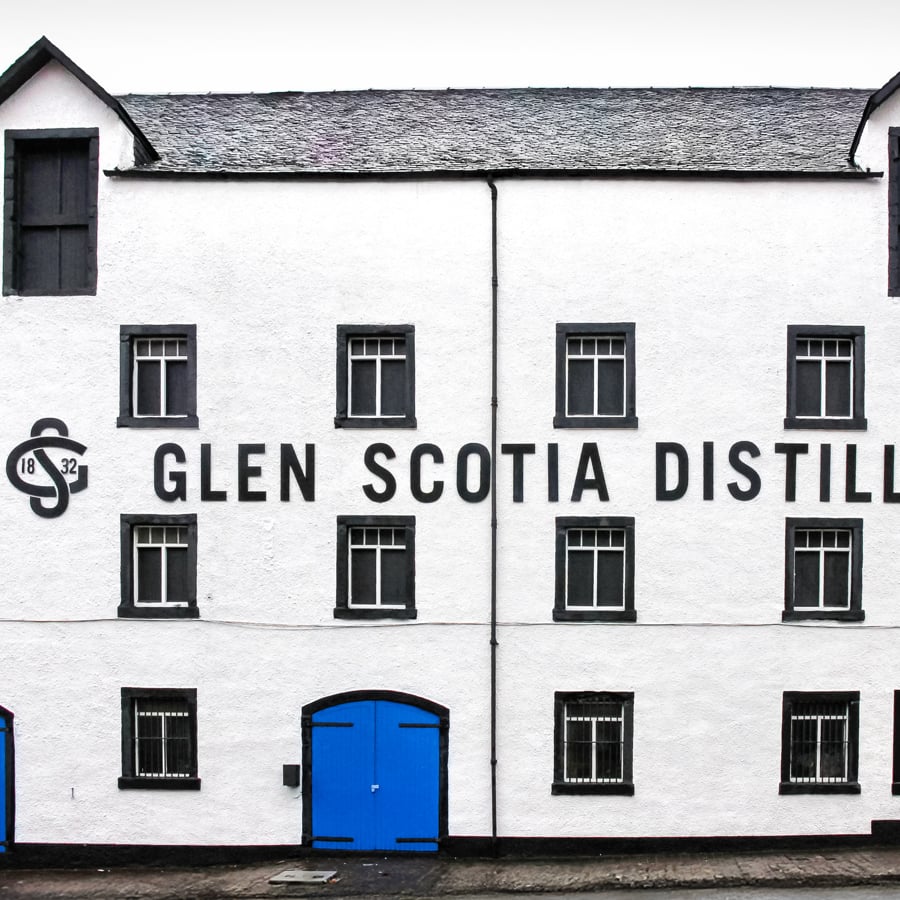
The bold character of Glen Scotia’s single malts has kept this towering Victorian distillery alive for nearly 200 years. One of the last producers of wild and funky Campbeltown whisky, it stands today as a cult favourite and a destination for those seeking idiosyncratic drams filled with notes of spray, ripe fruit and industrial minerality.
If you’re a lover of Campbeltown malt and want to explore everything Scotland’s smallest whisky region has to offer – or if you’re just starting out on your journey as a whisky lover – then this is a distillery you need to know.
Glen Scotia Whiskies
The best place to start exploring Glen Scotia is the flagship 12-year-old single malt, which boasts a thick, oily texture and a fine balance of maritime freshness and rich fruit.
Maturation in first-fill bourbon barrels brings a contemporary edge to this classic spirit, adding notes of cinnamon, salted cashews, and vanilla to a palate of pineapple, cider and honey.
From there, it’s worth pouring a dram of the powerful and smoky Glen Scotia Victoriana; a throwback to the distillery’s heyday, when Campbeltown whisky was famed for its intensity.
Medium peated and bottled at batch strength, this is a big whisky packed with herbal, medicinal aromas, coastal saltiness and roasted nuts. Victoriana benefits from added water and a bit of time in the glass to loosen up, so it’s perfect for slow sipping after a long day.
If you’re after something really special, the gold labelled Glen Scotia 25 year Old has been scooping awards across the globe for some time now, including a ‘Best in Show’ medal at the 2021 San Francsico World Spirits Competition.
Since 2020, Glen Scotia has also produced limited-edition bottlings for the annual Campbeltown Malts Festival. Departing from the traditional, these expressions include heavily peated whisky finished in Portuguese red wine barriques, and the same medium peated make that goes into Victoriana aged in ruby port casks.
The common thread here is that full-flavoured and brilliantly un-modern Campbeltown character. You just won’t find single malts like this elsewhere, and that’s due in large part to Glen Scotia’s commitment to traditional methods and equipment.
How is Glen Scotia Whisky Made?
Production at Glen Scotia is filled with nods to old-school whisky making. It carries out both long and short fermentations, to create nutty or fruity and funky styles as required – the legacy of its history suppling various styles to blenders.
The stills there are heated gently, with each 10-plus-hour spirit run tracked through handwritten records in a substantial ledger. Traditional worm tub condensers help to create the thick, oily texture noticeable in every Glen Scotia expression.
The original earthen floored dunnage warehouses that have stood since the 1830s provide the perfect conditions to age some of the distillery’s casks. There’s no glass in the windows of these warehouses; they’re open to the sea air coming in off the Atlantic, just as they were in the 19th century.
A Brief History of Campbeltown and Glen Scotia
Campbeltown, at the far end of the Kintyre Penninsula, was once the whisky capital of the world. The Wee Toon, as it’s lovingly known, experienced an economic boom in the early-19th century amid soaring demand for a new breed of blended Scotch whiskies.
Scotia (as it was originally known) was founded there in 1832, one of many producers hoping to earn a piece of Campbeltown’s whisky goldrush. Along with its many neighbours, it quickly became known for weighty and intense spirits that blenders favoured for adding depth to their creations.
When the doyen of Scotch history Alfred Barnard journeyed there in the 1880s, he noted that the distillery presented a “somewhat straggling old-fashioned appearance.” Which suggests that Scotia possessed a certain antique charm, even then.
The turn of the 20th century was not kind to Campbeltown. Bandwagoners hoping to cash in on the reputation of the Wee Toon’s robust malt whiskies were flooding the market with low quality spirits. This caused blenders to look elsewhere in the Highlands for casks and Campbeltown’s distilleries suffered as a result.
The Ghosts of Campbeltown
On Christmas Eve 1930, Scotia’s then owner Duncan MacCallum drowned in Crosshill Loch under mysterious circumstances. The nature of his passing is debated, but he was likely a casualty of Campbeltown’s declining fortunes. His ghost is said to walk the distillery to this day.
One by one, the stills of Campbeltown went cold and in 1934, Scotia and nearby Springbank became the only Campbeltown distilleries left in operation.
Learn more about the history of Campbeltown here
By the 1950s, Scotia was going by Glen Scotia. For decades, it was passed around different owners, closing and re-opening numerous times. But when the 21st century brought a new generation of single malt drinkers and collectors, things finally began to look up again for this old war horse.
Glen Scotia Whisky Today
Glen Scotia is currently one of three active distilleries in Campbeltown. It shares this storied region with the legendary Springbank and its sister distillery Glengyle – whose single malt is sold under the name Kilkerran.
As demand for single malts from Scotland’s smallest whisky producing region continues to outstrip supply, many whisky lovers are turning to Glen Scotia for a taste of that unique West Coast spirit.
Working in the shadow of such famous neighbours has led many to underestimate Glen Scotia, a bit like George Harrison versus McCartney in the Beatles. But much like George Harrison, Glen Scotia has a broad and infinitely rewarding body of work to explore.
Glen Scotia on the rise
Scotland is filled with distilleries that are well-respected by those in the know, but far from household names. But one of the great developments in whisky over the last two decades is the way previously overlooked distilleries have had the chance to reinvent themselves.
After nearly two centuries of dutiful commitment to craft, during which time it survived when so many others fell, Glen Scotia deserves a moment in the sun. So, why not pour yourself a dram and raise a toast to the dark horses, the stalwarts, and the Wee Toon.
Sláinte.