


 United States — would you like to set this as your default country of delivery?


 Trade
Trade  Shops & Events
  Customer Service
 Lost Distilleries: a closer look at Brora
One of the few 'lost distilleries' to escape its apparent fate, after 38 years mothballed, Brora is once again laying down fresh spirit. However, it is the distillery's increasingly rare and sought-after releases from before production ceased in 1983 that still excite whisky hunters and historians.

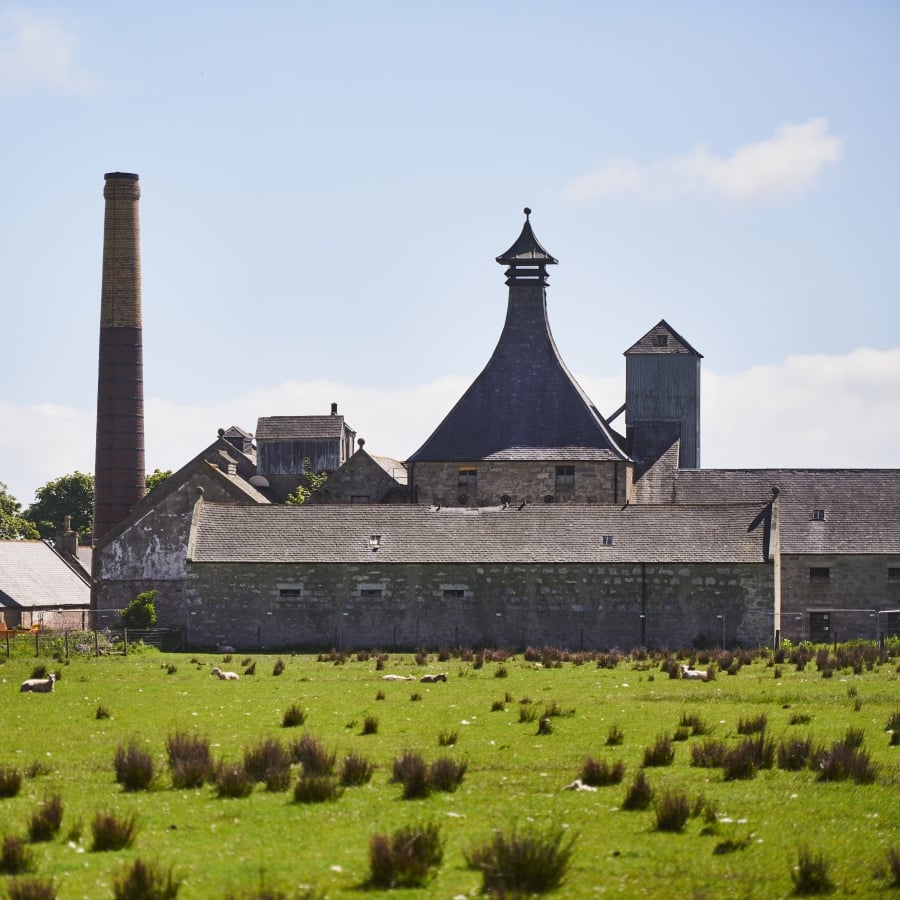
Located far up on the eastern coast of the Highlands, halfway between Wick and Inverness, Brora is a legend amongst the lost distilleries. Unlike some others, Brora is not defined by a singular distillery character. There are immensely peaty beasts among the bottlings, but others that barely show a whisper of smoke.
It is worth acknowledging that Brora is rare amongst the lost distilleries in that it has been revived. In 2021, a renovated and restored Brora distillery laid down the first new spirit in 38 years. This is exciting in itself, but also pays testament to the extraordinary reputation of the casks laid down here in the 1970s and 1980s that Diageo could justify the millions of pounds required to reopen this historic distillery.
History
Brora dates back to 1819, with the original licence granted to the Marquess of Stafford (later also the Duke of Sutherland). The Marquess is notorious for his role in the Highland Clearances of the early 19th century, and the distillery struggled in its early decades. By the late Victorian era, having changed hands many times, it was well-established and highly regarded.
Moving into the twentieth century, by 1930 the ownership was firmly in the hands of the Distillers Company Limited (DCL). precursor to Diageo's spirits arm today and already a behemoth then. The decades after World War Two were good for Scotch whisky, and demand for the distillery's whisky increased to the point that expansion was required. Demand was high enough that DCL simply built a second, bigger modern distillery next door.
At this point, we have to note an oddity – the distillery now known as Brora was, until the 1960s, called Clynelish. When the new distillery came online in 1967, they were called Clynelish 1 and 2 (or A and B, nobody seems to agree here). After running in tandem, Clynelish 1/A closed down, seemingly for good. But a few months later, a drought on Islay caused a hole to appear in production, and it was fired up again to fill the gap. It then continued operating, filling gaps and rarely running at full capacity. The Scotch whisky industry raised concerns about different distilleries trading under the same name, and in 1969 DCL renamed the original after the nearby village of Brora.
Brora was often used to cover for issues elsewhere, such as Caol Ila's rebuilding in the early 1970s. Brora was a utility player, not a star. But what could have been a sad decline over fifteen years is the span of time that cemented Brora's contemporary reputation.
Character
Plenty of other distilleries were also shuttered in the face of that industry contraction, so why is Brora so highly regarded? The easiest place to start is with a rare surviving bottle of the releases that crystallised Brora's gargantuan reputation – a 1972 Brora 22 Year Old from the Rare Malts Selection. An absolutely immense whisky, with huge, earthy peat character meeting sea spray and medicinal notes on the nose and still not overwhelming hints of pepper and barley sugar. The body shows a bit of a farm note, but this is a precise whisky for all its heft, and remains in balance throughout. Leather, pine needles and mint all show up to join the dank phenolic smoke on an endless finish. It is easy to see why this is one of the most highly rated whiskies in the last thirty years.
As is hopefully evident from those tasting notes, Brora whiskies are big. The new make spirit was, like Clynelish's today, oily and waxy, with a rarely paralleled ageing capacity. Phenolic elements have been noted and appreciated since at least the 1960s, with comparisons to Laphroaig, albeit fruitier.
Where it gets more complicated is the question of peat. Casks filled until around 1977 are virtually all well-peated, as Brora was covering for issues with the supply from DCL's Islay distilleries. After that, the need for peated whisky diminished, so Brora's character shifts by degrees.
For example, the Ian Macleod bottling of a 1981 Brora 23 Year Old from its Chieftain's range was laid down long after Brora's peat zenith. Matured in a sherry butt, this shows beeswax, apples, some pipe smoke, autumn leaves and floral spiciness. The palate brings up classic earthy Brora notes, with a full body. Sweet orange, wax and olive oil, before a long, full finish with more sherry fruit-and-nut playing in tandem with tobacco.
Whether it's laden with peat or not, the capacity to surprise and delight is on full show in the 1977 Brora 45 Year Old from Diageo's extremely limited Prima & Ultima 4 release. From a hogshead filled at the end of Brora's peated years, this defies its age. The peat is elegant on the nose, layered over toffee, with suggestions of wax and light minerality before cooler herbal notes. A sip brings the smooth oily edge you'd expect, on a full, sweet body that salt air and light smoke swirl through as medicinal accents develop. Warming cayenne introduces ginger, vanilla and marzipan, while the finish dries and cools.
Location
Brora is once again a living distillery and, while remote, is less than two hours from Inverness. Tours are very limited in number and can only be booked in advance. It should be noted that neighbouring Clynelish is not currently open to the public. Still, all those hurdles are as nothing to those who kept the faith over the distillery's quiet 38 years.


