


 United States — would you like to set this as your default country of delivery?


 Trade
Trade  Shops & Events
  Customer Service
 Lost Distilleries: A Closer Look at Convalmore
Named after the Conval Hills from where it drew water, Convalmore's elegant pagoda towers still look out over Dufftown, despite the stills having ceased their work forty years ago. While active, it largely supplied whisky for blending, and has less recognition than other lost distilleries such as Rosebank or Port Ellen. This is a great shame, and there's been a growing recognition of its distinctive qualities even as its availability dwindles.

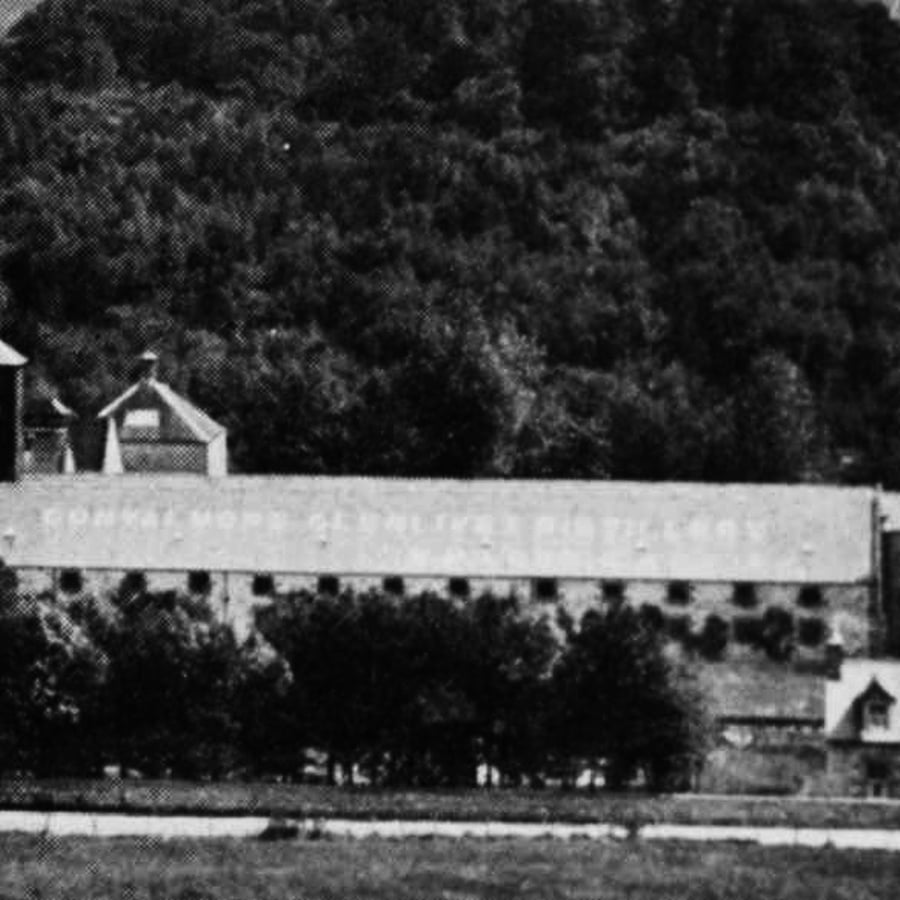
Convalmore's early days
Convalmore was founded in 1894 during the last Victorian Scotch whisky boom. The fourth of the 'Seven Stills of Dufftown', it is situated close to Balvenie and Glenfiddich at the north of the town.
Like so many distilleries of the time, it changed hands when times got tough. This happened first, in 1904, when it was sold to W.P. Lowrie & Company, and then when it was sold to its best customer, James Buchanan & Company, in 1906. With global reach for blends such as Black & White, the new ownership could weather the unhappy market conditions and keep Convalmore producing.
To add some real excitement to these financial problems, Convalmore suffered a serious fire in 1909. The intensity of the blaze restricted attempts to put it out, with locals assisting with buckets of water. “At its height the flames rose to between 30 and 40 feet. Snow also began to fall, providing a never-to-be-forgotten spectacle.”
Though the worst fire in the area to date, the stillhouse and warehouses were saved, and the distillery reopened a year later. Along with the rebuilding came modernisation, and Convalmore gained two new pot stills, and some form of continuous still, of which there are very few details. Whatever the specifics of its operation, the latter did not prove its worth and was decommissioned five years later.
As grand as Buchanan's was, it entered into partnership with John Dewar & Sons in 1915, quite possibly with a wary eye towards the enormous Distillers Company Limited (DCL) and its acquisitive habits. This step was not enough and a decade later, in 1925, Convalmore was brought under the umbrella of DCL, within its Scottish Malt Distillers subsidiary.
Modernisation and silencing
A process of modernisation was pursued in the 1960s, in the middle of a long growth period for the Scotch industry. Convalmore had two more pot stills added and the number of washbacks was increased to six, while the heating system was changed from direct firing to steam coils. It's notable that Convalmore avoided the common shift to shell-and-tube condensers and retained its worm tubs until the end. It's hard not to see this as a vital link in maintaining the character of the spirit so valued today.
While Convalmore saw further expansion over the 1970s, time was not with the distillery. A new stainless-steel mash tun arrived in 1975 as part of a new mash house, but industry overproduction and subsequent downturn caught up with Convalmore. As the industry struggled into the 1980s, Convalmore's production tapered off then stopped for the last time in 1985.
The character of a lost classic
Convalmore was intended to fulfil a specific purpose in blended whiskies: creating a fruity, waxy malt. For comparison, distillers who had experience of it apparently considered the new make spirit to be as waxy as Clynelish's, and possibly fruitier.
Given time to mature, Convalmore unsurprisingly tends towards the bigger and fuller – rather more an after-dinner dram than an aperitif. Interestingly, it is known for finishing drier than you might expect, and some releases still retain a wisp of smoke, a little reminder of very old-fashioned Speyside character.
Convalmore is prized for an elegance and composure that can respond to long ageing with great complexity and balance: like the Convalmore 1977 36 Year Old from the Diageo Special Release 2013 bottlings. An incredible balance of wood and whisky, this hasn't lost its vibrancy even after so long maturing. On the nose, apple, strawberry and even mango meet full toffee malt, while complex herbal, menthol and cedar spice notes join. The palate highlights the perfumed wood and spice on a full, rich base. Lightly earthy notes, incense, liquorice and shortbread emerge as it unfurls in the way that only whisky given real time to mature can. The finish is long, with chocolate and waxed wood joining the incense and liquorice root.
Convalmore today
Although Convalmore is in Dufftown, at the heart of Speyside, and the buildings are visible from the road, visiting is no longer possible. The brand is still owned by Diageo (the heir to DCL), but the facility was sold to William Grant as storage for the neighbouring Glenfiddich and Balvenie. Sadly, even if the buildings that housed Convalmore still remain, there are no longer any stills onsite, and this further cements the fact that those ever-dwindling stocks of whisky are all we will ever have to enjoy of this distillery full of stories.
