


 United States — would you like to set this as your default country of delivery?


 Trade
Trade  Shops & Events
  Customer Service
 Lost Distilleries: A Closer Look at St Magdalene
There are many "lost" distilleries, but the happy news of Brora, Port Ellen or Rosebank's revivals can obscure those that we won't ever see the like of again. Short of an intervention by a spectacularly devoted billionaire, St Magdalene (also known and bottled as Linlithgow) is only knowable through the ever-diminishing stocks that remain more than forty years after it went silent.

Early History
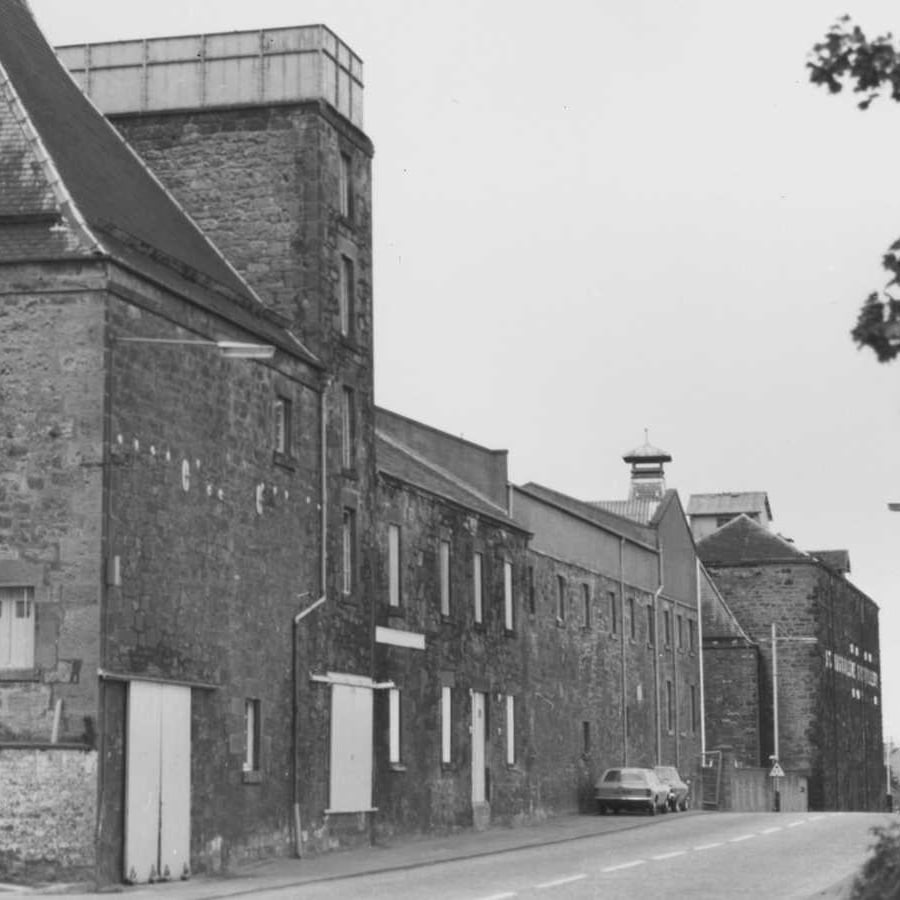
St Magdalene is situated in the ancient town of Linlithgow, also notable as the birthplace of Mary, Queen of Scots. Somewhat unpropitiously, the distillery was located on what was a leper colony in the 12th century. A few centuries later this was replaced by a convent, from which the name St Magdalene is thought to derive.
The distillery itself is one of the earliest Scottish whisky distilleries, dating back to at least 1797. Sat halfway between Edinburgh and Falkirk in Scotland's Central Belt, Linlithgow was already at that time home to four other distilleries. The primary figure in St Magdalene's early years is Adam Dawson, who already owned one of those other distilleries, Bonnytoun, a neighbour of St Magdalene. He bought the distillery in around 1800 and consolidated his businesses, physically absorbing Bonnytoun as St Magdalene grew.
The business remained a family concern for more than a century and benefitted from an excellent location as the industrial revolution gathered pace. Not only did the distillery sit on the banks of the Union Canal, but it also had its own railway sidings and good road access. By the end of the nineteenth century, it was a large, modern, and successful operation with 40 staff, able to put out some million litres a year.
The 20th Century
The early twentieth century was hard on the Scotch industry and like many other distilleries, St Magdalene went into liquidation in 1912. Bought by Distiller's Company Limited (DCL) – a precursor of drink’s giant Diageo – it was one of the original five distilleries in 1915 that made up DCL's subsidiary arm, Scottish Malt Distillers. The history of St Magdalene for the next decades is one of producing whisky for use in blending across DCL's enormous portfolio, largely unseen by the wider world.
As with Port Ellen and Brora, St Magdalene was a victim of the early 1980s downturn in whisky sales. Shuttered in 1983, the distillery has only garnered more plaudits since then, as independent bottlings raise awareness of how interesting a single malt it was.
Character
While squarely within the geography of a Lowland Scotch, St Magdalene is valued in part for how it both affirms and deviates from the expectations that designation brings. One aspect of this may lie in the fact that unlike Auchentoshan or Rosebank, St Magdalene's did not triple distil its whisky.
Though you can expect classic Lowlands characteristics such as a light body, fresh grassy notes, lemony citrus and gentle toffee across releases, there is an expressive complexity to St Magdalene's whisky that can build on that to some unexpected destinations.
Lowland redux
Starting at the end, with St Magdalene's last official bottling, the 1973 Linlithgow 30 Year Old Special Release from 2004. Recognised since its release as exceptional, this is more archetypally Lowland in its character, concentrated by a cask strength of 59.6%. A deeply fruity nose, rich with strawberry, cherry and lemon, brings on sweet malt. Hints of almond and pear contrast with restrained spiciness and very delicate notes of peat.
Light-bodied with a slight waxiness, those aromas flow through onto an expressive palate. The fruit is almost jammy, balanced by a fresh acidity surprising in a whisky with such age. The influence of the wood is restrained, taking the spices towards a drying cedar note, with chocolate and toast underneath. The finish continues slightly dry, but fades out cleanly with orange and chocolate. A masterpiece of complexity and integration.
A link to the past
In contrast to that, the 1964 Gordon & MacPhail Connoisseurs Choice 18 Year Old is a window to Scotch whisky as it once was. A taste of the past, when St Magdalene would still have their own floor maltings and modernisation had not yet flattened out the differences between distilleries. The nose is intense, interwoven with an immense number of details. Rich fresh and dried fruits, cinnamon and cloves, cocoa and coffee, lemons and fragrant herbs, leather and ash, apricots and a touch of oily metal.
This is sustained into the palate, which is deep without being a bruiser. More of the fruit notes mingle with honeyed malt, as the spices bring in pine resin, tea, liquorice root and tobacco. For a whisky that does so much it doesn't finish too long, but lets leather and tobacco keep it dry, with more resin and ash, even as a twinge of orange sees it through to the end. An older bottling like this, especially when it's from as reputable and astute an outfit as Gordon & MacPhail, is something akin to time travel.
St Magdalene today
Hopes of a resurrection, however slim, were killed off by the site's sale and conversion into flats in the 1990s. The conversion was sensitive enough that the pagoda roof remains, a distinctive landmark and reminder of Linlithgow's whisky heritage, should you be passing by. Of course, while there are still bottles to keep the memory of St Magdalene alive, there is still a thread connecting us to the distillery's glory days.

