


 United States — would you like to set this as your default country of delivery?



 Trade
Trade
 Shops & Events
 Customer Service
How to Start a Whisky Collection: Expert Tips for Beginners
Joe Rogers catches up with The Whisky Exchange’s head buyer for Old & Rare spirits, Jason Vaswani, to find out the best way to start and build a whisky collection. The conversation covers how to decide what to buy, figuring out what kind of collector you are, and which pitfalls you should avoid


Whiskies from the Old & Rare collection at The Whisky Exchange
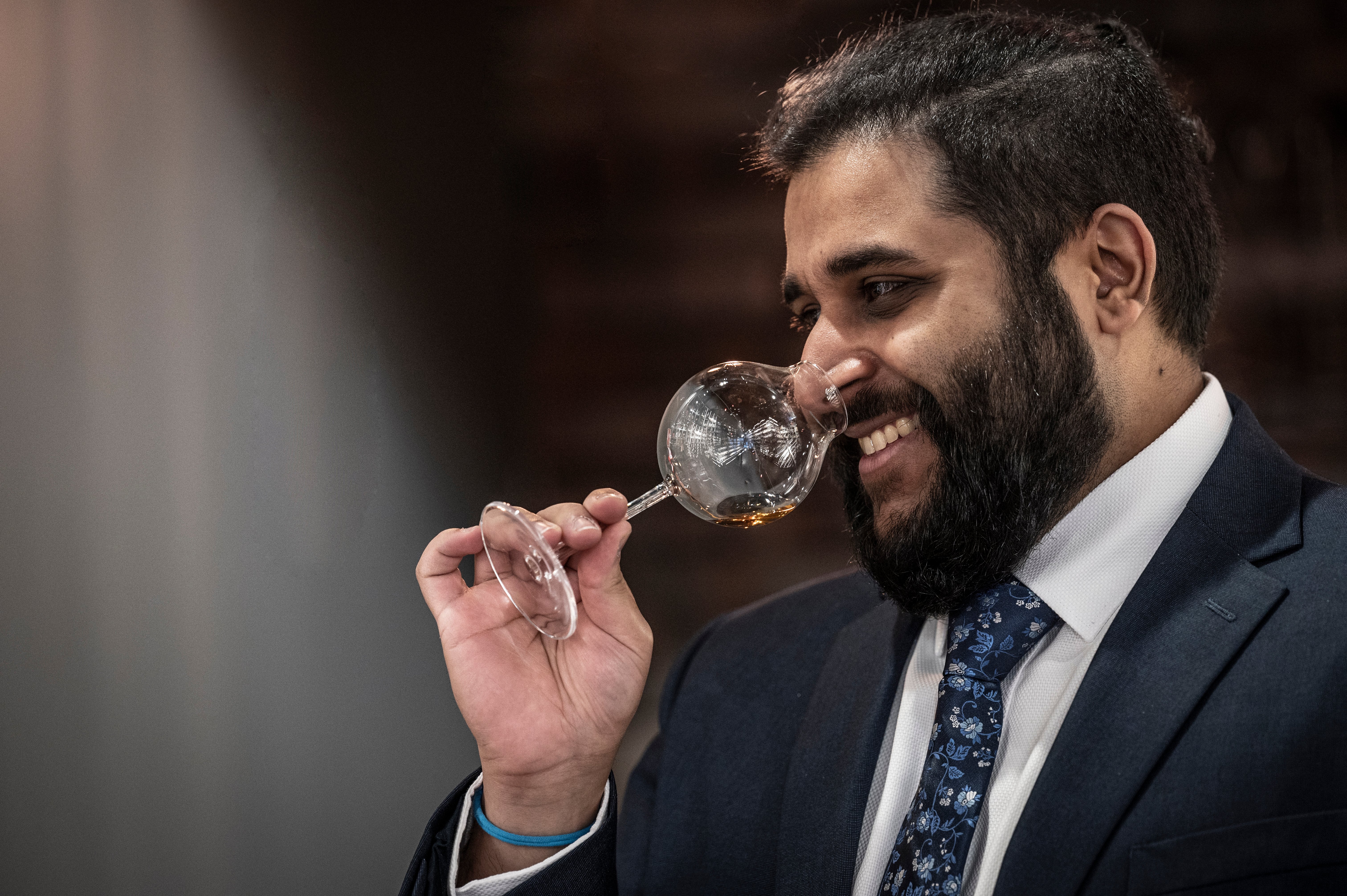
Starting a whisky collection doesn’t require vast sums of money, custom display cases or an established knowledge of single malts. Just ask Jason Vaswani, whose journey into collecting began with a single dram in a London airport.
“I was working in travel retail when I tasted my first whisky. I didn’t even drink alcohol before that,” he tells me. “We were being talked through the whole thing, but it made me want to taste more without anyone telling me what sort of notes I should be looking for.
"At first, I didn’t really think of buying whisky as collecting, I was just trying to figure out these different flavours I was encountering. I was very curious at that time, I wanted to know why different distilleries had such unique characters. So, it started off with buying a few bottles, then I had 20, then 50, then 100. I just never stopped.”
While learning the ways of whisky by buying and opening as many bottles as he could, Jason began vlogging about his new hobby. Six years on, he’s living proof that all you need to start a collection is a sense of intrigue. Curious to know more about how he built momentum, I sat down with him to discuss which whiskies first captured his imagination.
Where to start collecting whisky
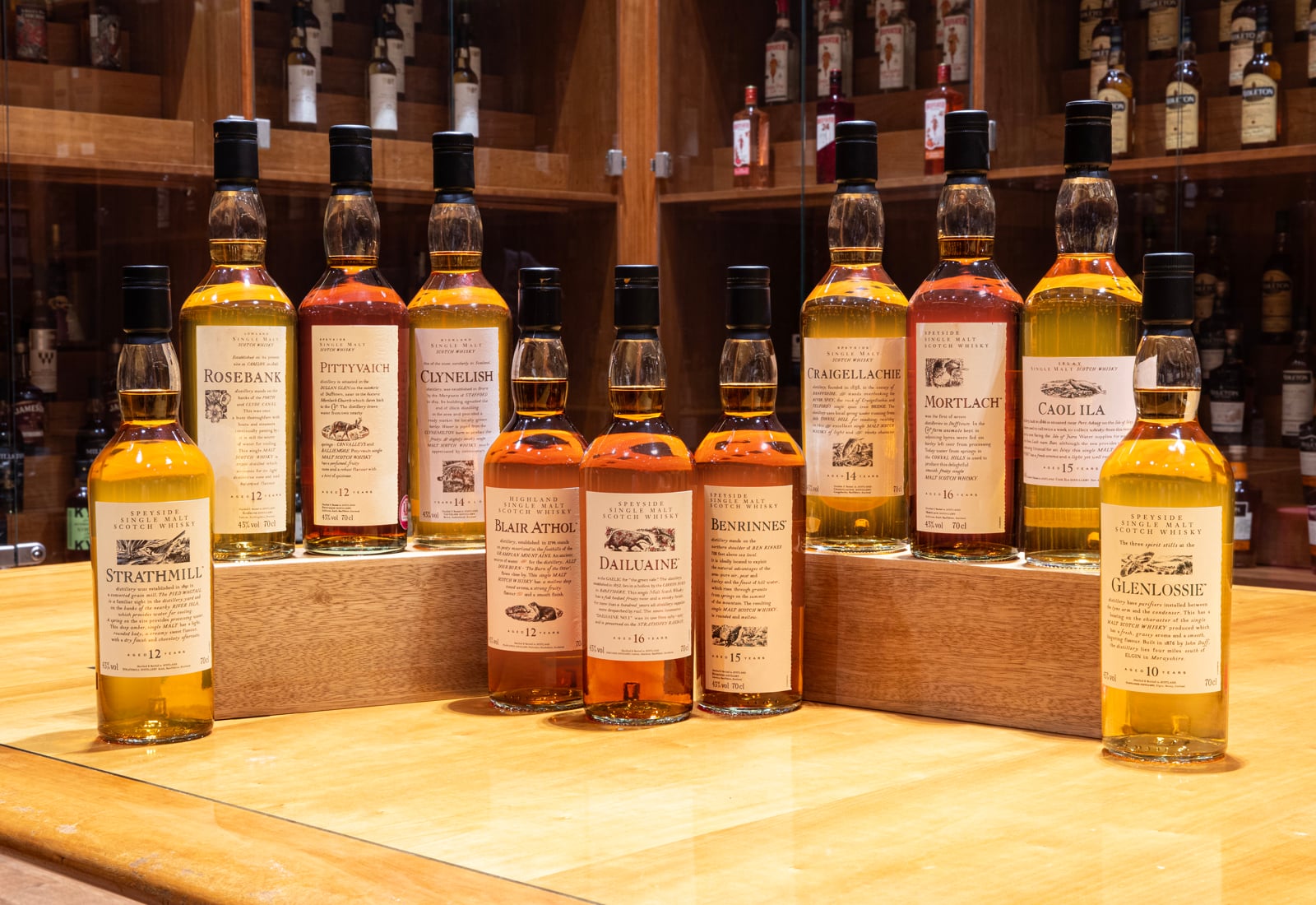
“One of the first distilleries I really loved was Glenmorangie, so I started to work my way through the whole range, all the way up to the Glenmorangie Signet. I wanted to learn about how the flavour profile changed with each expression. ‘What do different casks impart? What does this limited-edition give me?’”
After exploring the core ranges of his new favourite distilleries, it was an encounter with the much-loved Flora & Fauna series that sparked his interest in rare and discontinued bottlings.
“They were all great expression from different distilleries with beautiful artwork. Some were discontinued, like the Rosebank and later the Mortlach, which made me decide to buy an extra bottle of things I really liked when I could, so I could drink one and keep my collection going. Even today, I don’t really buy anything unless I love the whisky itself.”
Flora & Fauna was originally introduced by drinks company Diageo to showcase single malts from its lesser-known distilleries, especially those whose output was mostly earmarked for blending. Some entries in the series are from distilleries the company no longer owns, such as Aberfeldy, Craigellachie and Rosebank, making them a fascinating prospect for collectors.
Talk to anyone with a good selection of bottles at home and they’ll usually have a story like this, a series or a tasting or a particular whisky that turned their curiosity into a lifelong passion. But one of the things I’m fascinated by when talking with Jason, is the fact that he still views his whisky collection as something that shifts and grows, rather than a selection of artefacts to be kept forever under glass.
Whisky collecting as an investment
“You tend to see three different attitudes to collecting whisky,” Jason says. “You’ve got people who are into drinking and sharing their whisky, they open lots of stuff; then you have pure collectors, who like to have a big, curated selection of closed bottles to display and enjoy that way; then you’ve got people who look at buying whisky as an investment.”
This is a question that’s eagerly asked by many people looking to build their own collection, will it become more valuable in the future? Over the last decade, we’ve seen numerous headlines leading stories about record-breaking auction sales and old bottles skyrocketing in value. It’s a tantalising prospect certainly, but Jason is keen to characterise this aspect of whisky collecting as a potential benefit rather than something you should bank on.
“There are no guarantees in whisky," he says. "If you want to start a collection, do it because you love whisky. If one day you find the value of a bottle has gone up 50-or-100%, that’s a bonus. There are some things I keep sealed, because I want to have the full set for show, but my collection’s more for sharing than anything else.
“I think the collectors who open at least some of their bottles have the most fun, because they know they’re going to appreciate their whisky one way or another. If you buy things that you really enjoy then you can’t lose, they’ll always have value because you can drink them.”
When I ask if opening bottles ever leads to regret, Jason is quick to answer. “It’s much worse to regret not trying something when you had the chance. I do wish I’d bought more Mortlach Flora & Fauna 16 Year Old before it was discontinued. That’s a very special whisky for me, I think it was the first bottle I ever bought from The Whisky Exchange. The price has gone up, but I still pick up one of those from time to time.”
The question of how much money you need to put aside to start collecting in earnest is also common. To build up a collection of single malts from historic distilleries like Port Ellen or Karuizawa, you’ll need to put down considerable sums of money. But that doesn’t mean this hobby is necessarily the preserve of the super-wealthy.
“Lots of people think you need to throw thousands of pounds at it to start your whisky collection. But four or five whiskies is still a collection, you can start out pretty cheaply and go from there. You’ll probably get to a point where you want to have all these crazy bottles, but your collection is a living thing, it grows with you.
“I think if the last six years in this job have taught me anything, it’s that almost everything has a collectability to it – which can actually be kind of dangerous! You might have a distillery with a solid range of core bottlings and then a marketing team somewhere changes the branding or the owners tweak production and alter the character of the whisky. As a result, the old presentation becomes collectable.”
Whiskies to buy now
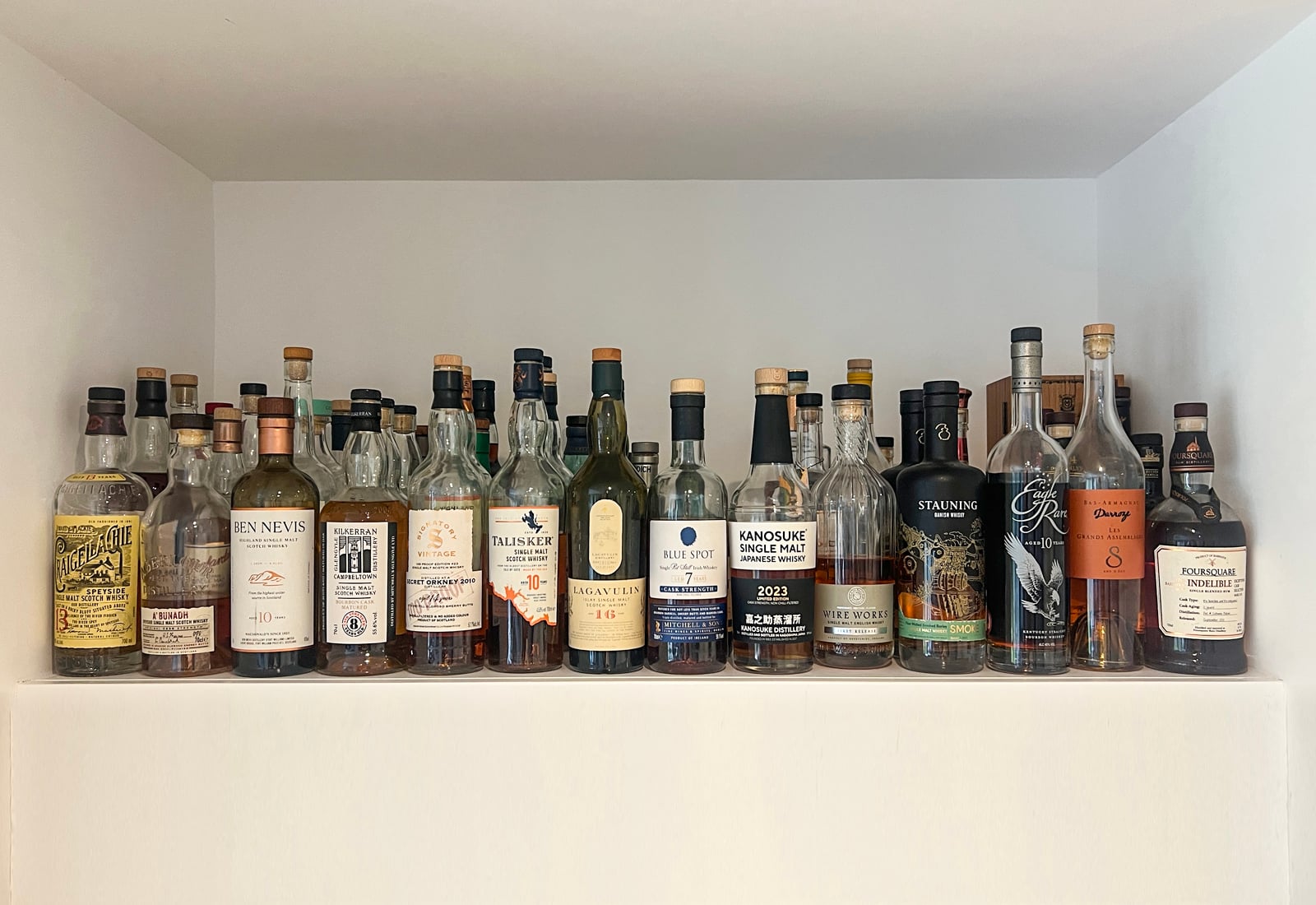
While some collectors can be cagey with hot tips, Jason lapses easily into conversation about what he’s excited about buying. His belief that the hobby thrives on community and dialogue and sharing drams with friends is contagious. “I’m really impressed with Glencadam and Glen Scotia right now, I just love what they’re doing," he says. "I know I can pick up any of their new releases blind because the quality of the spirit is high.”
“Old blended whiskies are also brilliant if you want to experience historic styles of whisky on a budget. People pass them by, but I think that’s just because they don’t understand how good they can be. If you try Dimple from the 60s or 70s it’s superb liquid, beautifully textured, lots of layers. I opened one for a charity tasting earlier this year and people were just blown away and asking where they could get a bottle.
“If your blend was bottled in the 1960s, that spirit could come from the 1950s or earlier. You just get so much character from them. It's something I don’t think people realise.”
Amid all this excitement, I’m also keen to ask Jason about the mistakes people make when they’re starting out. “Be mindful of listening to too much hype,” he says. “It’s easy to spend a lot of money in a short space of time. Just in general, don’t spend more than you can afford.”
How to store (and not to store) your whisky
“We’ll go into this a bit more later in this series, but make sure you’re storing your whiskies carefully,” Jason says. “I just saw a collection yesterday of very rare single malts bottled for the Italian market and they’d been kept in a wine fridge on their sides for decades. They should have been worth £8-10,000 a bottle, but I couldn’t make an offer on them.
“If you store a bottle of whisky horizontally, the spirit will eat into the cork and degrade the closure. So, always store your whisky standing upright, never in direct sunlight, ideally in a place where the temperature is relatively cool and constant.”
One of the nice things about talking to collectors, and Jason in particular, is that conversation doesn’t linger on cautionary tales for long. We return quickly to talk of community and a shared passion.
“It gives you access to a community of these amazing people. You learn so much when you go to events like Whisky Show to try things and meet people. Even if you don’t know anyone there it’s easy to strike up conversations. I’ve met so many people I can call close friends through that shared love of whisky collecting. That’s something I’d suggest people try to experience, it’s magical.”
After our conversation, one of the things that sticks with me the most is Jason’s assertion that a few bottles on your shelf is still a collection; that if you buy what you like and learn through experience, there’s nothing to lose and everything to gain.
This series will return with an introduction to collecting whiskies from lost distilleries, by Joe Rogers and Jason Vaswani




