


 United States — would you like to set this as your default country of delivery?


 Trade
Trade  Shops & Events
  Customer Service
 Independent Bottlers: how do you pick a cask?
Independent whisky bottlers are responsible for some of the most exciting releases that you can find today, but what actually motivates them, and how do they decide what comes out under their name?

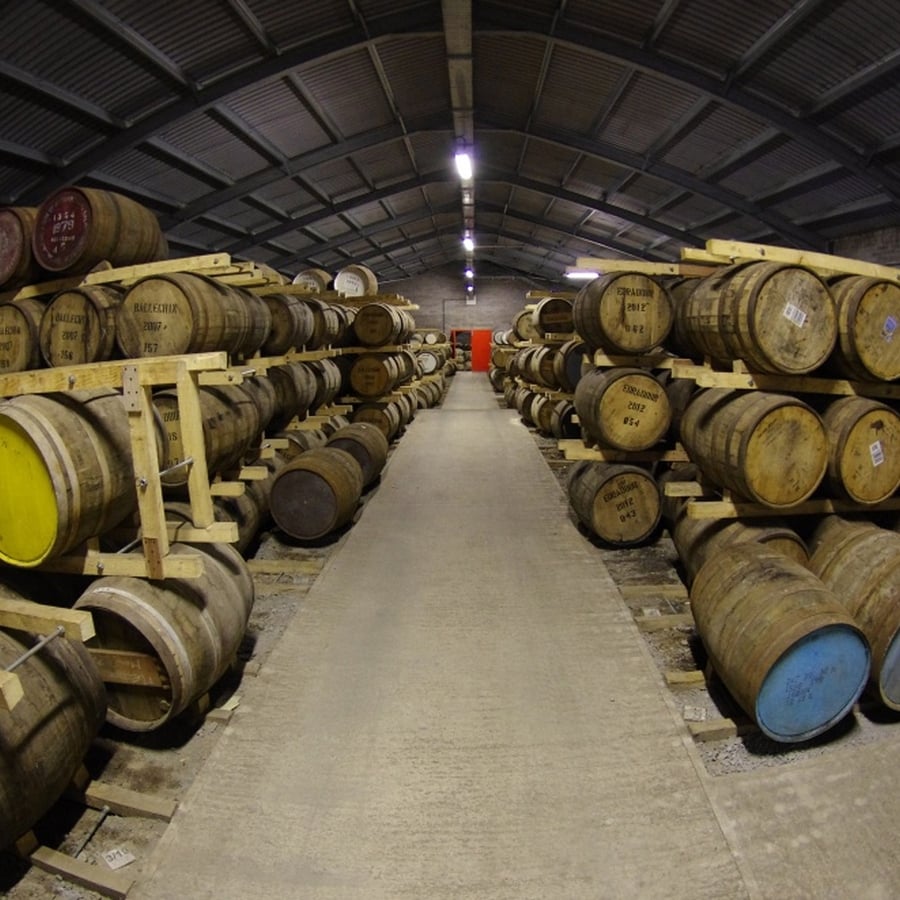
Signatory Vintage's warehouses at Edradour
We spoke to a few of independent bottling's leading lights to get an idea of how these decisions look from their side of the tasting glass: Andrew Symington and the team at Signatory Vintage, Mark Watt of Watt Whisky, Matt McKay of the London Distillery Company, Paul Dempsey from Brave New Spirits, and The Whisky Exchange's very own cask selector, Chris Bolton.
Putting to them a fairly broad opener highlighted a few common themes: What is the general process that you go through when choosing a whisky to bottle?
The first of which was summed up by Chris Bolton, who considers the problem conceptually – “For our single cask bottlings, we like to come up with a theme that links a selection of casks together…then it is a case of searching high and low until we find the right casks".
Matt McKay is in a different position at the London Distillery Company – he is looking after the latest incarnation of the company, which previously closed back in 2020, leaving a stock of maturing whisky. He is understandably conscious that he's "acting as a guardian of a very finite piece of London whisky history." As such he emphasised care and restraint at the centre of his process, although “…while still creating something compelling, modern, and distinctive enough to move the distillery’s story forward.”
Another piece of the puzzle was highlighted by Andrew Symington: the fine judgements required to pair the whisky with a cask that will harmonise with it during maturation. “Often it all starts before the whisky even exists – with wine! We carefully select only the finest wines to use in our maturation process, matching specific casks to specific whiskies.”
Of course, none of this is any use if you can't find an audience. For example, Watt Whisky try to keep their releases priced under £120 with Mark Watt summing it up simply: "I want to be able to afford to drink my own whisky."
Paul Dempsey at Brave New Spirits focused on looking beyond one person's view: "We check cask samples regularly through the year and review in a group – it's important to have a majority that think something is good enough to bottle."
Another aspect that they all agreed on was tasting and retasting and retasting again, to make sure a cask was where they wanted it to be before bottling.
From there, we continued with an obvious follow-on: What do you look for in a whisky that makes you want to bottle it?
Andrew Symington had an elegant simile here for Signatory's whiskies "We're after character – bold, expressive flavour, a long and satisfying finish, and a clear, beautiful connection to the cask. Whether it's sherry, port, sauternes, Pinot Noir or something else entirely, the best whiskies wear their cask like a tailored suit."
Matt McKay has to be deliberate in his approach, but this gives space to another aspect – the character of the underlying spirit: "With LDC, I’m always asking whether a whisky reflects the DNA of the distillery. Especially with these stocks being finite, each whisky should justify why it deserves to become part of LDC’s new story."
Mark Watt agreed and, despite being a self-professed fan of big sherry-cask whiskies, feels it's his job as an indie bottler to showcase the different distilleries' characters. However fond he is of the sherry bombs that Watt Whisky have released, he focuses on the importance of looking for "balance between the cask adding maturity and some influence to the spirit but not dominating the spirit."
Paul Dempsey takes a similar approach to Mark but looks to showcase other aspects of distilleries that aren't necessarily otherwise seen: "If we’re bottling from a distillery that’s well known for a certain flavour profile or even ABV, then we’ll try to show something different. Alternatively, we also like to bottle from distilleries that may not be that well known themselves for their own bottlings."
Another strand of thought was brought up by Chris Bolton – in a marketplace fit to bursting with so many fascinating releases, ensuring that any cask chosen stands out from the crowd is vital. As he put it, "Is there something special about the flavour and characteristics [of the whisky] that grabs our attention?"
Of course, illuminating what they looked for brought up a discussion of the other side of cask selection: What aspects of whisky make you not want to bottle it?
While, of course, they all agreed about unignorable issues such as technical flaws, these bottlers also dovetailed in their thinking when it came to the importance of balance. As Matt McKay puts it: "Technical flaws are one thing, but more often it’s about character and balance. I want the cask to support and shape the spirit, not overwrite it."
Paul Dempsey also emphasised character, but rejected brand: "We also don’t want to bottle anything purely down to the cask coming from a big-name distillery – the quality, flavour, character must always really impress us."
Mark Watt drew attention to not just whether the whisky was good, but whether it represented its age properly: "You ask yourself what age would I think this is – it could be a tasty whisky but if it tastes like an excellent six-year-old whisky and is actually 12 years old then it is not reaching expectations."
Andrew Symington also talked about aging but from a different angle: "If it doesn't stick with you, it's not ready. Simple as that. We want something you're still thinking about long after the glass is empty – if it's forgettable, it stays in the cask a little longer. No rush."
Chris Bolton concurred: "We never bottle products just for the sake of it. There has to be a story, and it has to feel special in some way."
This led us onto our next question: What’s the most important thing for you when choosing a whisky?
There was, unsurprisingly, an emphasis on quality. As Chris Bolton put it "The single most important criteria is the quality of the liquid. We are very selective over what we're prepared to put into glass, which means rejecting a lot of samples." Paul Dempsey agreed: "We’re trying to find whiskies that make us want to show them off!"
At the risk of being pigeonholed, Mark Watt discussed the nuts and bolts of commercial viability: "Will it sell – unfortunately this has to be a serious consideration. At a company like Watt Whisky we cannot afford to sit on things that we like but are unlikely to sell. For example, we got offered a single cask of a 16yo Pineau des Charentes that was one of the best things I have tasted in ages but being brutally honest, can I sell a whole cask of Pineau?"
Identity came up as a strong theme in this topic, and Andrew Symington was typically ebullient on the issue: "We want a whisky that has something to say – something distinct, original, unapologetic. A whisky that tastes like everything and nothing in particular isn't doing its job. Distinctiveness is non-negotiable."
To finish off, we asked them all: What’s a recent release you’ve worked on that you are especially proud of and why?
For Matt McKay it was LDC's Embarque. To him, "In many ways, it perfectly captures where London Distillery Company is today – respectful of its past but not trapped by it. Embarque was particularly rewarding because it brought together a number of different elements that I think define modern whisky making: thoughtful cask selection, careful composition and the preservation of the true heart of the distillate."
Mark Watt picked a playful number: "One I would pick out would be our recent Benrinnes 13 Year Old, finished in the cask our 17-year-old Chateau Laubade Bas Armagnac was matured in for 21 months. What was particularly good, was we still had some bottles of the armagnac so we have been able to host tastings where you try the actual armagnac side by side with the Benrinnes. For me this is the kind of cool geeky thing that you really can only do when you're a wee independent company."
Andrew Symington couldn't help but talk about an obliquely named release, one that's happily due to see another release soon. "We have to talk about our Speyside (M) – and if you know, you know. We're genuinely proud to be able to offer a whisky of this calibre at a price that makes it easy to say yes." While we can’t possibly mention which distillery it might come from, those who like sherry-matured Speysiders should keep an eye out for them.
Paul Dempsey went for a landmark release from Brave New Spirits: "Our Glenburgie 50 years old, for a couple of reasons: It was the oldest whisky we’ve bottled, it was very simple 'on paper' (ie: no luxurious cask finishing, fancy decanter, etc), and we all thought it was superb."
Finally, Chris Bolton gave an honourable mention to last year's A Good Old-Fashioned Christmas Whisky (“I feel like we really nailed the concept”) but honed in on the Loch Lomond (Croftengea) 2009 bottled for the Zodiac Series: "A real stand-out. Lashings of tropical fruit and barbeque smoke, it's my kind of dram."
In the end, for indie bottlers it seems that there’s one common theme when it comes to what they put in a bottle: it’s whisky that they want to drink.

London Distillery Company Embarque London Single Malt Whisky
£81.25


Speyside (M) 200518 Year Old Signatory for Whisky Show 2024
£235

Croftengea 200916 Year Old The Zodiac: Leo The Whisky Exchange
£99.95

Campbeltown Blended Malt 20169 Year Old Watt Whisky
£66.50

Glenburgie 197550 Year Old Cask Masters
£1,435