


 United States — would you like to set this as your default country of delivery?


 Trade
Trade  Shops & Events
  Customer Service
 A Guide to Glen Garioch
A thoroughbred with a surprisingly low profile, Glen Garioch (pronounced “glen geery”) has a long history and seemingly bright prospects ahead.

Early History
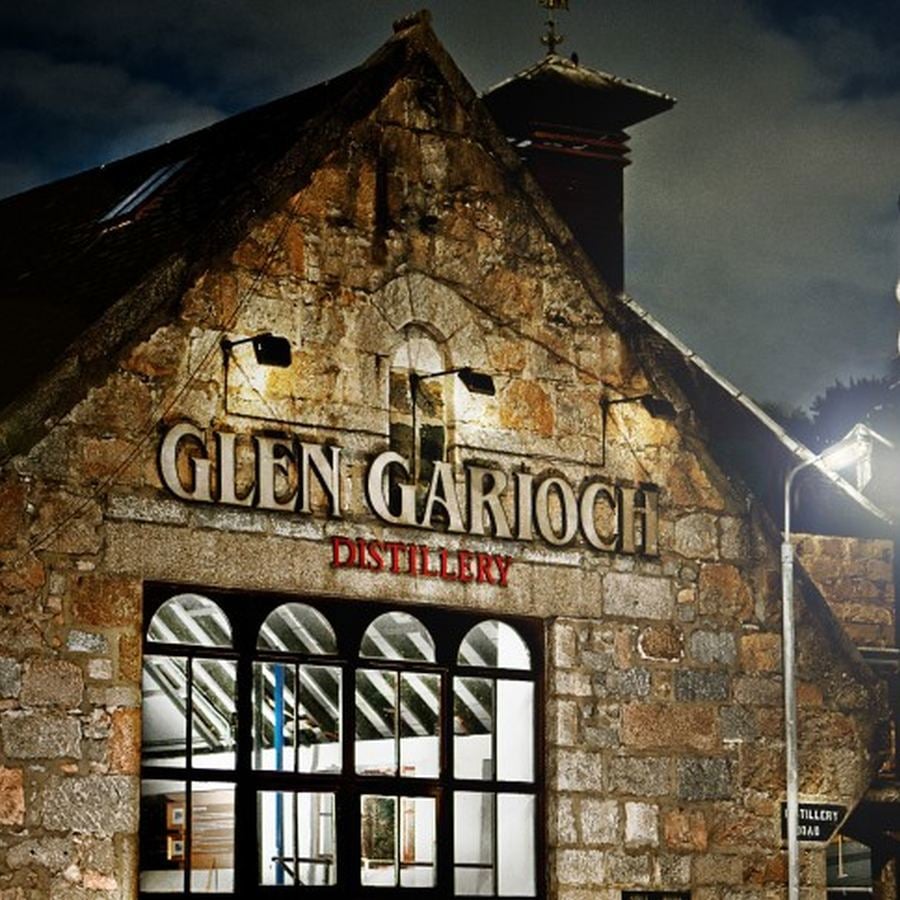
Glen Garioch is situated in the market town of Oldmeldrum (sometimes also referred to as Old Meldrum) around 20 miles northeast of Aberdeen. The fertile Garioch valley has long been a favoured grain-growing area and so it is no surprise that the distillery was founded here in 1797, though there is talk of an older distillery on the same site dating back to 1785. Either way, it’s one of the oldest licenced whisky distilleries in Scotland.
Somewhat unusually for a Scotch whisky distillery, especially one as long established as Glen Garioch, it’s very rarely suffered periods of closure. Founded by John Manson, it was largely family-owned until 1884, when it was sold to JG Thomson & Co of Leith. Various ownership permutations saw it come under William Sanderson & Son’s control in the early 20th century, who felt it was an essential constituent of the company’s flagship blended scotch, Vat 69.
As so often happened, Glen Garioch’s owners ended up part of the huge Diageo precursor Distillers Company Limited (DCL), in the late 1930s, too battered by the twin blows of Prohibition and the Great Depression to retain its independence.
Drought and plenty
The distillery only got mothballed in 1968, with DCL citing severe water shortages as an impediment to continuing operations. Two years later, Glen Garioch was sold to Stanley P. Morrison, the Glaswegian whisky broker. Accounts differ, but he apparently managed to resolve the lack of water by either hiring a noted local water diviner Neil Mutch, or local JCB driver Alec ‘Digger’ Grant. Either way, a deep well was found on a nearby farm that could supply more than enough for the distillery, despite its complete invisibility up to that point.
Things were so successful that the distillery expanded and modernised repeatedly over the next decade, being the first in Scotland to convert to gas-fired stills. Amongst other innovations at Glen Garioch, one eye-catching project was a waste-heat recovery system that not only cut energy bills £90,000 a year (in 1970s' money), but also heated two acres of glasshouses and polytunnels, providing tomatoes and kiwi fruit.
Absorbed fully into Suntory in 1994, Glen Garioch was closed for only the second time in 1995. Since reopening in 1997 it has shown no sign of slowing down, with production focused on single malt.
Into the current day
There have been some exciting developments in this time. The distillery reopened its floor maltings in 2022, which is now supplying 25% of Glen Garioch’s requirements. This is pleasing partially because distilleries malting their own barley was very common until not so long ago, so seeing it revived has a certain romance. It is also pleasing because it’s a conscious step away from prioritising efficiency, to explore which parts of the process could add more flavour and character.
Another older method that was restored at the same time was a return to the use of direct heat for the wash still. Again, the pursuit of efficiency and consistency has seen near-uniform industry adoption of indirect steam heating, but there can be a trade-off with the intensity of flavour. Alongside these physical alterations, Glen Garioch has returned to the use of brewer’s yeast and fermenting for longer, both of which should enhance the character of the wash. Between these measures you have a clear blueprint for prioritising flavour and body, which bodes well for the next few decades. Speaking of the character of the whisky...
Character
While the spirit from Glen Garioch has been respected for well over a century, the character shifted somewhat in the early 1990s. The maltster brought in by Stanley P. Morrison in 1970 was reputed to have a fondness for peat dating back to his training on Islay. This resulted in a hefty, lightly smoky spirit that was valued as a taste of old-fashioned Highland Scotch. Age tends to soften the smoke notes, but the rich dried fruit and malt notes intensify with time, and bottlings from this era are very highly regarded.
The maltings closed in the 1990s and Beam Suntory repositioned Glen Garioch’s single malts slightly. As a result, its whisky hasn’t been peated since 1995 and focuses on the fruity, waxy, full-bodied side of its Highland character. This is not to say that modern Glen Garioch is not as good, just that it is different - after all, Brora went through peated and unpeated phases in its golden era.
Compare and contrast
What better way to illustrate this than look at a few bottlings? The Glen Garioch 12 Year Old is a great example of the modern distillery’s character. Since a brand refresh in 2009, all the standard expressions are bottled at 48% as standard, a heartening sign in itself. A charming dram, with a nose that introduces heathery floral notes, poached pears and barley sugar sweetness with an underlying oily richness. A sip reveals creamy vanilla, dark sugar and more pears, along with oodles of ripe fruit. A touch of coffee or toast keeps things in check, and the finish is long and sustained. All in all, it’s hard to argue with the distillery’s fans.
For a sense of how unpeated Glen Garioch ages, you could hardly do better than the Macbeth Angus 31 Year Old. While over three decades in first fill bourbon casks can start to show on some whiskies, here there’s still a great brightness and clarity here. Aromas of candied peel and grape notes lead, before richer patisserie and baked fruit notes arrive on the nose, supplemented by golden syrup and a dusting of cinnamon. That well-loved oily texture is present and correct, as are rich fruit – first tropical, then more apples and pears – and honeyed malt. An orange-lemon aspect shows itself along with both warm and cooler, resinous spice. A little oak keeps the structure taut as it finishes, the texture and flavour delightful to the end.
Of course, it would be remiss not to discuss an example of the older, peated style and in the Glen Garioch 1978 30 Year Old – still a standout expression to this day – we have an absolute classic. The nose intertwines garden fruit and oil, gentle honeyed peat, generous warm spices and quantities of fudge and dried fruit. The taste matches up beautifully, complemented by a rich, full and oily mouthfeel. The smoke remains light, with fruit loaf, dark chocolate and stewed fruit under. Vanilla, bitter orange zest and lightly resinous notes approach in the finish, waxy to the end.
This bottling actually came up in conversation with our whisky oracle (and master of understatement) Billy Abbott, who said: “I had a bottle of that once. It was rather good” with a dreamy smile.
Visiting
Being the easternmost whisky distillery in Scotland, it’s a little set apart from the main Speyside distilleries, but Glen Garioch is situated less than 30 minutes drive from Aberdeen and is happily open to visitors. With over two centuries of history, it is perhaps unsurprising that the site is thoroughly enmeshed in the heart of Oldmeldrum. There is a definite charm to the site, with character developed over time and public roads running between buildings and pipes positioned over the roads to keep the distillery connected.