


 United States — would you like to set this as your default country of delivery?


 Trade
Trade  Shops & Events
  Customer Service
ClynelishSingle Malt Scotch Whisky
Interestingly, the distillery building is an exact replica of Caol Ila. However, prior to the new distillery being built, the Clynelish name belonged to the distillery now known as Brora...
The Clynelish name started life in 1819 when a distillery was founded in the village of Brora by the Marquis of Stafford, later known as the Duke of Sutherland. This notorious character is more famous in Scotland for his part in the Highland Clearances of the same year, when he evicted around 15,000 crofters from his land in order to farm sheep. It is speculated that he started the distillery to provide a market for his barley and to put the local moonshiners out of business.
After enjoying immense popularity almost from its inception (for long periods in its early history the malt produced at Clynelish was sold only to private customers and not to blenders at all), the distillery, in common with most of the industry, suffered in the period between the beginning of Prohibition in America and the end of WWII. Production ceased in the years 1931-38, and again from 1941-45.
During the subsequent recovery after the war demand from blenders for Clynelish malt was extremely high, so in 1967-68, owners Distillers Company Ltd (DCL, which was eventually to become part of Diageo) built a new distillery adjacent to the existing one to increase capacity. This distillery was also called Clynelish, as the company wished to trade on the existing good name of the old distillery. Unfortunately, there seems to be some confusion and lack of agreement as to the exact sequence of the events which followed in the history of the two distilleries, with little or no agreement on the dates.
It would appear that the original distillery ran in tandem with the new distillery under the names of Clynelish A and Clynelish B (sources disagree over which was the new distillery and which the original Clynelish) during 1968/9. Predictably, this arrangement was not to the liking of the Customs & Excise folk and the SWA due to the dissimilarity between the types of whisky being produced at the two distilleries. The original distillery was closed down in 1969 and then reopened at some point in the 1970s under the new name of Brora. The date of there-opening is unclear, although everyone seems to agree that it was definitely producing by 1975. It then operated intermittently, producing heavily peated (around 40ppm) whisky for blending purposes, before eventually becoming a victim of the DCL cull of distilleries in 1983.
The new Clynelish distillery was built as an exact replica of DCL's modern Caol Ila distillery on Islay and has continued to produce a muscular, slightly peatymalt that ismuch valued by blenders – it is one of the base spirits for the excellent Johnnie Walker Gold Label. In recent years Caol Ila's profile has increased thanks to some excellent independent bottlings and its incorporation into Diageo's 'Classic Malts' series.
From the website
When you think of the great homes of malt whisky, you probably think first of Speyside and Islay. But other regions play a full part in whisky’s story, and Scotland’s far north-east, from where Clynelish comes, is one. Distilleries here on the stormy sea coast of Sutherland were forever few and far between, yet malt whisky enthusiasts have always championed Clynelish™ over many more famous names.
When the original distillery was built in 1819 by the future Duke of Sutherland, the quality of Clynelish™ whisky was so prized that only private customers were supplied.
Over the years, Clynelish™ has continued to be held in high regard by experts. The great Victorian, Professor George Saintsbury, selected it as a favourite and today's malt whisky gurus consistently praise its unique combination of North Highland and maritime qualities.
You can almost taste the sea air in Clynelish, with its crisp, medium-bodied, mustard-fresh style. Although there isn’t an Islay’s pungent smokiness here, there is a trace or two of it. Don’t think that this is a heavy malt, though. Its clean taste makes it a fine aperitif – and you can enjoy it just as much later in the evening, such is its versatility.
“The most coastal-tasting mainland whiskies are those from Clynelish, between Inverness and Wick. They typically have seaweedy, salty and mustard-like aromas and flavours. Mustard-and-cress, perhaps? The 14-year-old is less peaty than some older editions.” Michael Jackson, whisky writer and expert.
Character and Style of Clynelish
 Wax
Wax  Apple
Apple 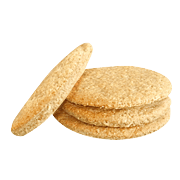 Biscuits
 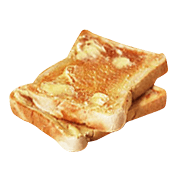 Toast
Toast 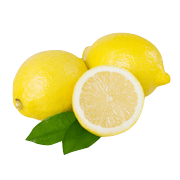 Lemon
Lemon  Brine
Brine
Filter By
Price Range
Bottling Status
Flavour Profile
Age
Vintage
Cask Type
Single Cask
Bottler
Series
Strength
Size
Limited Edition
Food Pairing
Colouring



Clynelish 14 Year Old
£54.95

Adelphi's Highland 10 Year Old (Clynelish)
£47.95

Clynelish 201510 Year Old Cask 51282 Adelphi
£79.95

Clynelish 201510 Year Old The Zodiac: Virgo The Whisky Exchange
£105

Clynelish 20178 Year Old Gleann Mor Rare Find
£61.25

Clynelish 14 Year OldServant Household Series Macbeth Act Two
£138

Save
£40Clynelish 199528 Year Old Cask #11250 Signatory Symington’s Choice
£419

Clynelish 201610 Year Old Equinox & Solstice Autumn Edition 2026
£63.50

Clynelish Aged over 8 YearsThompson Bros
£40.95

Clynelish 201214 Year Old Hidden Spirits Pop-People Collection
£199

Clynelish 199626 Year Old Prima & Ultima 4
£1,500


Clynelish 199329 Year Old Carn Mor Exclusive to The Whisky Exchange
£775

Clynelish 199035 Year Old Cask #3505 Signatory Symington’s Choice
£749

Clynelish 199119 Year Old First Cask #13211
£350

Clynelish 1982Bot.1997 Cask Strength Flora & Fauna
£1,500

Clynelish 199330 Year Old Halcyon Spirits
£750

Clynelish 1992 Distillers EditionBot.2007
£250

Clynelish 201112 Year Old Whisky Show 2023
£200

Clynelish 10 Year OldSpecial Releases 2023
£155

Clynelish 199526 Year Old The Nectar of the Daily Drams
£485

Clynelish 12 Year OldSherry Cask Finish Special Releases 2022
£165

Clynelish 199032 Year Old Daily Dram
£875

Clynelish 201111 Year Old The Whisky Show 2022
£199

Clynelish 199031 Year Old Signatory
£680