


 United States — would you like to set this as your default country of delivery?


 Trade
 Shops & Events
 Customer Service
Maison Lineti
Maison Lineti is an exciting French distillery that has had a rocky road to releasing its first whisky. Backed by science and an obsessive examination of flavour, the distillery is at the forefront of whisky making with, finally, whiskies arriving that we can taste to see the results.


Starting a distillery is never an easy venture. It is expensive and fraught with challenges. The site, the build, the fitting out all have to be paid before you get to the raw materials, casks, and ever-increasing running costs. Even when you finally make whisky you have to wait for three years, all the while laying down ever more stock. Then there’s the outside forces which you cannot control – recession, societal change, palate shifts, war, all of which affect impact on business. It’s a money pit which many new distilleries drown in.
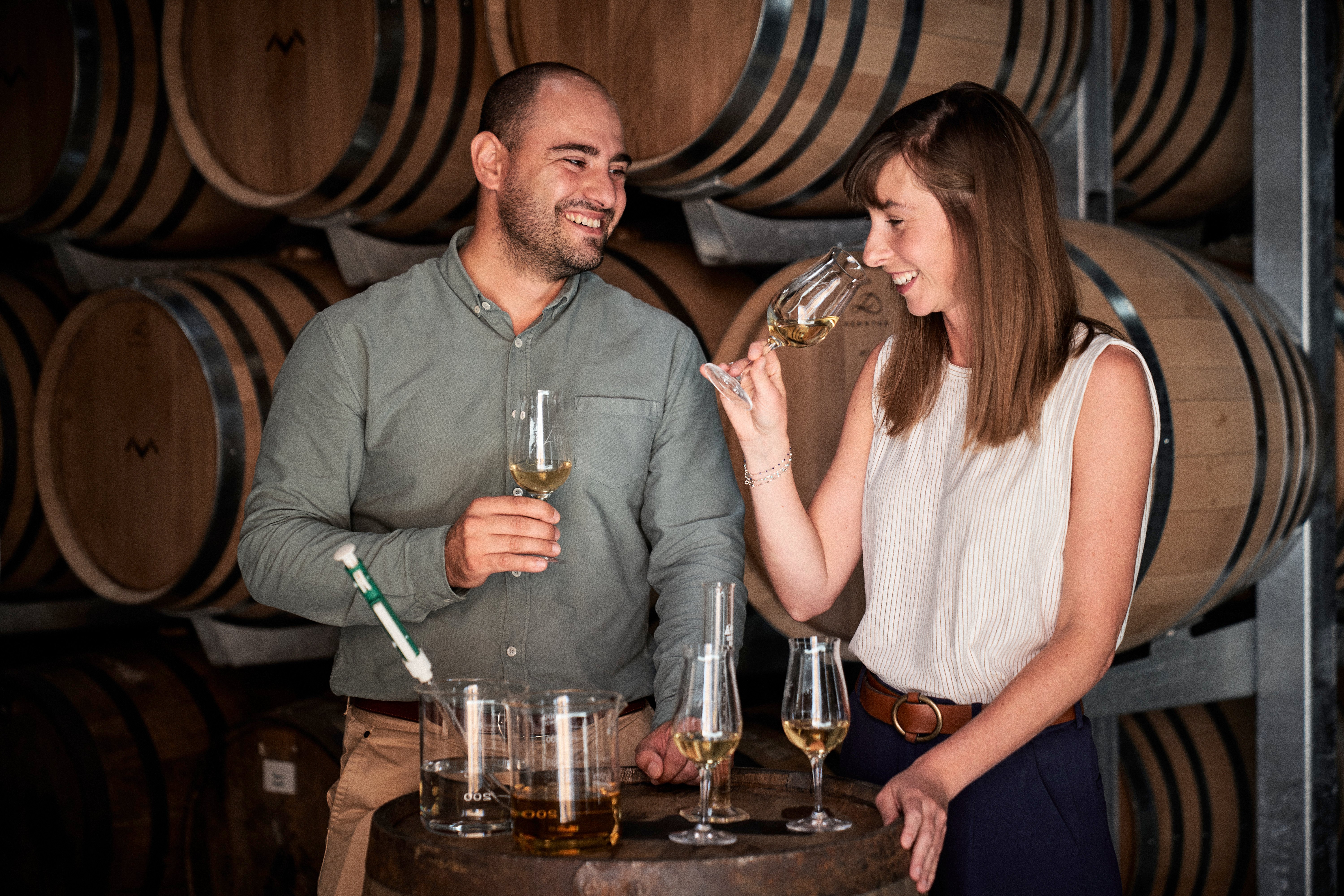
Maison Lineti was a classic example of this. The brainchild of husband and wife Alex Cosculluela and Dr. Magali Picard, their vision was to adapt ideas from wine and science. Picard, a world expert on maturation, splits her time between the distillery and her lab in the University of Bordeaux (itself a collaboration between the university and Demptos cooperage), where she applies analytical chemistry to investigate sensory character.
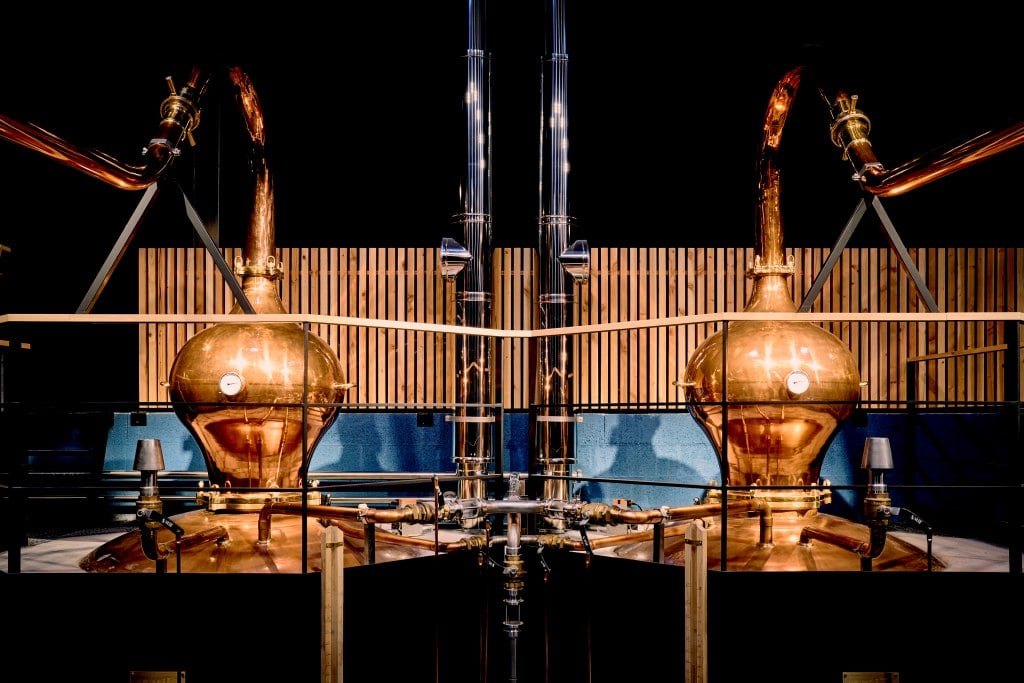
Given this background, there was little surprise that Maison Lineti’s approach to whisky was different a selection of speciality malts, a bespoke malting regime, different yeasts, egg-shaped ceramic fermenters, Cognaçais stills, a wide range of different cask types. Some mashes were inoculated with lactic bacteria, others given active lees ageing. The talk was peppered with wine-speak: tautness, acidity, minerality palate length, texture. It seemed both alien to whisky, yet logical.
With a site in Saint Émilion (the distillery name is an anagram of the wine region) and bankrolled by the Thienpoint family, which owns a portfolio of legendary chateaux, all seemed set fair.
Then, the Bordeaux wine industry collapsed, the majority shareholders pulled out. On July 7 2025, Maison Lineti was liquidated before it had even released its first whisky – a month later it was reborn with a new owner, and the couple still running the distillery, their vision intact. It will remain small and highly focused, rather than chasing volume. ‘It’s been a hard year,’ says Cosculluela, ‘but now it’s a bit easier to talk about. We’re more smiley now!’

The original idea of creating a series of vintage whiskies each made with a different process released in five ‘chapters’ (at three, five, eight, 10 and 12 years), has been replaced by a more orthodox approach. Now there is a core whisky, ‘Calibre’, supported by annual limited-releases ‘Complications’ which show the results of some of the research.
‘Calibre is the distillery DNA,’ Picard explains. ‘Its focus is fresh, floral fruitiness, some pear aromas and minerality at the end. The blend is composed of 87% ex-Bourbon casks, but it gets extra complexity from a small percentage of distillates made with different yeasts and speciality malts. We complement that with 13% of a spirit aged for a year in ex-Bourbon and then in new oak. New oak is used to support and preserve the character of the distillate.’
It seems counter-intuitive. New oak is often used as a blunt weapon, a way to add what appears to be maturity, but is in fact just oakiness. It can easily dominate – especially when the distillery character is on the floral/fruity side. Here though there’s fascinating science behind its use.
‘I like to draw a parallel with perfume,’ she continues. ‘A perfume evolves on the skin over time, with more volatile aromas at the beginning, then the core, signature aromas, then finally the base.
‘A whisky’s base notes are mainly given by maturation. They’re memory aromas that come when the glass is empty. We worked a lot on discovering the role of the polymer in the oak – ellagitannin – and how this plays a role in fixing the most volatile compounds and avoid the volatilisation of the most fresh, fruity characters.
‘In first month of ageing, a lot of esters evaporate and you can lose the fruity/floral elements, but with a touch of new French new oak we can fix them.’
Those early interactions are, she argues, vital in developing a whisky’s final character and complexity. It, too runs counter to orthodox whisky thinking. ‘The first year is where the main changes happen,’ she says.
‘There’s the extraction of the oak, the interaction with the distillate, and how the acidity increases, impacting the the kinetics of creation. New oak can prepare the distillate for longer-term maturation.’ This process – élevage – might be unusual in whisky but is standard practise in Cognac.
Complication #1 is a demonstration of the impact of malolactic ferment and is made from a wash which was inoculated with lactic bacteria to add a creamy buttery texture.
The new make was aged ‘mostly’ in ex-Bourbon with the addition of 5% of whisky firs matured in new oak, and ex-Cognac, then transferred to ex-Bourbon. ‘The new oak and Cognac balance the roundness of the malolactic,’ she explains. ‘It adds more acidity and tautness on the finish. It’s a whisky that’s accessible with people who have some knowledge of wine.’
Complication #2 is vatting of two ex-oloroso casks (but being Lineti there’s two different marques using different yeasts plus 2% of distillate in ex-Bourbon) ’to balance the strength of the oloroso cask.’
‘Whisky is like a pizza,’ says Cosculluela by way of explanation. ‘The consumer expects tomato sauce and mozzarella when they order one. In whisky if you make whisky only with French oak, the consumer will be lost because it doesn’t smell or taste like what they’ve tasted before.
‘Here, we try to integrate the French oak in a way where we can continue to taste the ex-Bourbon at the end, but improve the quality and get the distillate aromas while not being radically out of the box. We just want to make the best margarita ever!’
Maison Lineti’s start may have been rocky, but now the project can start properly. That said, the couple are under no illusions about what lies ahead as they try to prove themselves in a still cluttered and sluggish market. Goodwill only gets you so for, as, sadly does quality. Price, distribution, and the ability to tell the story all now comes into focus. Maison Lineti was a strange, theoretical whisky – the subject of numerous articles but without any actual liquid to back the words. Now it can be tasted. Palates will decide.
Tasting Notes
Calibre No.1
There’s some light nose burn along with apple blossom, a light green and leafy element (watercress?),whitecurrant, pear and a hint of cereal. Water helps to amplify all of this.
The palate is slightly hot – again a drop of water helps. Here there’s a fruit syrup sweetness in the centre, then a mix of herbs and flowers. It’s fresh and slightly powdery/mineral, firming up on the back palate before expanding into candied fruit and flowers.
Complication #1
This is more fleshy, with the sense of greater weight than Calibre. The fruits and flowers are there, but with extra juicy ripeness – white peach and a creamy back note that’s mixed with fondant icing. Water helps here as well, relaxing and softening.
The palate has a tongue-clinging quality with estery fruits sitting on top. Water adds in lemon barley water, the icing element, a creamy almost oat-like quality and more spice before a clean glacier mint coolness to the finish that’s balanced with a hint of salinity.
Complication #2
A pretty classic sherry cask aroma that sits on the figgy, orange peel and shoe polish side of things before some candied walnut emerges. Water adds a slightly volatile lift and some energy.
The palate is warming, with fine-grained tannin. It’s off-dry with the dark fruits adding a rounded element. A little water brings out the central fruits and amplifies the nutty quality coming from the cask/wine. Further dilution adds a resinous edge.


